WHAT REALLY HAPPENED ON THE FIRST DAY OF SUMMER
22 Tuesday Jun 2010
Posted in Summer!, Vegetable garden, West Seattle garden
22 Tuesday Jun 2010
Posted in Summer!, Vegetable garden, West Seattle garden
11 Tuesday May 2010
Posted in Iris, May flowers, Spring, Transplanting, Vegetable garden
Tags
cabbage, clematis, fava beans, iris, pears, peas, Spring, tomatoes, transplanting
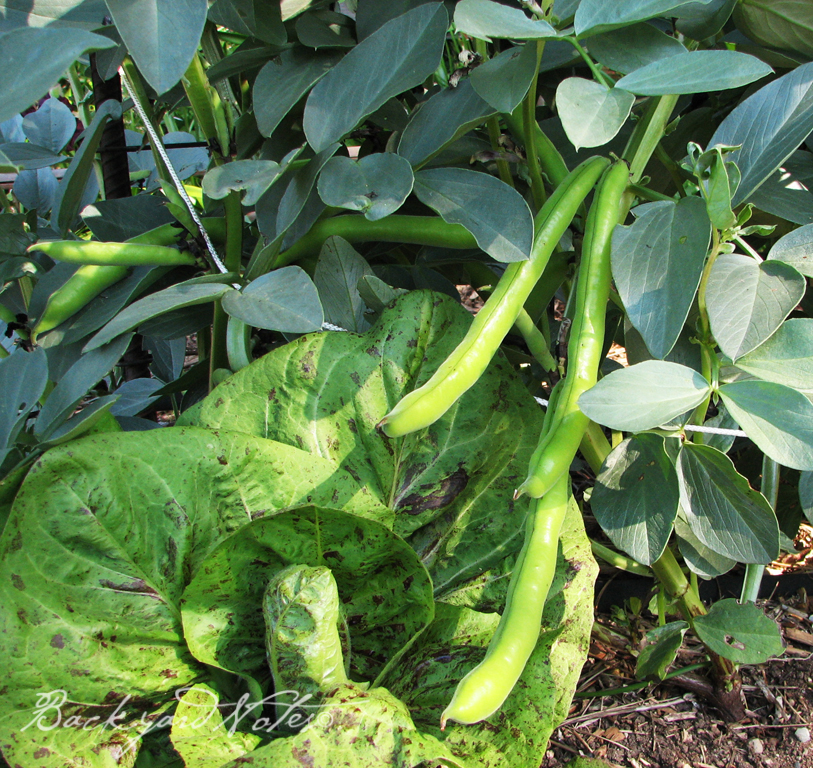
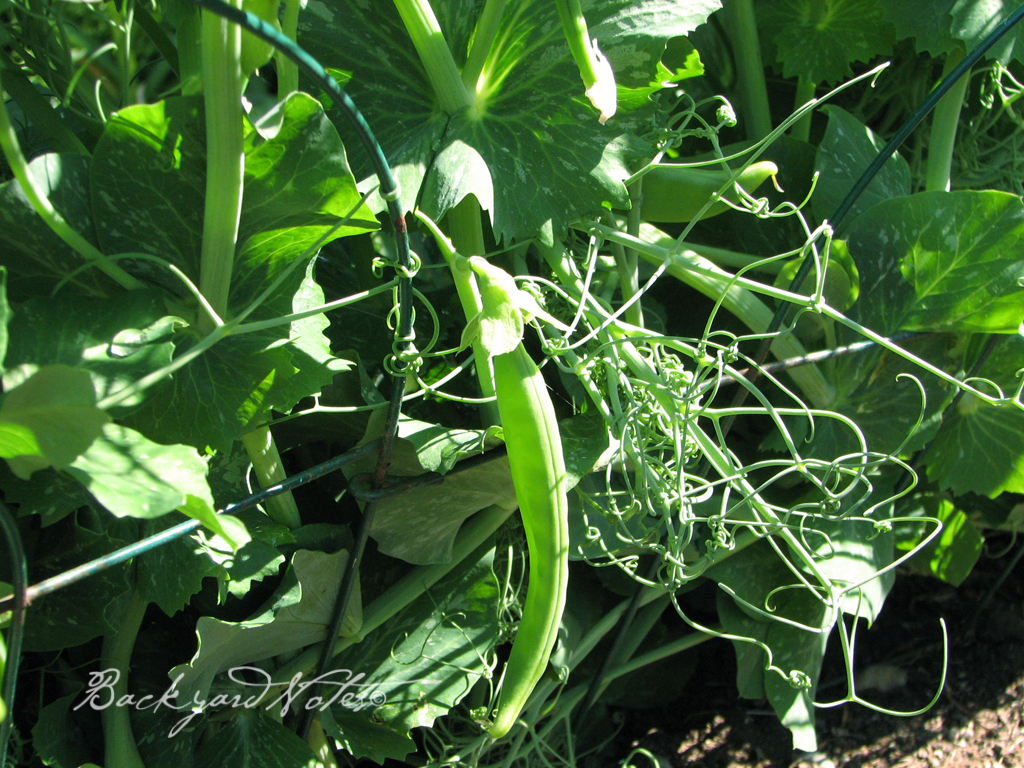
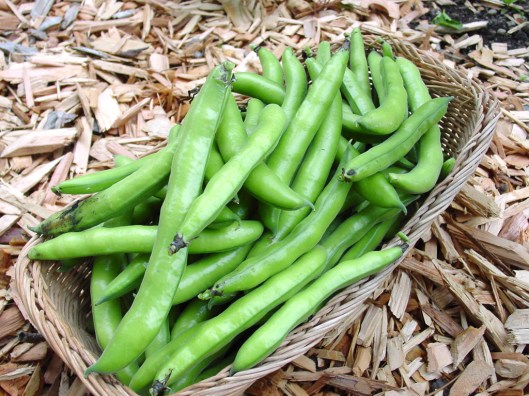
PICKING THE FIRST PEAS AND FAVA BEANS OF SPRING IS SHEER JOY! The favas may need another four to five days, but we’ll see. I planted two varieties, Negreta (3ft tall) and Aqua Dulce (5ft tall). The Negreta are about a week or more ahead of the Aqua Dulce for harvesting.
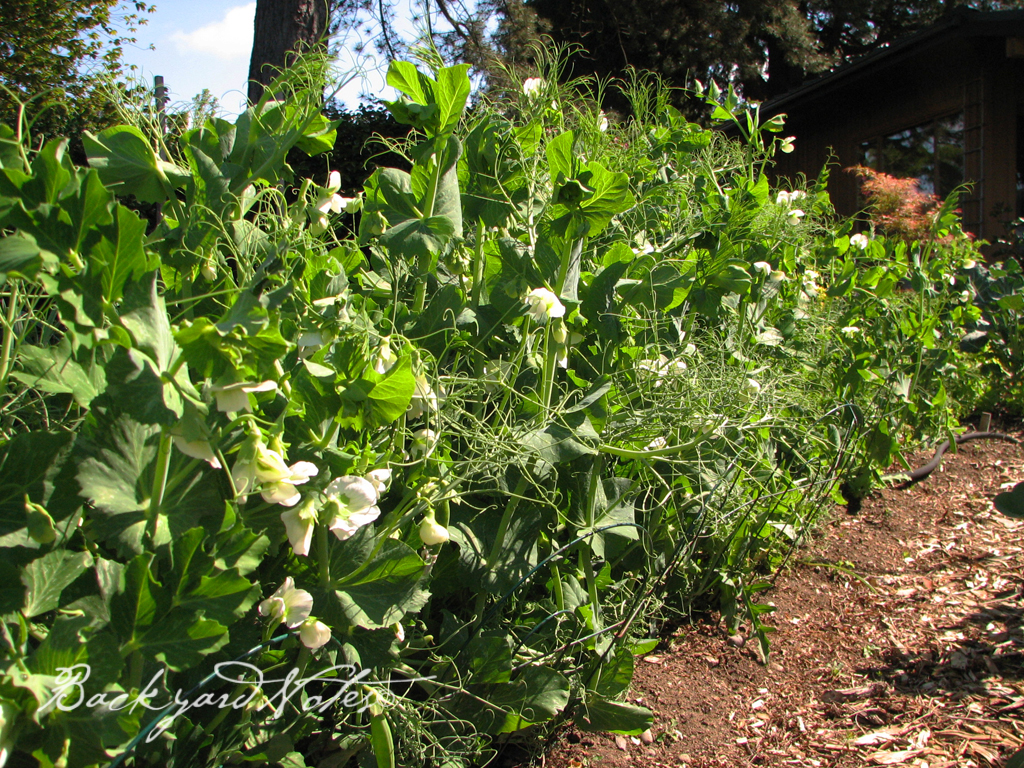
And, the some of peas that were a real mixed bag of age, varieties, and viability and planted in December are nearly ready to harvest. Can I exercise a little restraint and keep myself from picking a pod or two as I admire them?
They have really taken off!
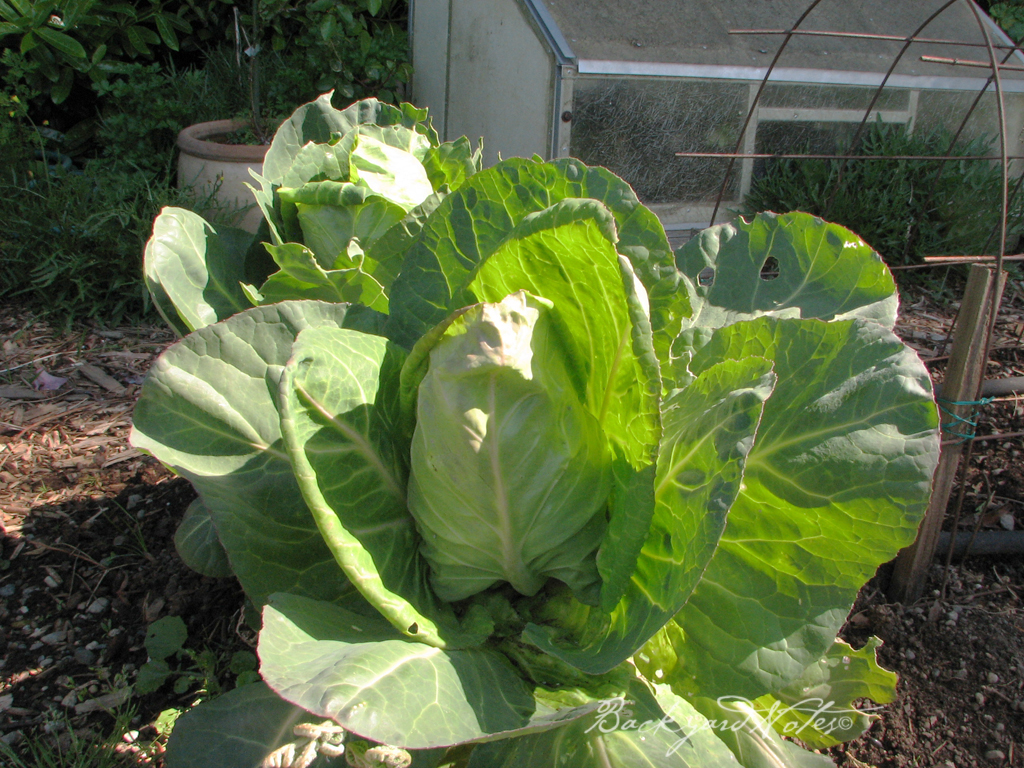
The Arrowhead cabbage that I planted last fall are nearly ready to harvest too, it’s surprising since the other cabbages have long since bolted. One Savoy is still forming a head.
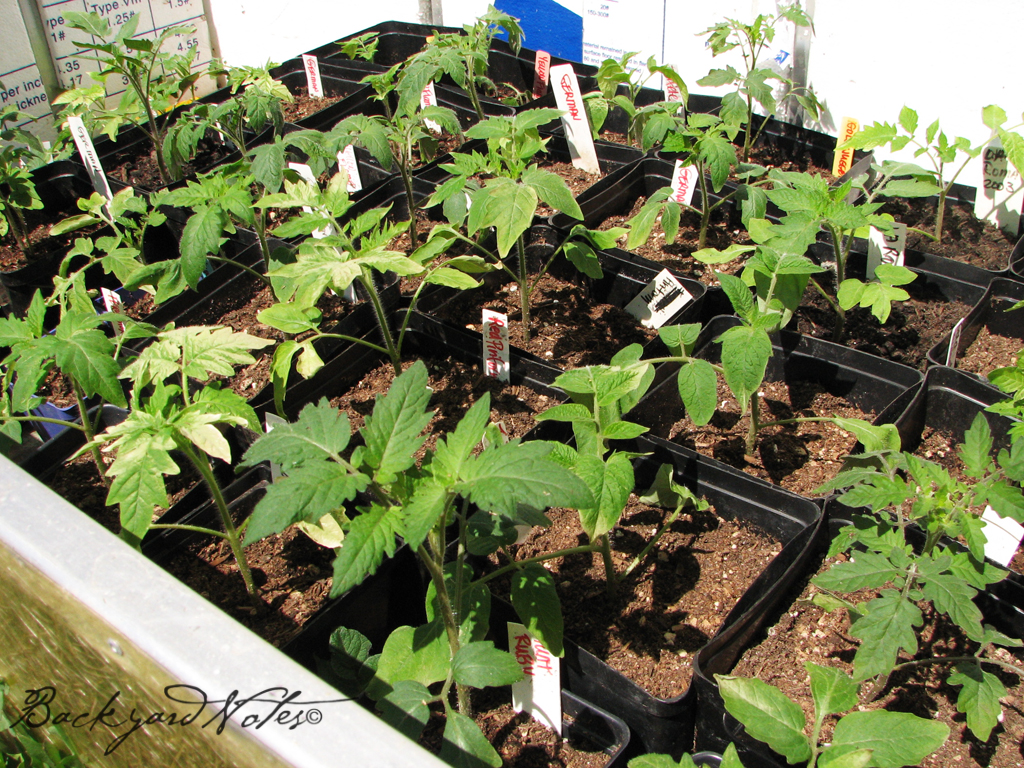
On Friday and Saturday I transplanted all of the tomatoes and some of peppers, most into one gallon pots, then into the coldframe they went. They were twenty-eight days since seeding. Tomatoes grow like weeds; happily for us they certainly taste better! Just about the time they are ready to outgrow the coldframe, the fava beans should be nearly done and can come out to make room for tomatoes.
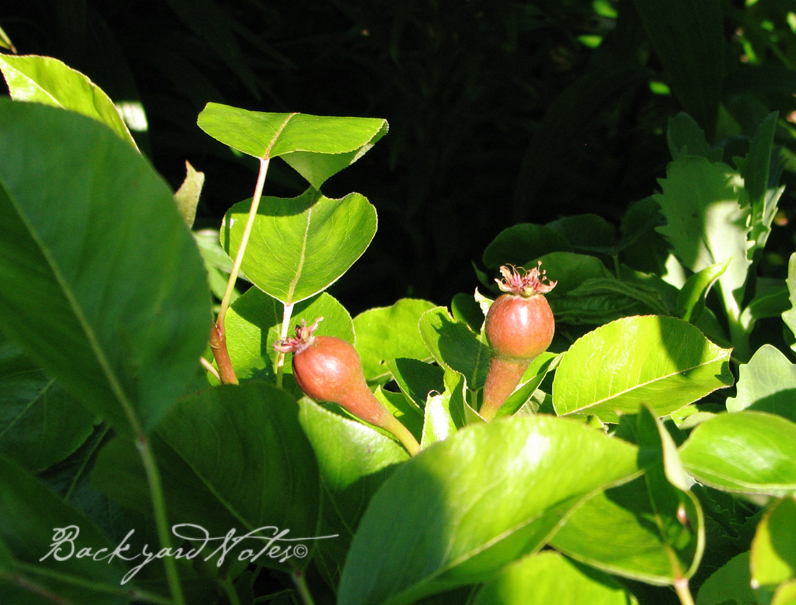
I’m excited to see that we will indeed have pears. There quite a few of each type. We’ll wait another week or so before thinning them. These are the Bartlett’s. This is a great time of year!
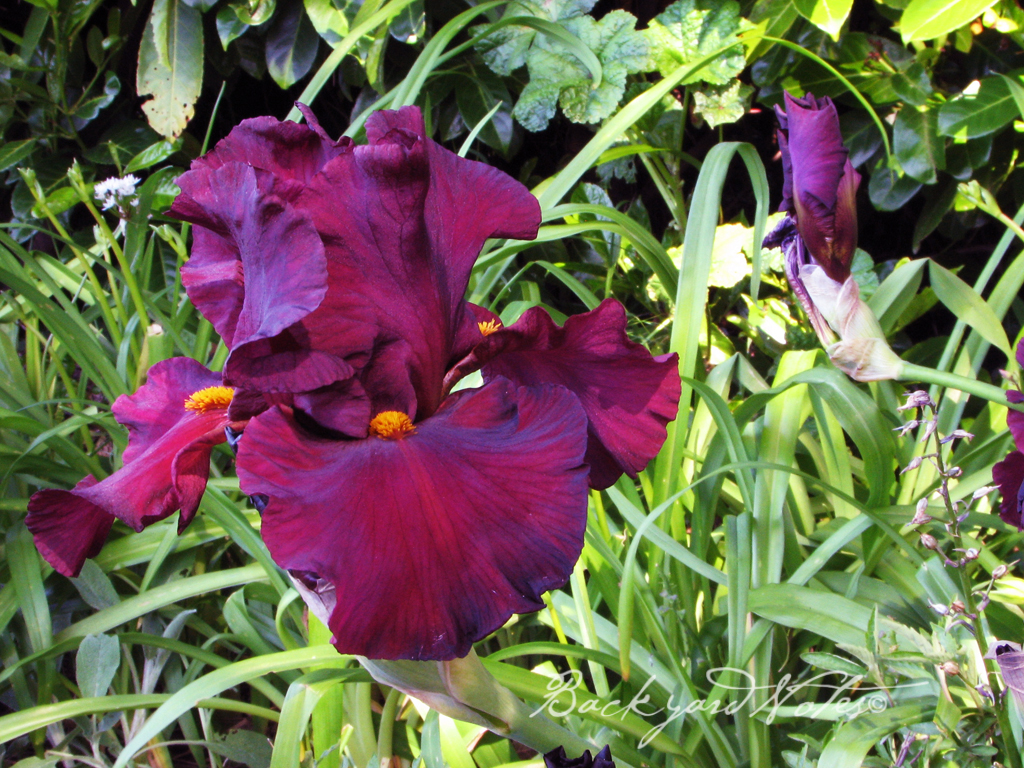
In the flower garden, the iris ‘Saturday Night Fever is in full swing. Very large flower and tall stalks. I purchased this one at the Seattle flower and Garden Show about ten years ago and it has multiplied nicely. Time to divide this year after blooming has finished.
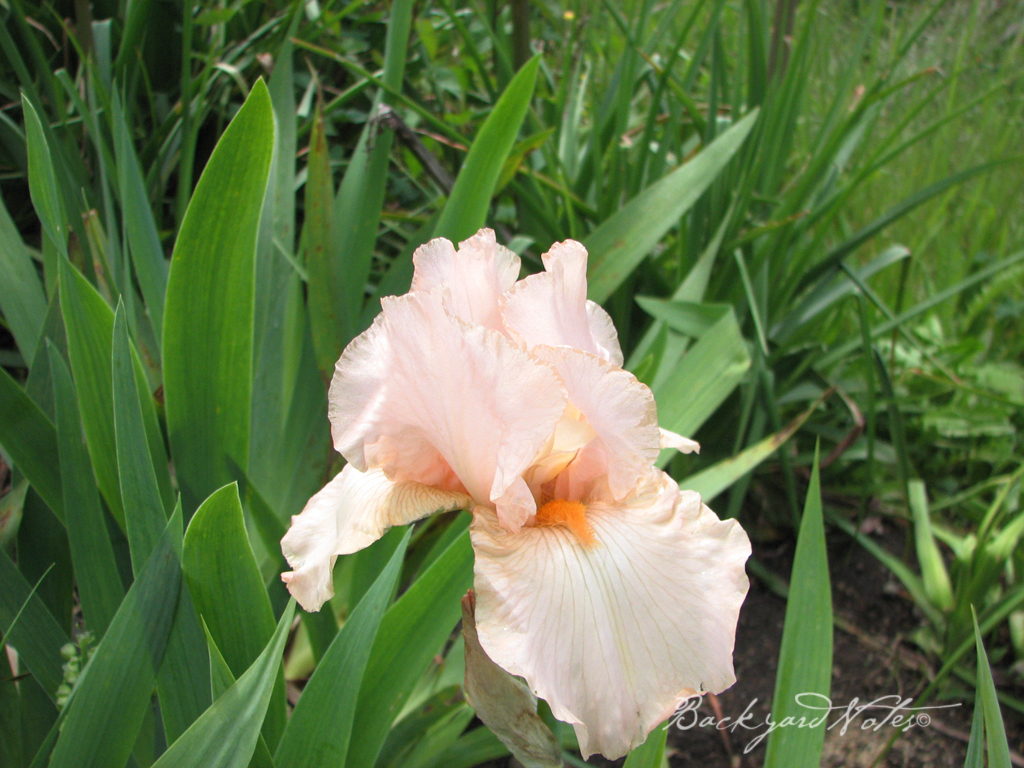
Another lovely, delicate bearded iris is ‘Lenora Pearl‘ from White Flower Farm. It is a reblooming iris, blooming again in the fall. This has proved quite vigorous and in also ready for division after ten or elven years.
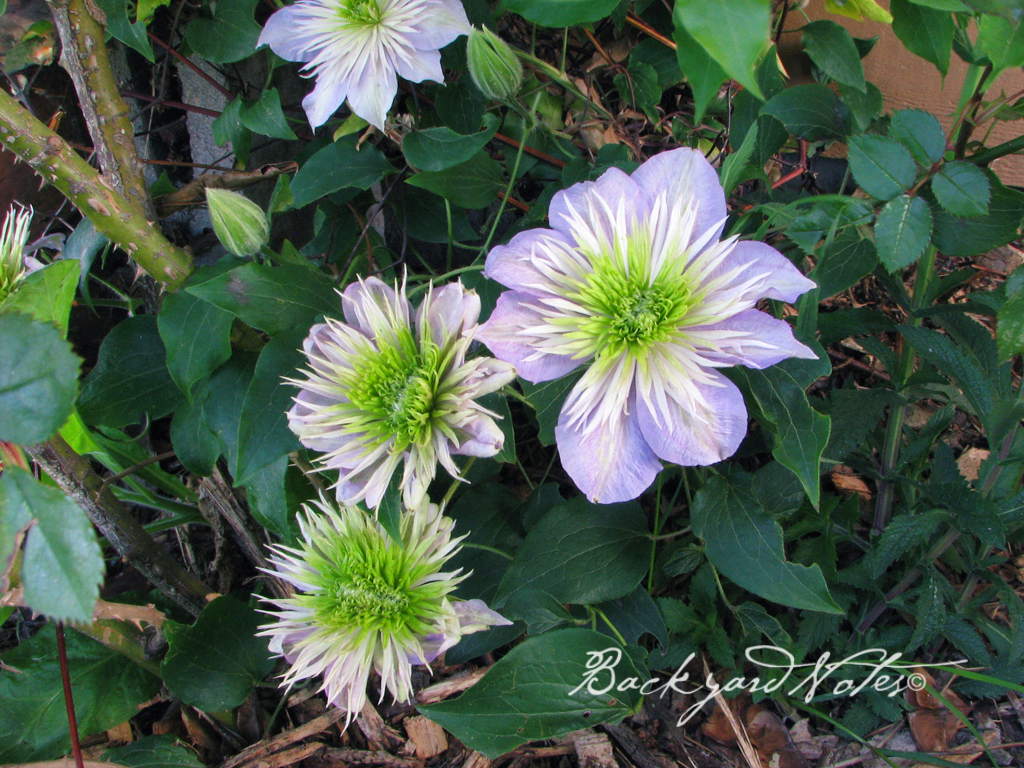
We have several clematis trellised up against the house and this one, ‘Crystal Fountain’, is quite showy. Deb and I each bought one from here in 2005. I kept mine in a pot on the deck until last fall when it went into the ground (much happier and growing like crazy), against the house and behind the miniature climbing rose, The ‘Rocketeer’. This clematis is a rebloomer throughout the summer.
Time now to attend to matters outdoors and take advantage of more fabulous weather–predicted to last the rest of the week!
26 Monday Apr 2010
Posted in Peppers, Tomatoes, Vegetable garden, West Seattle garden
EVERY GARDEN NEEDS SOME SPRING CLEANING and there are no exceptions here. The biggest job looming over me has been the vegetable garden. Pulling out the bolted and blooming brussels sprouts, cabbages and carrots that were part of the fall and winter garden was long overdue. Beets and swiss chard are near to bolting and weeds have sprouted a plenty since the last weeding before our trip in March. The endive and escarole are beautiful and full now and should nearly tide us over until new lettuce is ready. The garlic looks great and the fava bean plants are beautiful and plentiful–we can hardly wait until late May when the first pods will be ready to pick. Vegetable gardening is in the blood, I guess. Grandma T always had a very large one and Grandma Aggie always had something growing in her small side garden, including horseradish, which she dearly loved. My late (first) mother-in-law, Helen was my tutor and mentor for the first vegetable garden I ever planted–a whopping 40ft x 60ft garden planted with canning in mind.
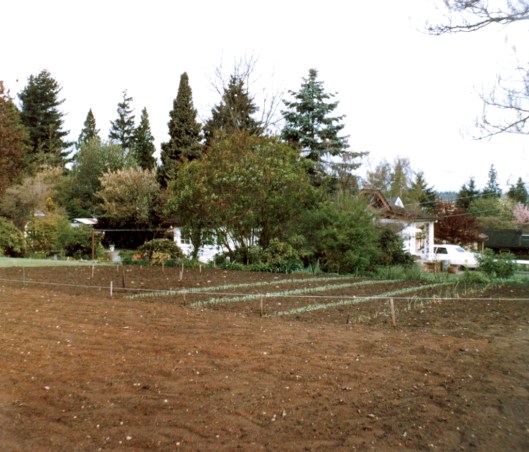
Grandma T’s vegetable garden ready for planting in 1982 was nearly two city lots in size. While I was growing up the upper portion had a Yellow Transparent apple tree, peach tree, raspberries (kept to the end), logan berries, and gooseberries. The peach tree eventually came down, the gooseberries came out because they were ‘buggy’ and finally the logan berries went away. She always planted peas (which we sneaked into and then got yelled at), corn, tomatoes, beats, carrots, onions, etc. My grandfather got a couple of loads of horse manure every year and tilled the garden for her. It is hard to believe that she was still planting a garden of this size at the age of 75! She fed her family from this plot of land for more than fifty years.
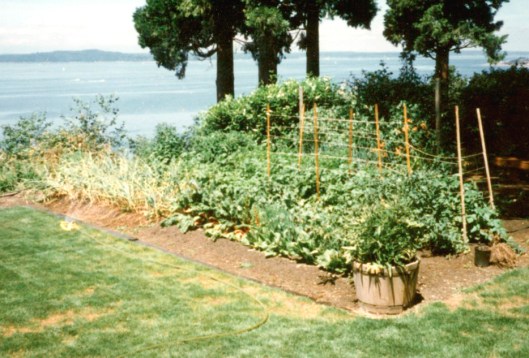
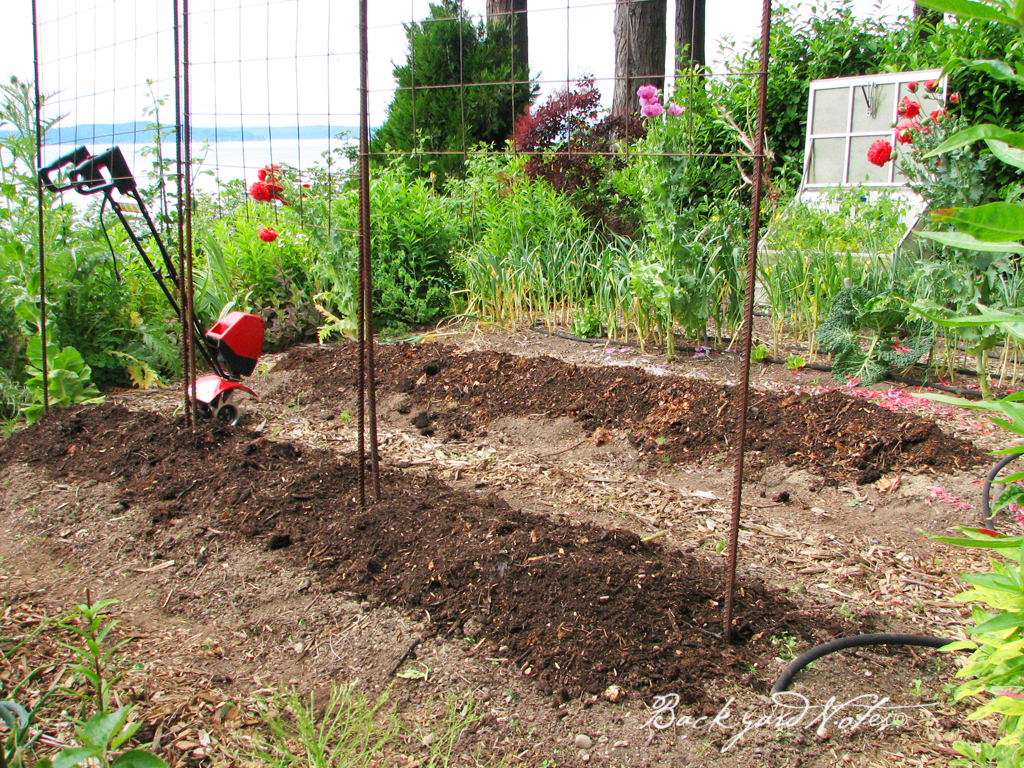
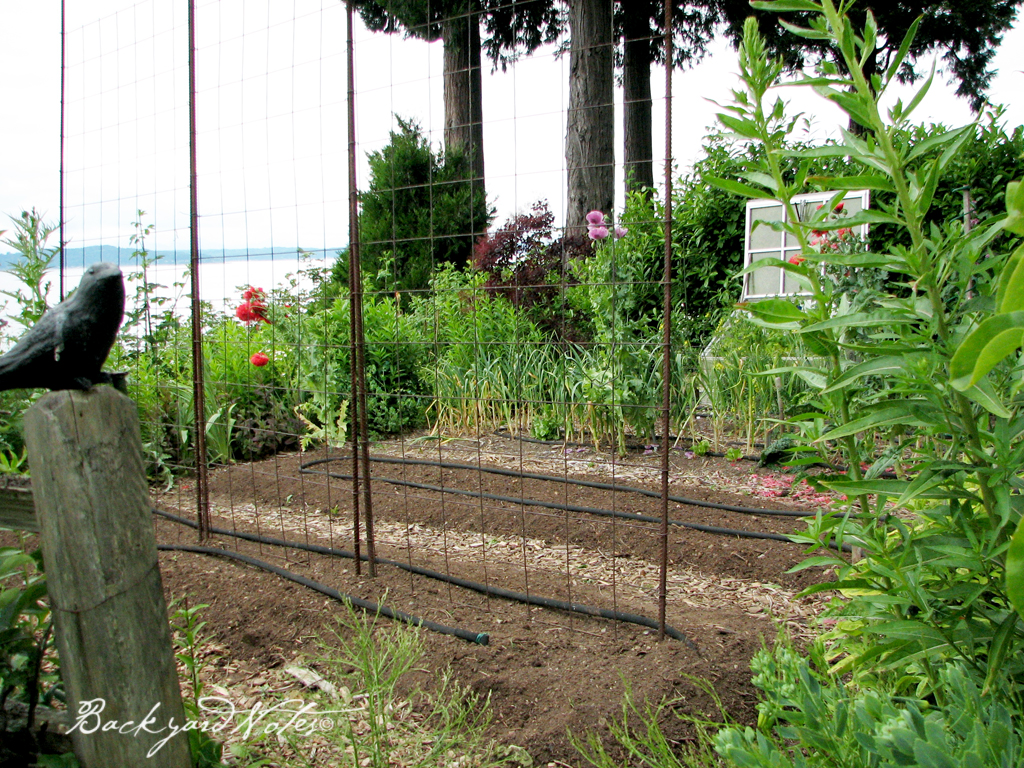
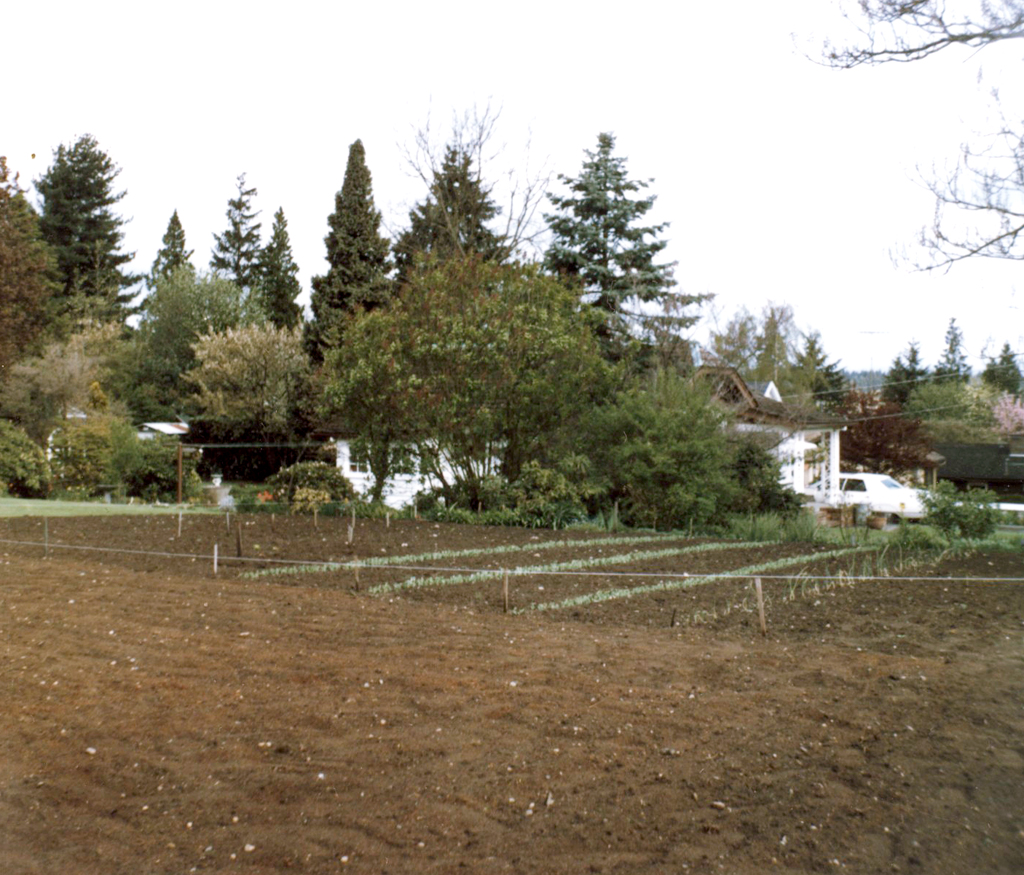
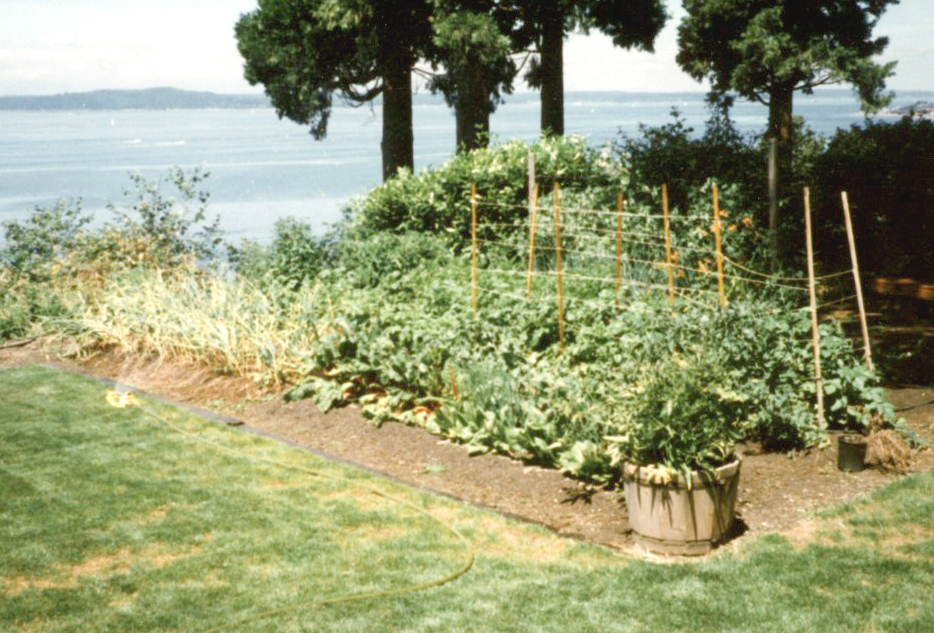
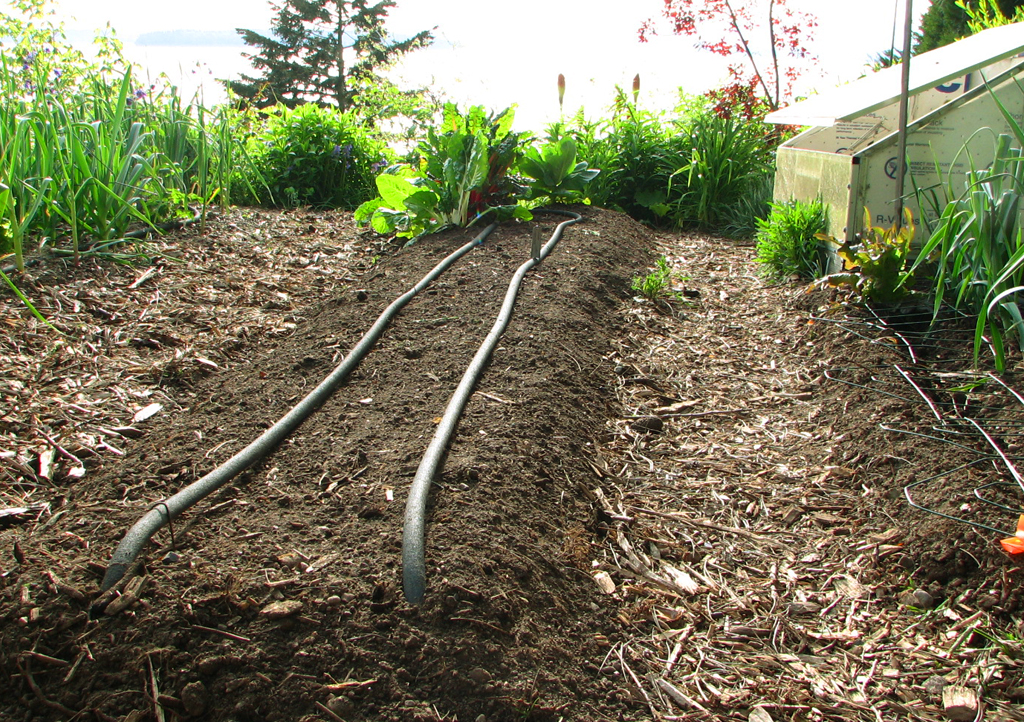
My initial garden here in West Seattle was smallish when first laid out in 1993 and is loosely designed on the principles described in Better Vegetable Gardening: Peter Chan’s Raised Bed System the Chinese Way, first published in 1977 and an excellent book. My vegetable garden has evolved considerably since then. Today’s vegetable garden area is about 25ft x 20ft. There are four 15ft long x 2.5ft wide beds and four 8ft long ones; they are oriented east to west. The one below is ready for planting. I couldn’t bear to pull out the Swiss chard just yet! I add chicken manure, veg fertilizer and compost to each bed before tilling. I no longer turn the soil by hand after a bout of sciatica several years ago. Now the beds are turned with the help of the Mantis, a great little electric tiller just the right size for these beds. All the beds have black rubber soaker/drip hoses and the paths between are covered with wood chips to keep feet clean over the wet winter. The wood chips need replacing about every three years.
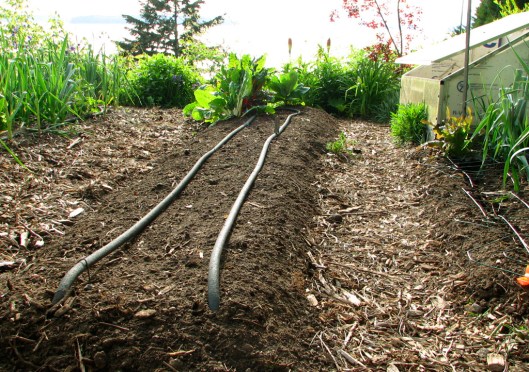
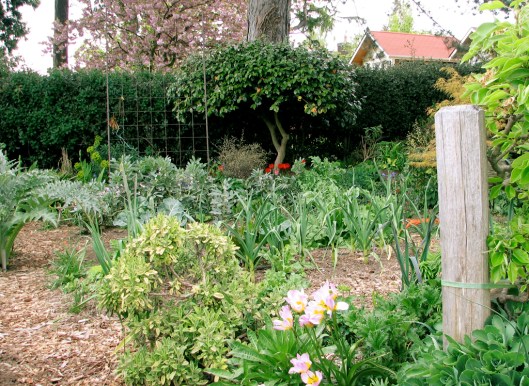
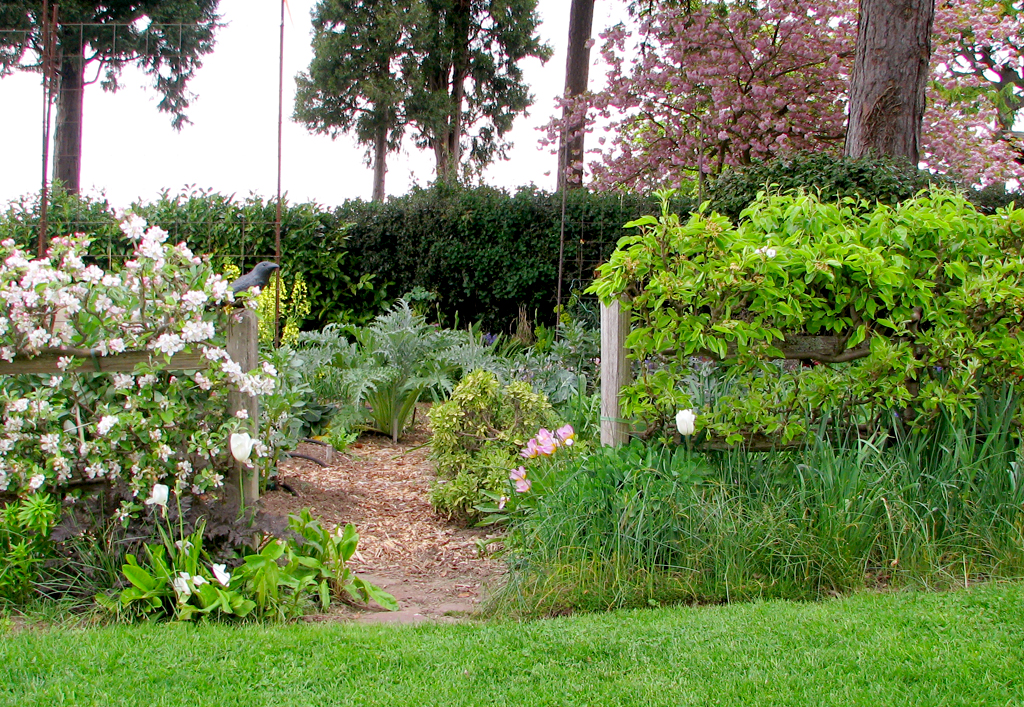
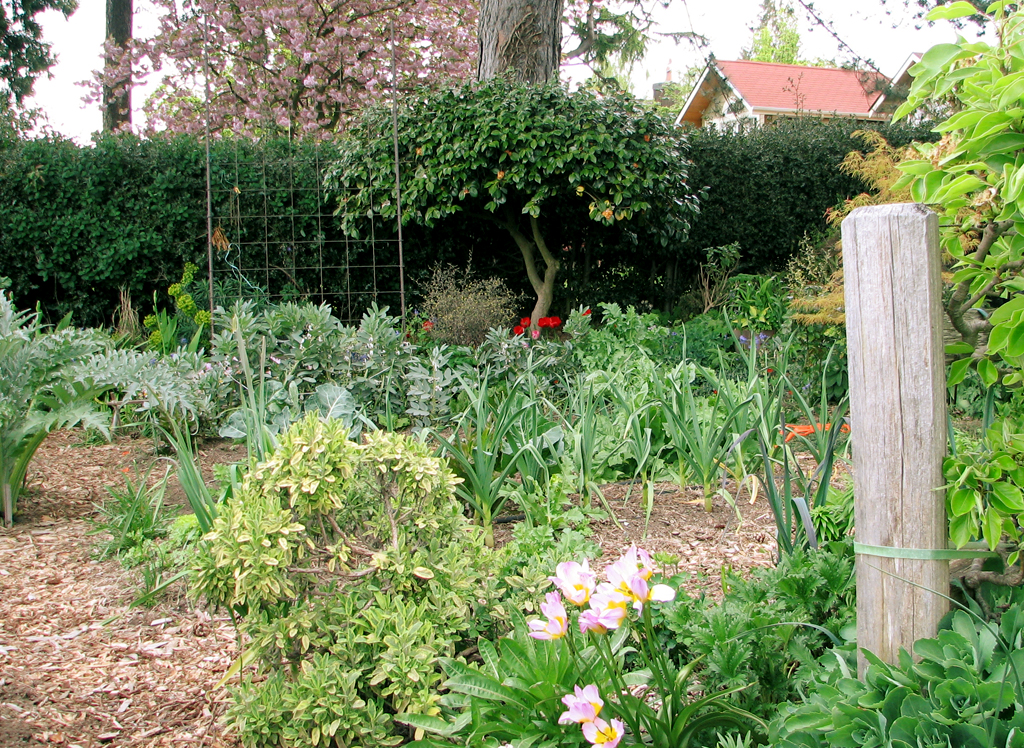
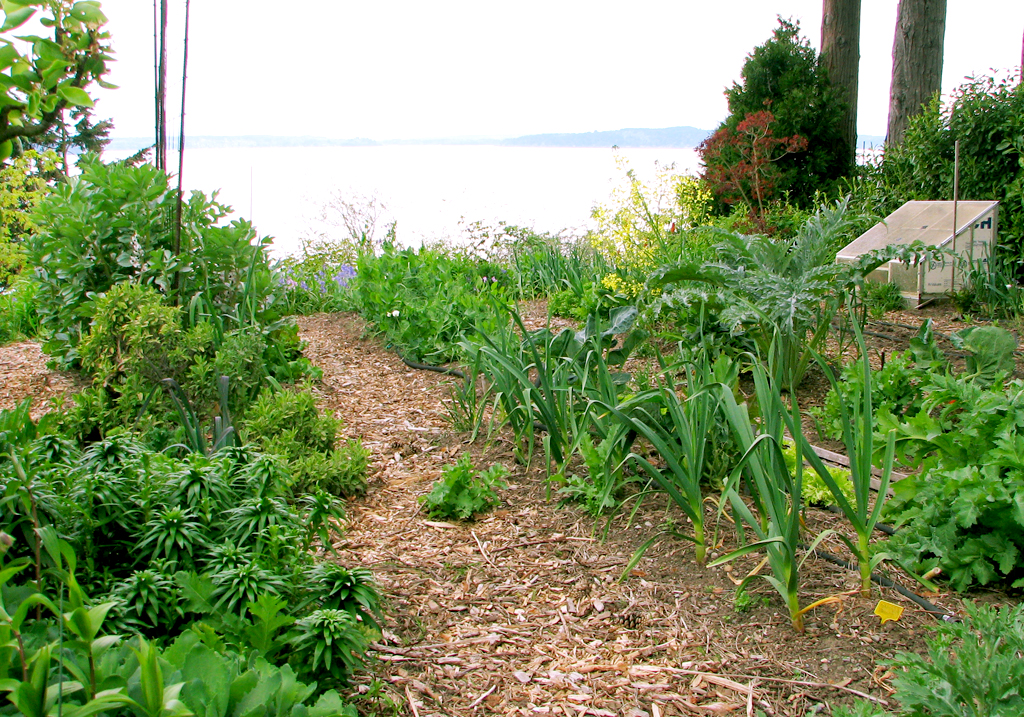
The vegetable garden is on the north edge of the property and bounded on the west by a perennial bed and the house, on the south by espaliered apple and pear trees. To the west is the edge of a slope. As you can see, we having some outstanding overcast weather.
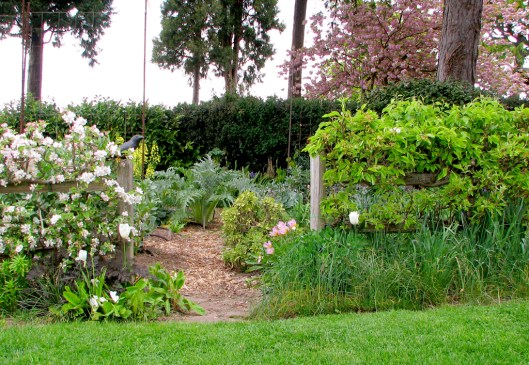
North view
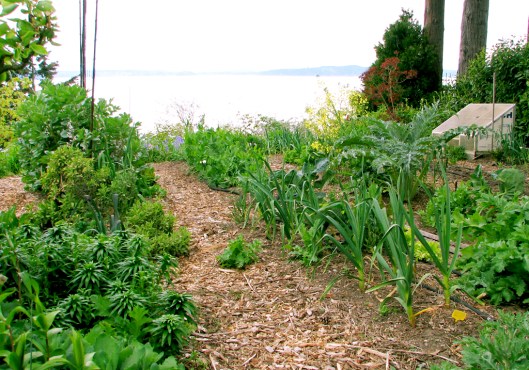
West view
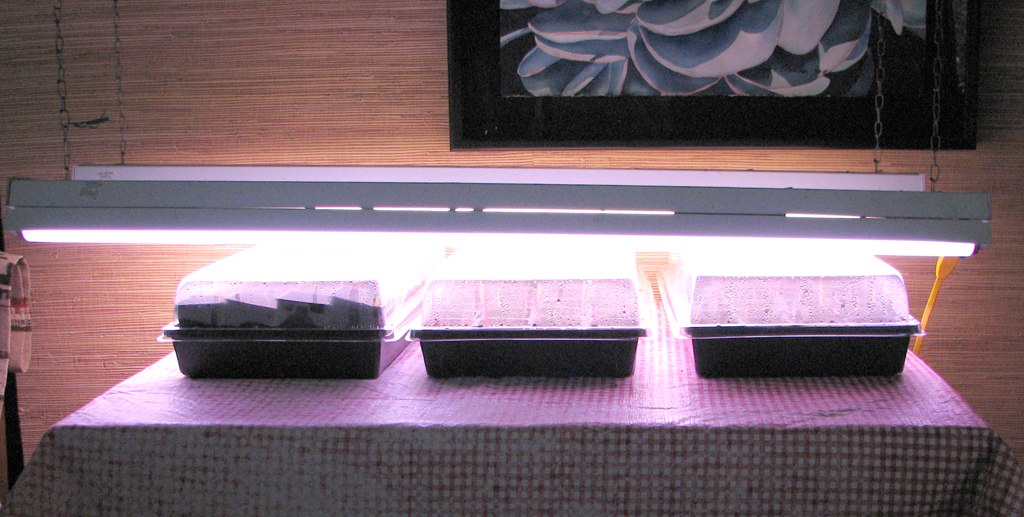
Every year is full of decisions. What worked last year, what’s new to try this year? I always look forward to starting tomatoes and peppers! When the last tomatoes plants are pulled from ground in October (if we are lucky) we have period of mourning–no tomatoes until next August! By February the longing begins and we dream of sweetly ripened tomatoes, warmed by the sun. Each year I like to try one new one and leave the poor performers behind. This year I started my seeds a tad late, on April 10th. I have started them as early as February (too early) and as late as the third week in April (a little late). By the end of May they have been in the cold frame for a couple weeks, hardened off and ready to go into the ground once overnight temperatures are 5o°, which around here is not usually before June. By that time, the favas are ready to harvest and then plants come out and tomatoes go in. Once the tomatoes are in the ground Tom takes over their care and maintenance.
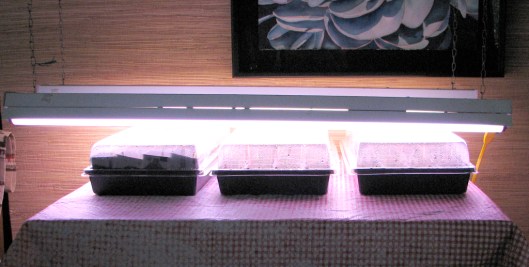
The seed starting setup.
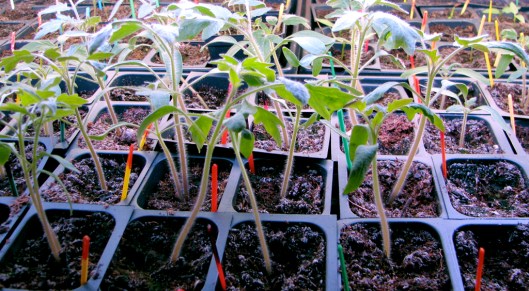
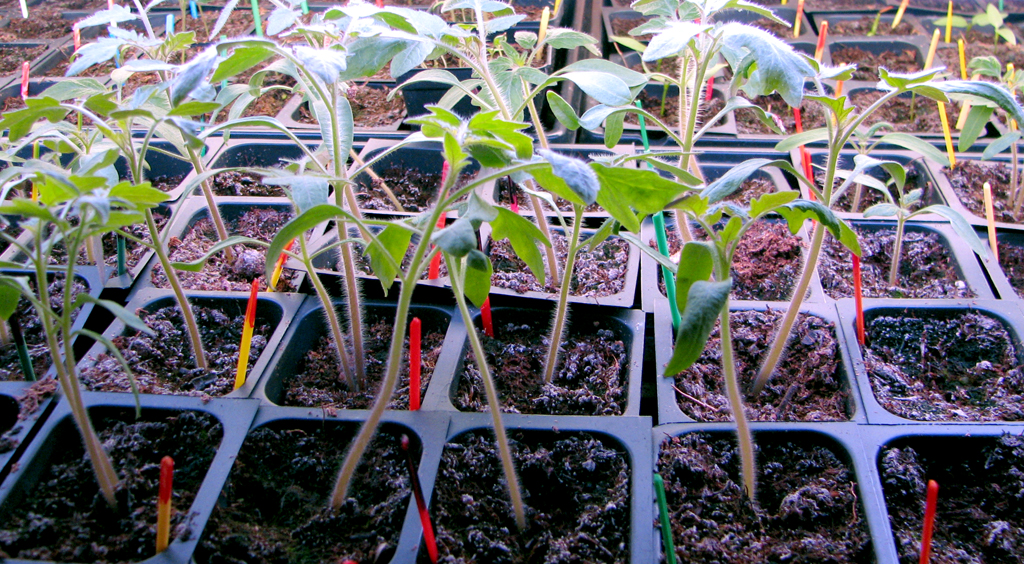
The seedlings after sixteen days.
Tomatoes are quick to germinate, usually within five-seven days; peppers up to two weeks. This year I have started twelve varieties. My favorite producers are an Heirloom German originally from Johnny’s Seeds, Yellow Flame, Aunt Ruby’s Green, and a Roma type from seed that I saved from plants that I purchased in 1995. My newest favorites are Red Pear Piriform (2006), also from Johnny’s and Japanese Black Trifele (2009) from Territorial Seed Company. Also good are cherry tomatoes Black Cherry and Sungold. We have such a short season and the first tomatoes are usually ripe mid-August if we have favorable weather.
Peppers do very well and continue to ripen well into October. Last year’s surprise was a little yellow pepper (chosen by one of my daughters), Yum Yum (Territorial), a prolific producer of sweet, sweet fruits. So many that they were turned into pickled peppers. Another wonderfully sweet, blocky, red pepper is Figaro, originally from Shepherd’s Seeds. I have saved seed since 2006 with good success. Last year the Ancho chile peppers were huge and a bumper crop to boot. I canned them using a recipe from Eugenia Bone‘s wonderful book, Well Preserved for Marinated Peppers. The flavor of these peppers six months later is a knockout!
No time for dreaming, it’s back into the vegetable garden for now.

16 Tuesday Feb 2010
Posted in Vegetable garden, Winter flowers
I PROMISED Renée that I would try to keep a current accounting of what is happening; new year, new ambitions, and new surprises in the garden.
We spent the first eighteen days away from gray, rainy and cool Washington. Ten of those days were spent in Death Valley National Park, California, where the average daily temperature was 65 degrees and evenings cooled to the low 40’s. DVNP was spectacular; we look forward to returning next year to see what we left unexplore.
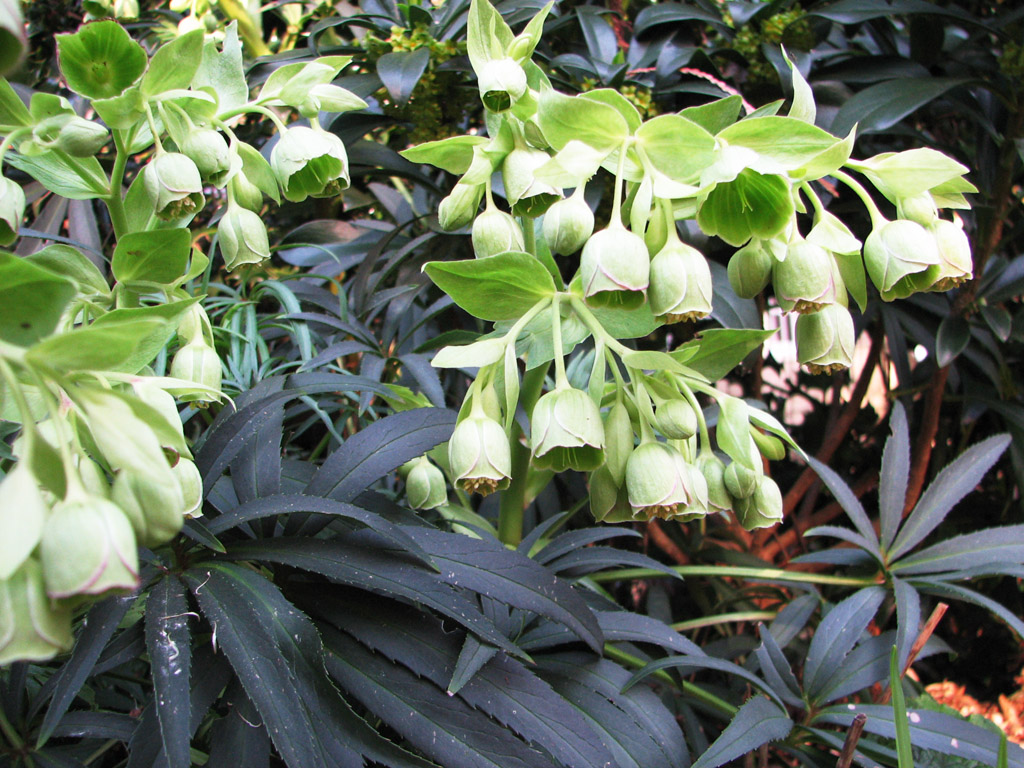
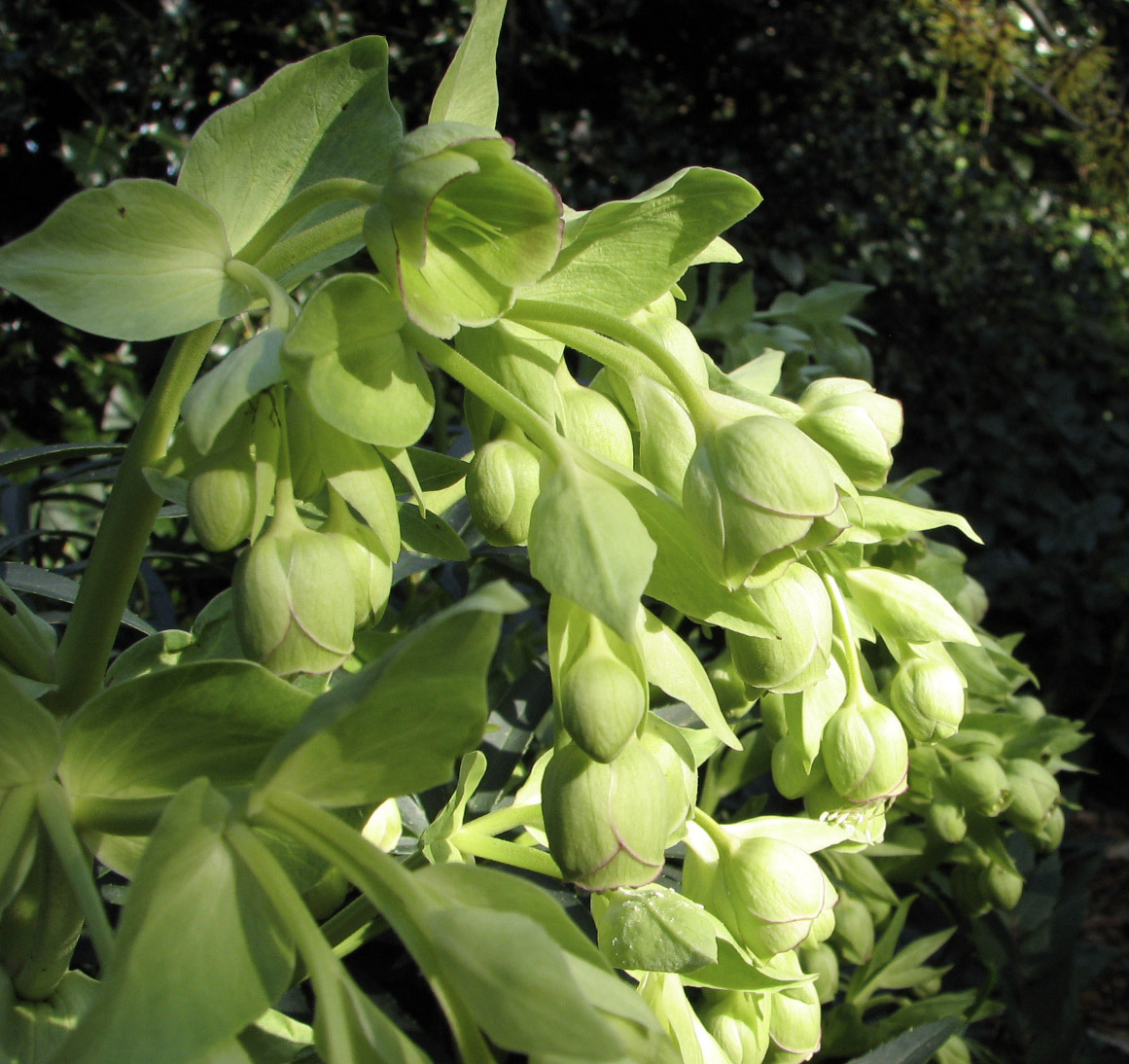
When we returned, many winter bloomers were well into flower. The earliest winter flowering plants in my garden is Helleborus foetidus, the so-called stinking hellebore. It may be a little smelly but I find it lovely in the winter garden. It generally starts to flower in mid-December, has dark green foliage and the light, bright green flowering cymes are bell-shaped and nodding, some having red rimmed ‘petals’. The flowers last several months and they are are prodigious seeders.
The original plants came from Grandma T. and as new plants have sprouted I have moved them to more difficult areas of the garden since they do not seem to fussy about location.
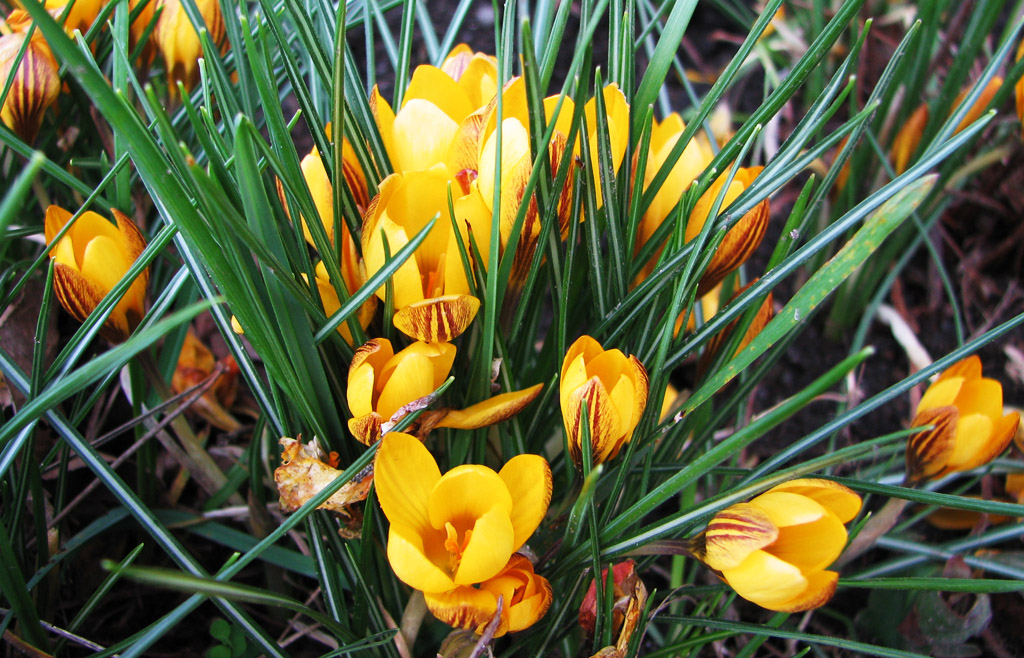
We have had a very mild winter courtesy of El Nino so many plants are up early and flowering ahead of schedule. One bulb that has always showed in early to mid-January is this lovely crocus, the bunch flowering Zwanenburg Bronze, always the first crocus here; a reliable multiplier and very long blooming, into February.
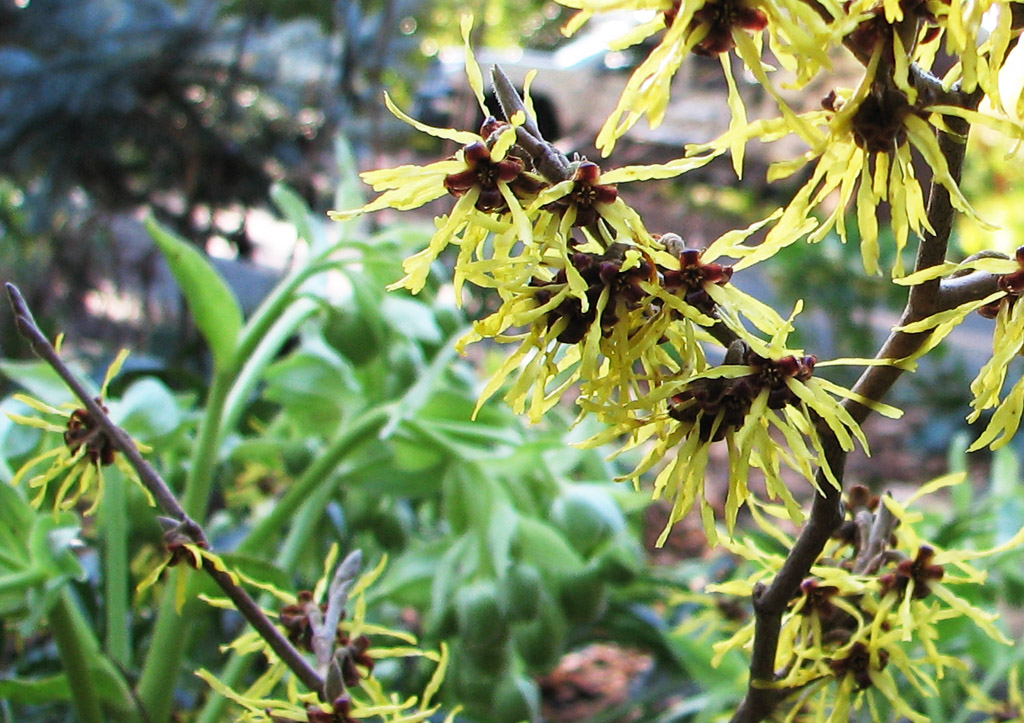
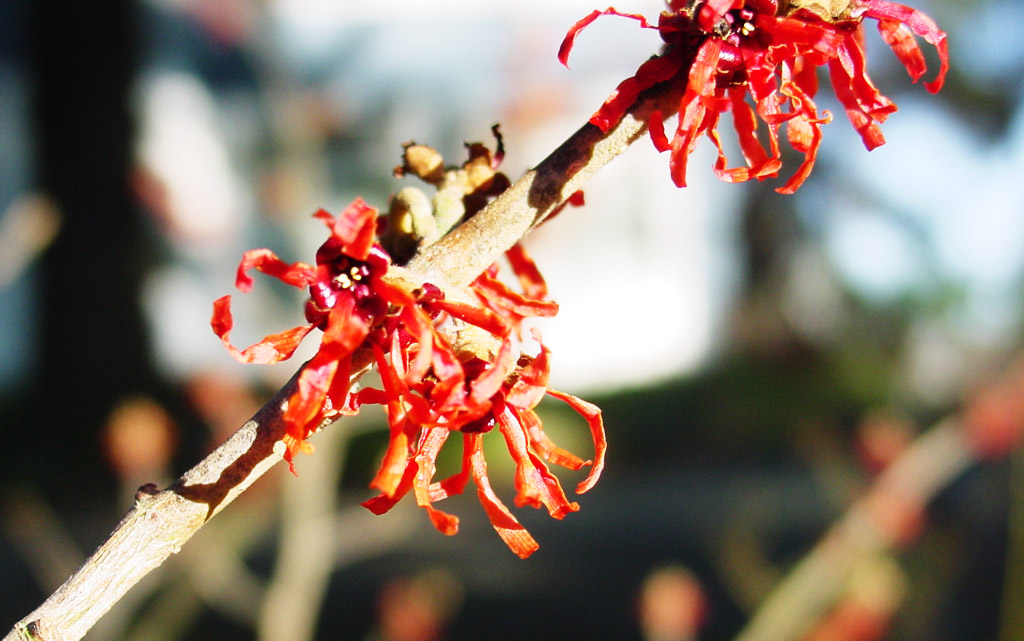
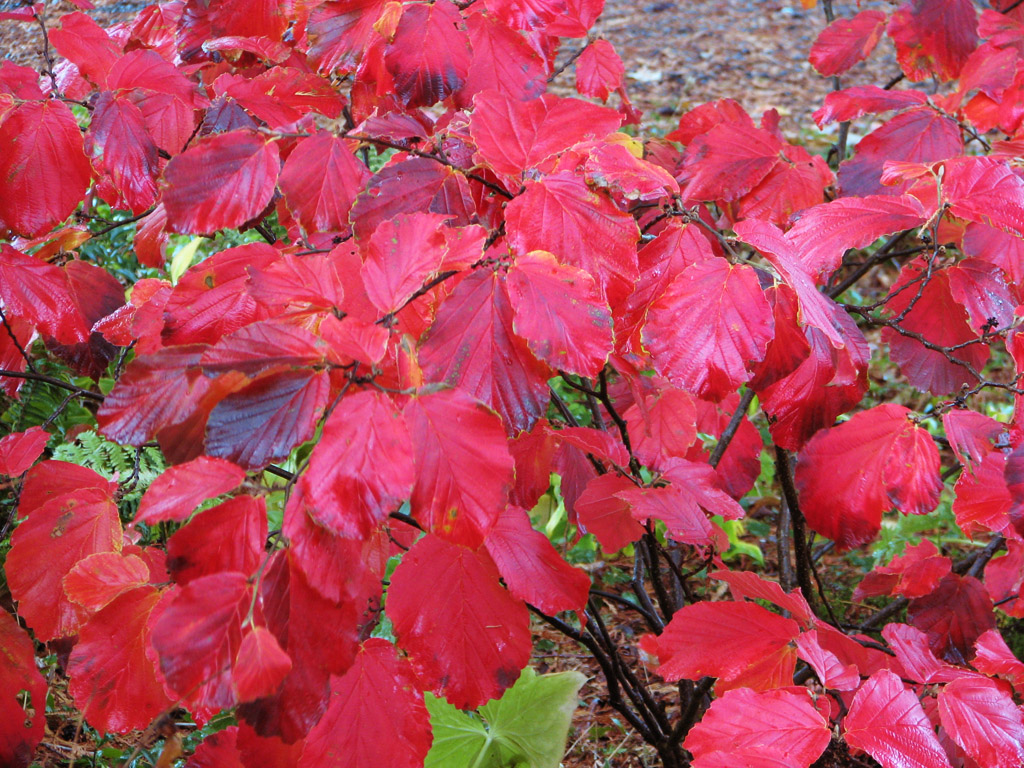
Three years ago we saw this lovely Hamamelis x intermedia (witch hazel) at the Bellevue Botanical Gardens, mid-winter. The petals are wispy and bright yellow; so cheerful in our gray day winters. The variety is Westetede. It has an upright, vase shape to fifteen feet tall and nice fall color. It was not happy in the original planting location, so I found a new home for it and happy days! Another hamamelis that we planted about fifteen years ago is ‘Diane’, a very deep red flower and stunning fall color.
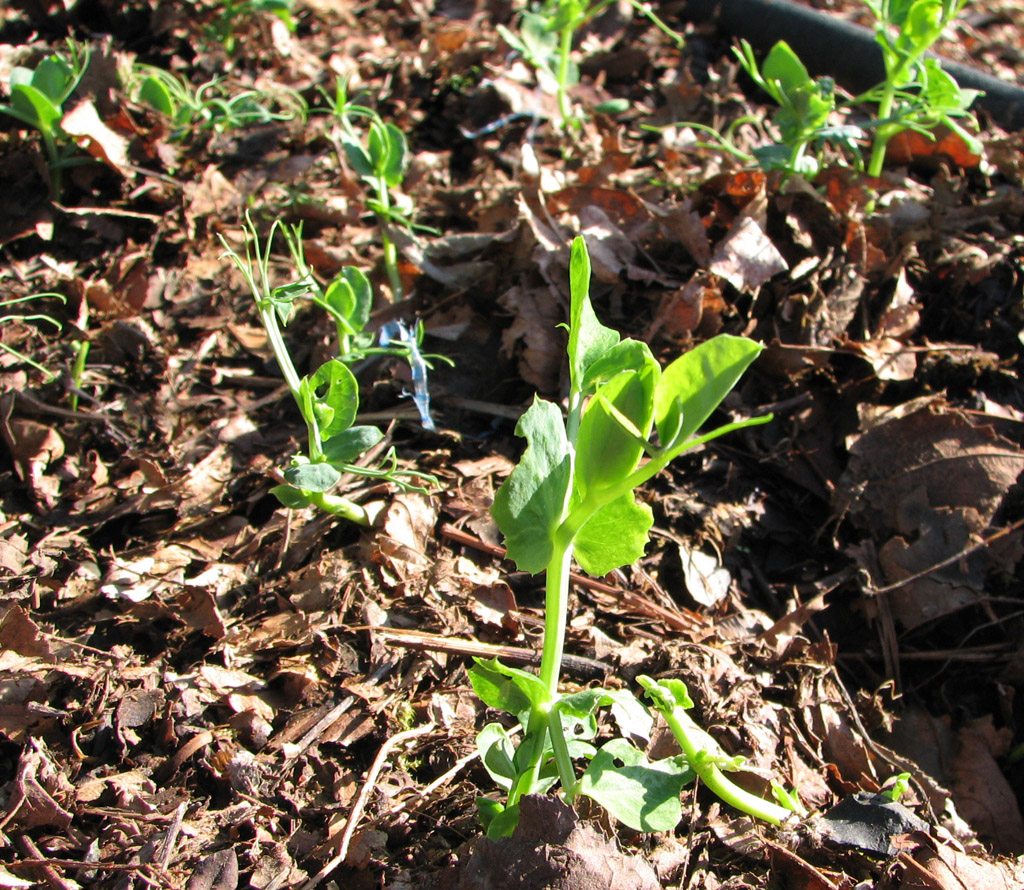
In early December just days before the really cold weather hit, I combined all the pea seed that a friend from art class had given to me and soaked them for a few days and then broadcast them over one entire vegetable bed and covered with shredded fall leaves (February-March is the traditional time to plant them around here). I had close to a pound of seed, many varieties. I figured there was little to lose since all of the seed was in the neighborhood of six to ten years old. By the end of December many had sprouted but had not peeked their little heads out of the leaves. By late January this is what they looked like:
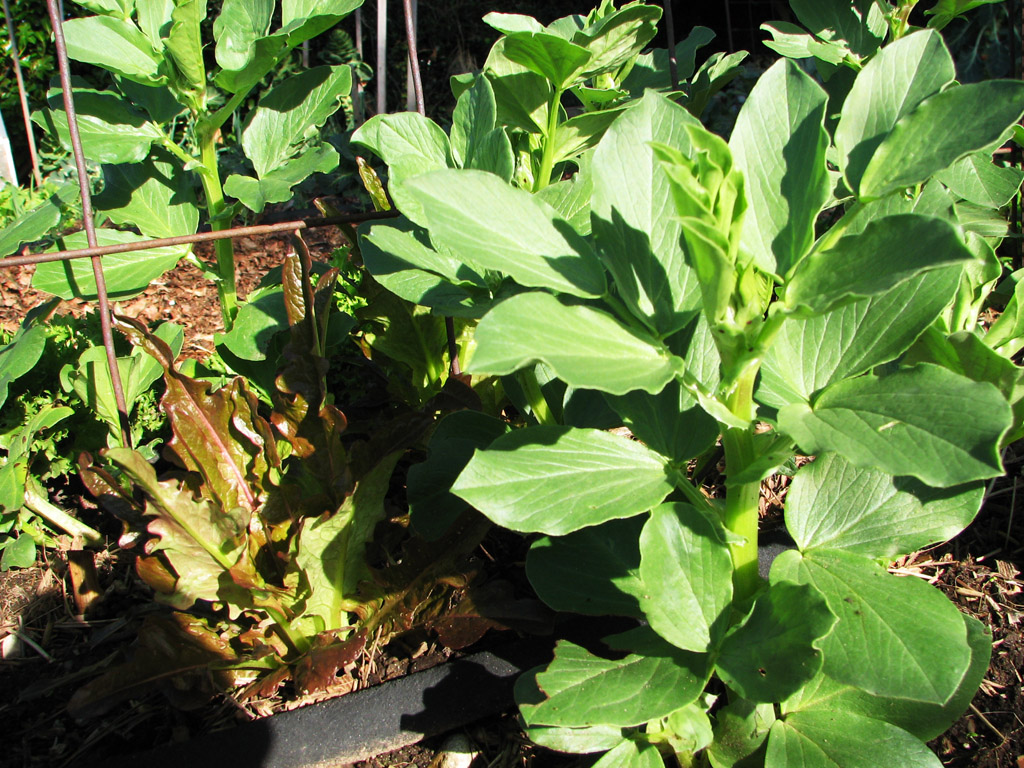
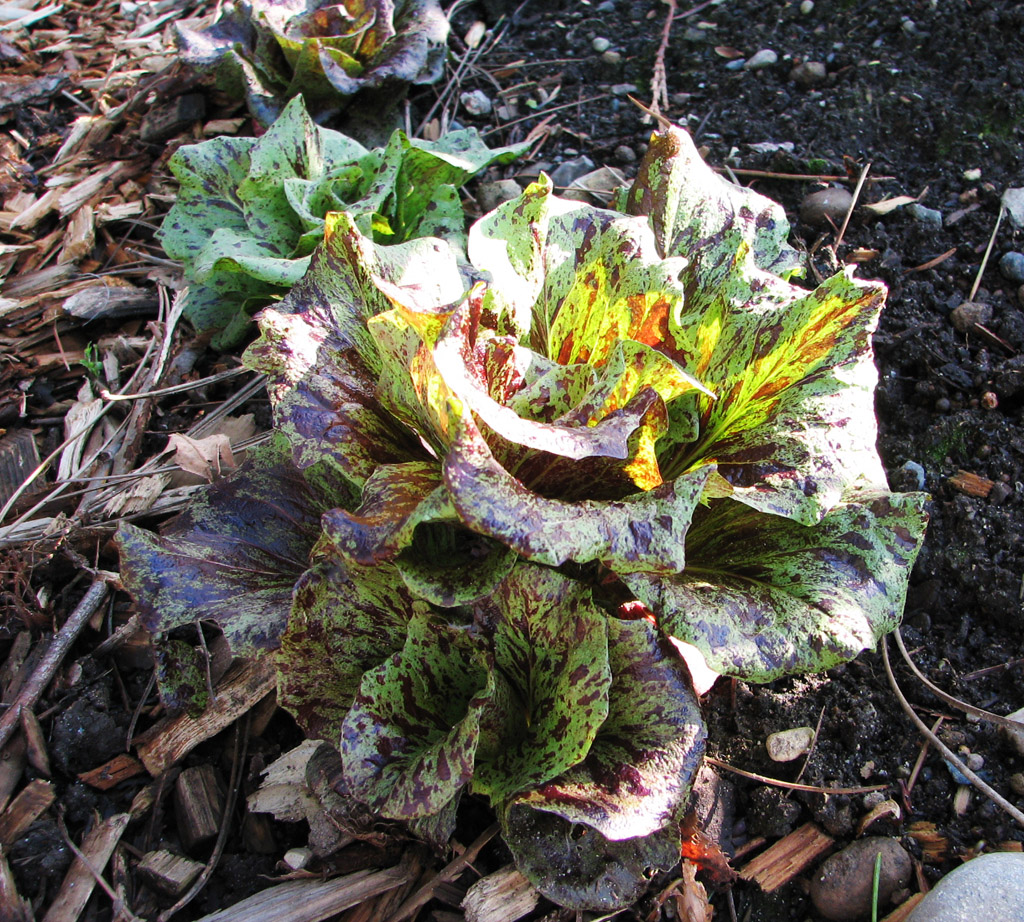
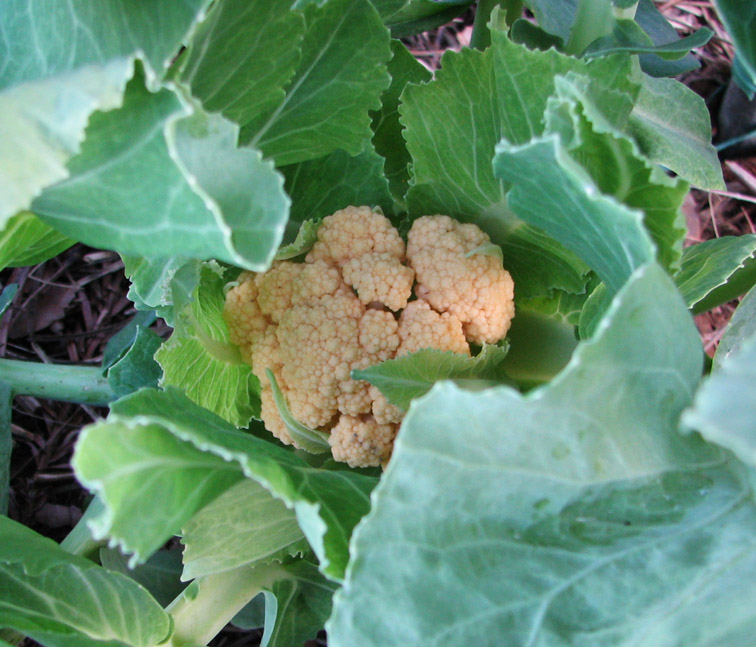
Also in the winter vegetable garden are fava beans that were planted in October and will be ready to havest in early June, some chicory/raddichio which came from seed that I purchased in Rome in 2000 (the seed is still viable); the variety is Castelfranco and the leaves are speckled with red. These plants however are from a few heads that I let go to seed and then sprinkled them around the garden. This is a favorite trick of mine; I like to let a favored lettuce and cilantro go to seed and then sow/throw/broadcast aroun the vegetable garden. The seeds germinate when they feel like it, many in late fall (see the red oak leaf lettuce next to the fava) and then I transplant them into beds for the winter. The seeds that germinate in very early winter provide a head start on spring lettuce. For me, cilantro does best sown in this way. I usually have beets, chard, brussels sprouts, broccoli, sometimes cauliflower like the variety Cheddar, endive, escarole, and lots of other winter greens.
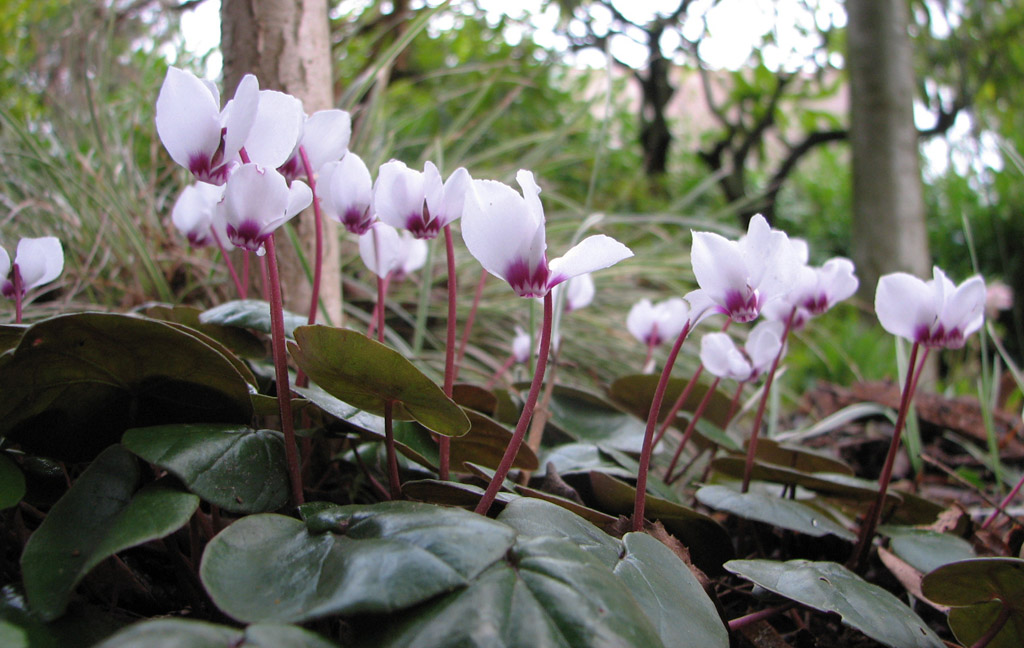
Finally, these dainty little white cyclamen at the base of Viburnum plicata tomentosum ‘Summer Snowflake’. The flowers appear first and then the leaves. The flowers stick around for a good two months.
07 Saturday Nov 2009
Posted in Summer flowers, Vegetable garden
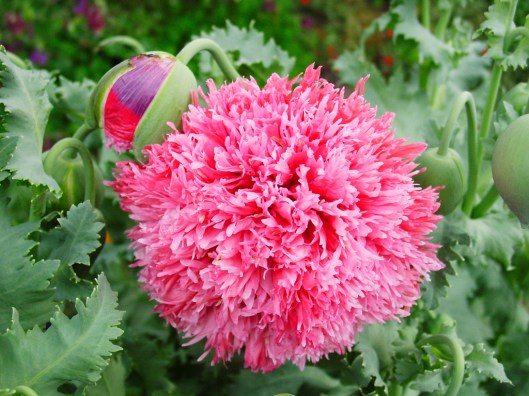
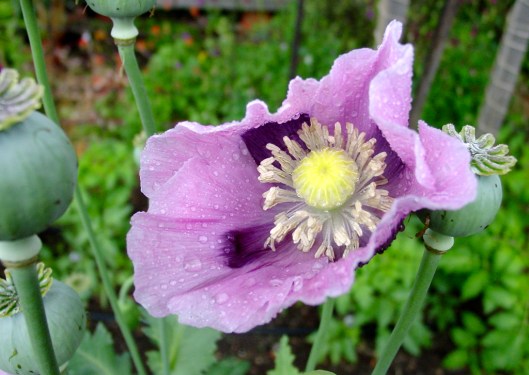
JUNE, SWEET JUNE. Poppies, lilies, columbine and roses are the beauty queens of June and herald the beginnings of summer. One of the perennial seeders is the Lettuce or Peony flowered poppy (papaver somniferum) named no doubt for its’ frilly appearance. This pink one was spotted on the bank of our property about 13 years ago. I managed to get to the seed head and sprinkle the seed around and have been rewarded every year since. They are prolific re-seeders and not always true as evidenced by the pale lavender ones that showed up the following year.


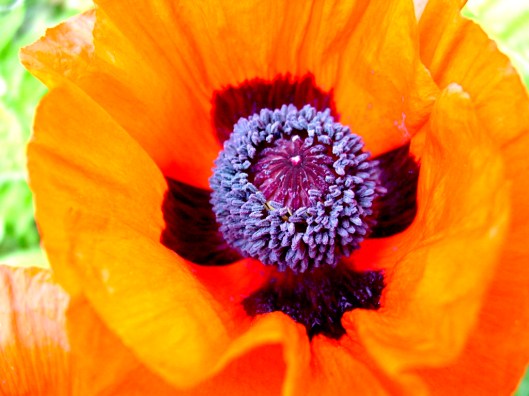
Also in the poppy lineup is the orange perennial Oriental poppy (papaver orientale) that was given to me by a neighbor. This one blooms late in my garden most likely because of a shaded location. Dark green, ferny, hairy leaves and beautiful dark centers contrast sharply with the bright orange petals. After blooming, the leaves die away in July and reappear in late August or early September, so I have tried to inter-plant with geraniums and some carex varieties that will fill in the blank spots.

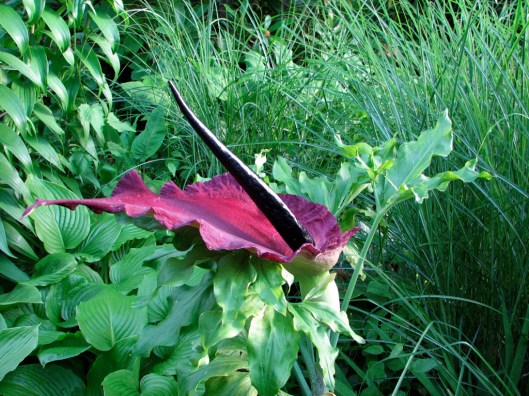
Two other garden spectacles make their appearance in June. The unusual and showy Dracunculus vulgaris has an unpleasant odor and goes completely dormant after flowering leaving no trace of leaf or stem. This plant came from Grandma T’s garden and produces new tuberous offsets for propagation.

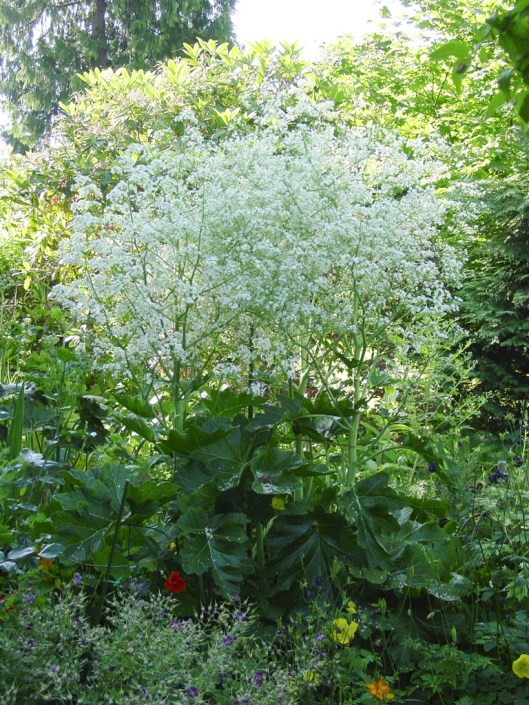
Crambe cordifolia with its tiny white flowers held aloft on tall stalks are like a June snow shower. They float above big, bold, dark green leaves. The flowers have a light, sweet fragrance and overall the plant looks like giant Baby’s Breath.

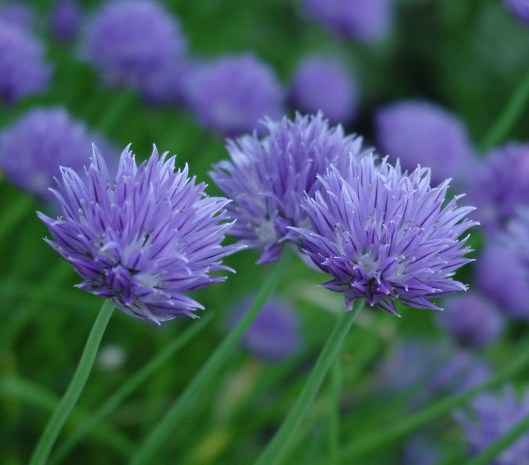
Lovely to look at and tasty too, are chives. One of the few color notes in the herb garden.

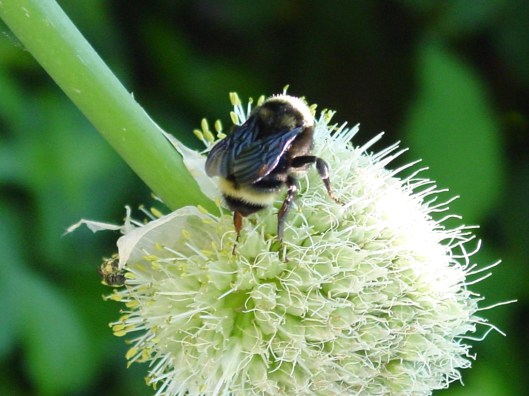
Another member of the perennial onion family is Allium fistulosum or bunching onion. Beautiful white flowers that all bees and bee-like flies can’t seem to resist. A great plant to have at the perimeter of the vegetable garden to promote pollination.

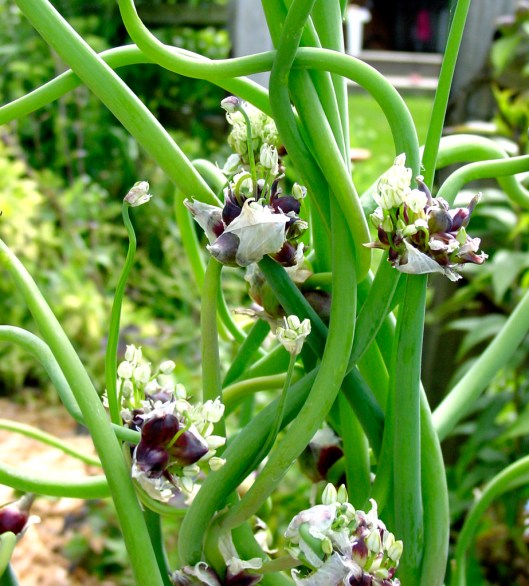
And finally, a more unusual member of the family is the Egyptian or Walking onion that is a top-setting onion. As the topsets grow, the stalks bend to the ground where the bulblets take root.

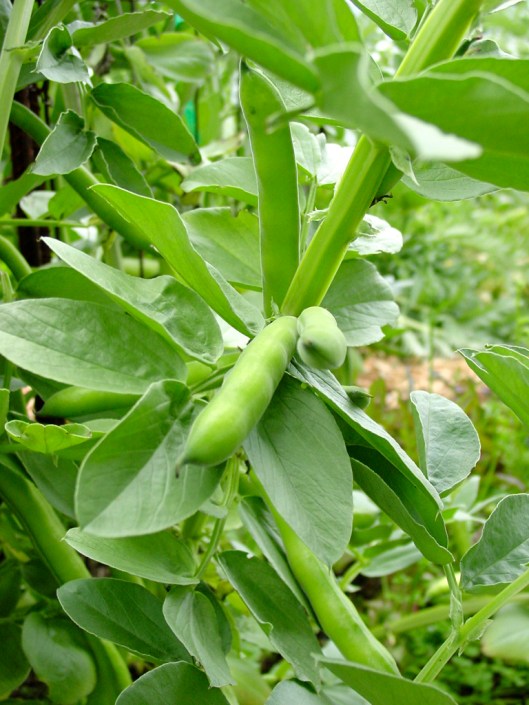
One of most anticipated crops in June are Fava beans. Favas go into the ground here in mid-to-late October for spring harvest and poke their heads out a couple weeks later if the weather remains relatively mild. They continue to grow over the winter and begin flowering in early spring. I plant them for two reasons: they help to replenish the soil by fixing nitrogen in the soil where tomatoes have grown and are a delicious spring vegetable when shelled and lightly dressed with olive oil, lemon and a shaving of pecorino romano cheese. The quintessential taste of spring. (No apologies to peas.) Puréed with a little garlic, salt, and lemon juice favas make a savory spread for toasted bread.


And that wraps up everything good about June.
Musings from the back roads
Celebrating the Harvest
All things botanical in photos and words—in my West Seattle garden and elsewhere; seeing and creating art and assorted musings.
WordPress.com is the best place for your personal blog or business site.