WHEW! I HAVE A LOT OF CATCHING UP TO DO. Since the Whidbey Island Garden Tour on the 25th of June, I have worked in the garden, pickled and canned cauliflower, taken a trip to the Long Beach peninsula for the Fourth of July, camped along the Oregon coast, and attended a niece’s wedding in Troutdale, Oregon on Saturday the 10th. No time for backyard notating.
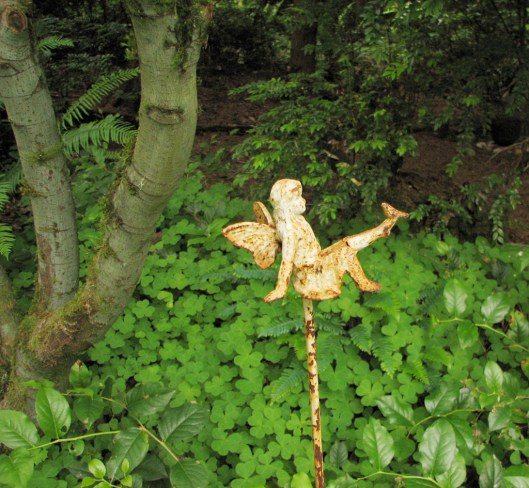
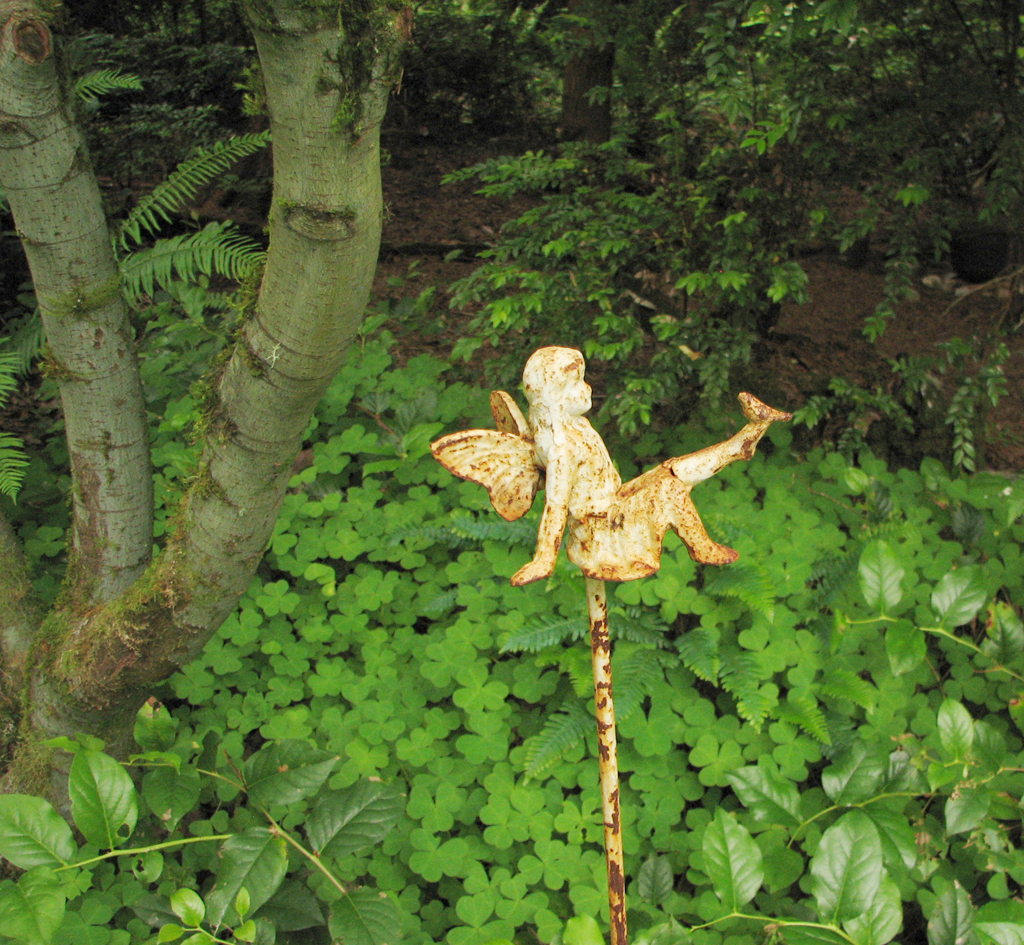
THE PREVIEW TOUR OF FIVE WHIDBEY ISLAND GARDENS was delightful, informing and widely varied in siting, design, concept, and purpose. The weather was mild and overcast, not too bad for photos. Two of the gardens were decidedly devoted to vegetable and fruit gardening; one was quite formal with a sweeping view to the west and Port Townsend; one was highly landscaped with beautiful specimen trees and ponds and a small home available for events and getaways; and one took advantage of our northwest climate and towering evergreens, ferns, mosses, and other natives, creating a green retreat complete with fairy garden. Pre-tour, Betty and I went to The Chocolate Flower Farm nursery so I could purchase lobelia tupa and Abutilon ‘Red Tiger’. What I came away with additionally were two ‘Karma Choc’ dahlias and three ‘Kissed by Chocolate’ delphiniums that were developed by nursery owner Marie Lincoln (see the website); the pale whitish petals are blushed with strokes of chocolate brown. Quite striking.
All of the gardens were quite large covering two or more acres. A lot of ground to cover and maintain compared to my city patch! I found the gardens that combined vegetable gardening with ornamentals the most interesting to me.
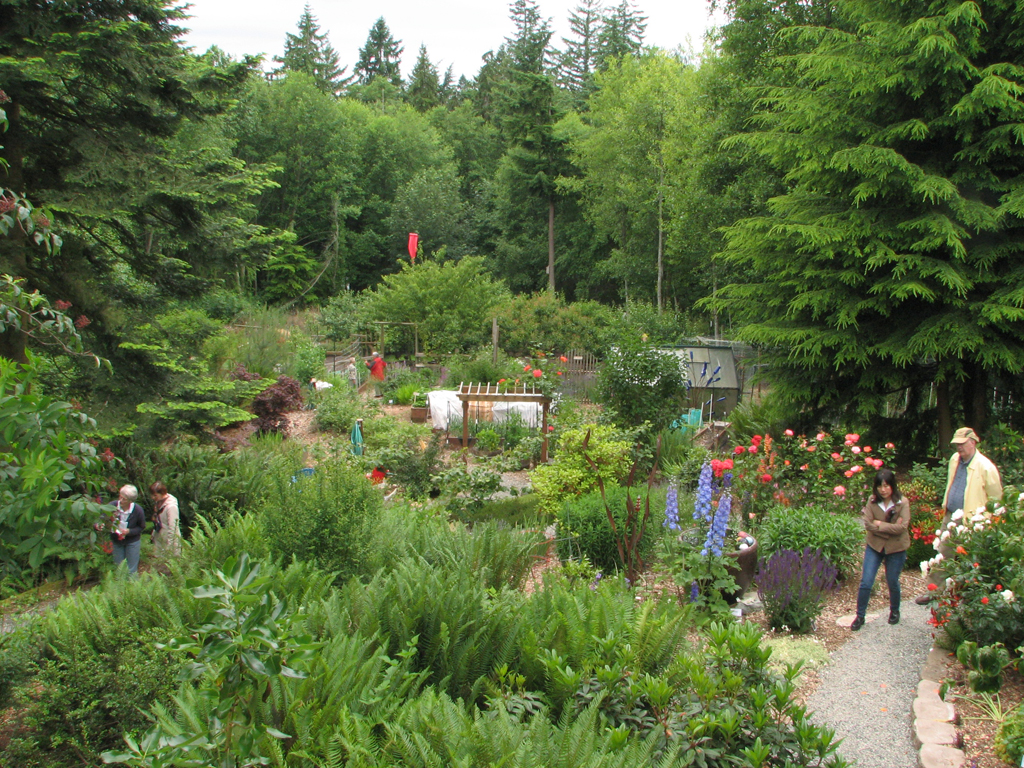
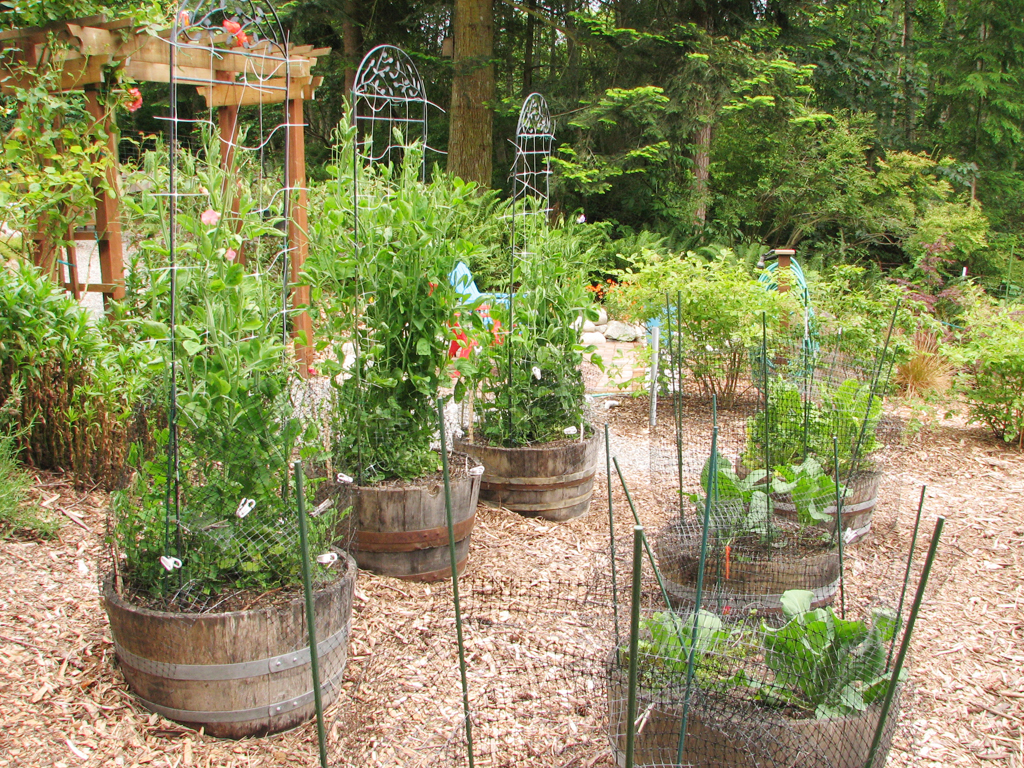
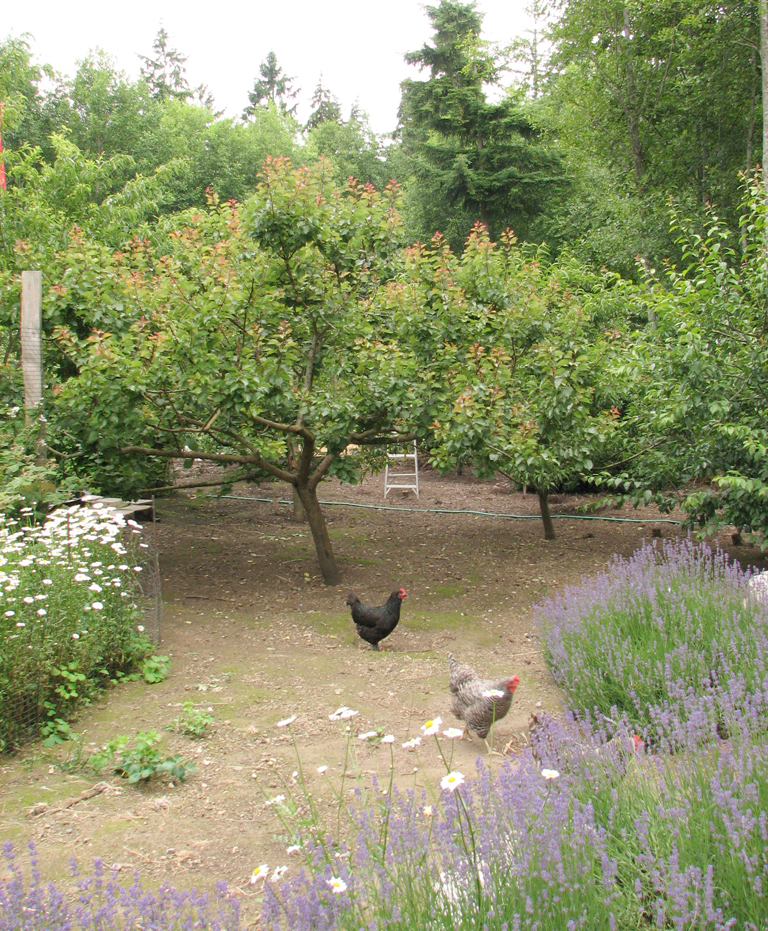
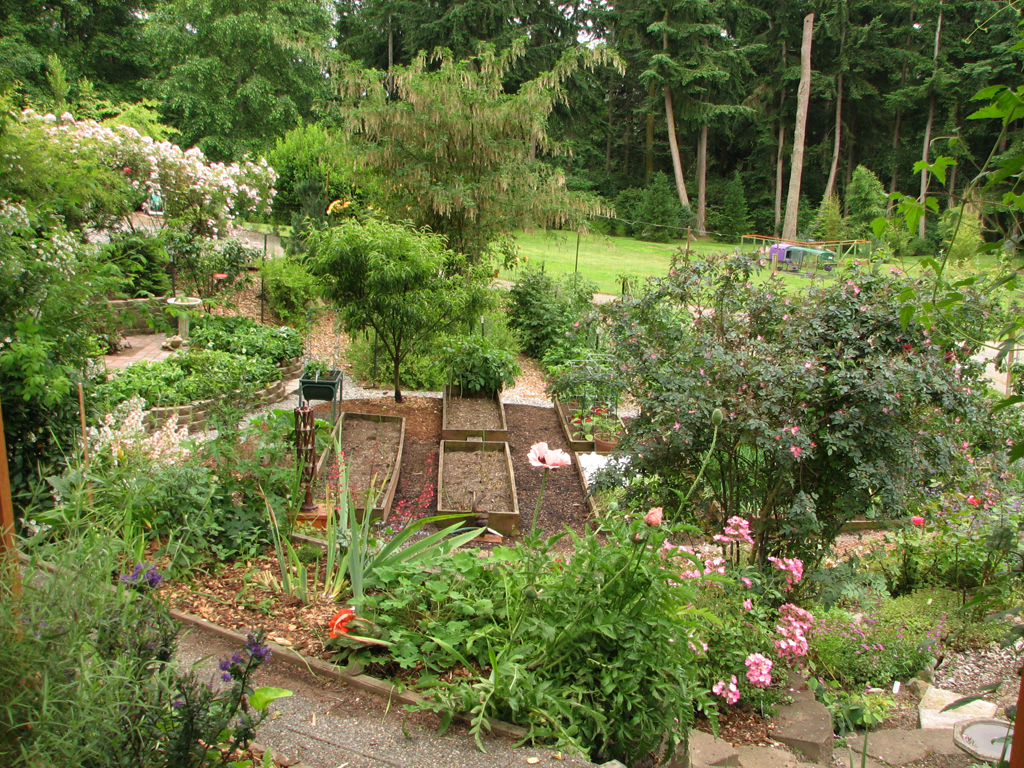
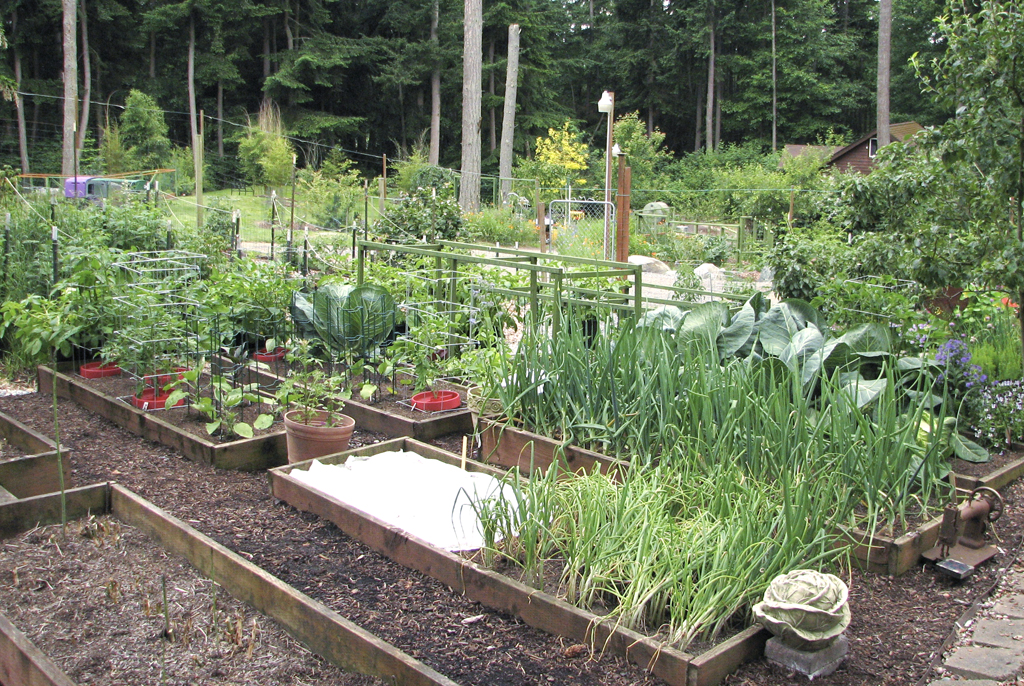
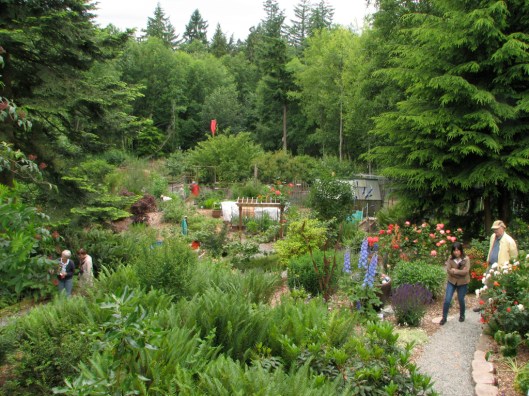 THIS GARDEN was called the Gathering Place. The garden is mainly about growing fruit and vegetables. Ornamental plants lead the way down a gentle slope to the extensive vegetable garden, complete with orchard and chickens. This garden was completely fenced to keep the deer out.
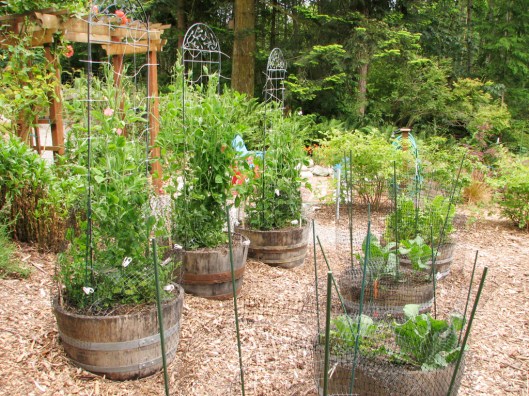
A novel way to grow peas.
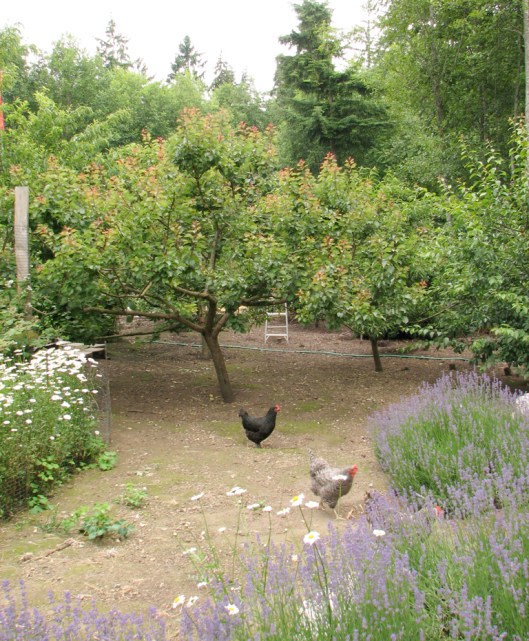
The orchard is separately fenced and doubles as a chicken yard.
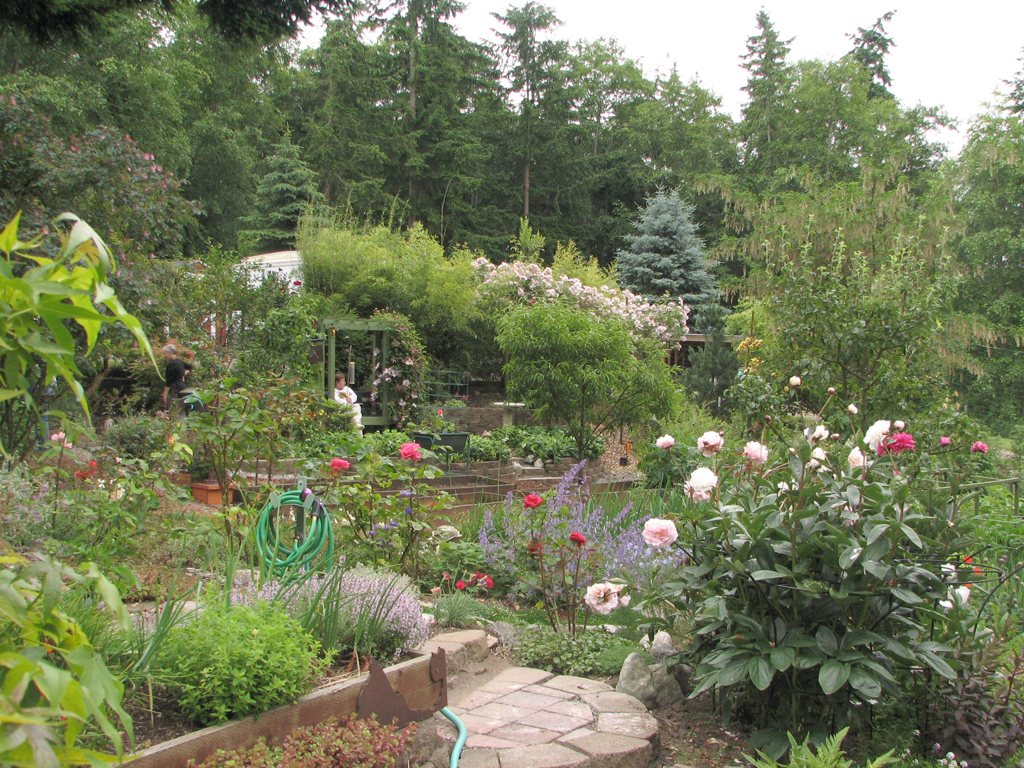
THE LEWIS & BECKMAN GARDEN was also on a slope, bowl shaped, terraced and mainly devoted to growing food. Ornamental shrubs and perennials were nicely integrated. This was the most amazing garden space; it had good design, variety of plant material and took full advantage of its site. And, it was very large.
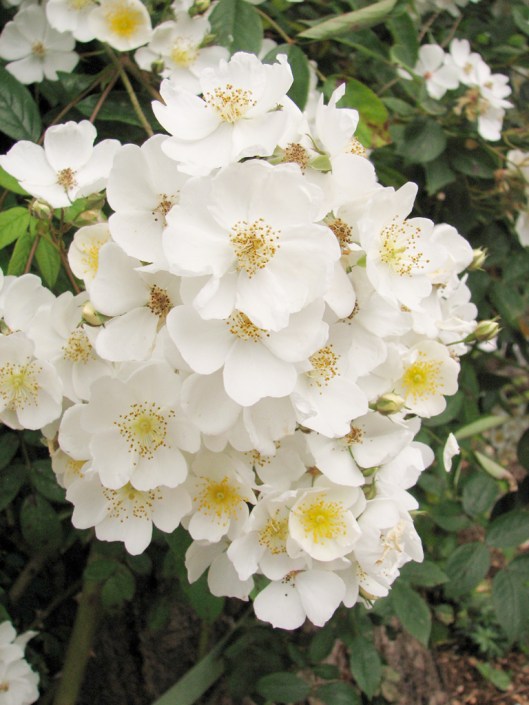
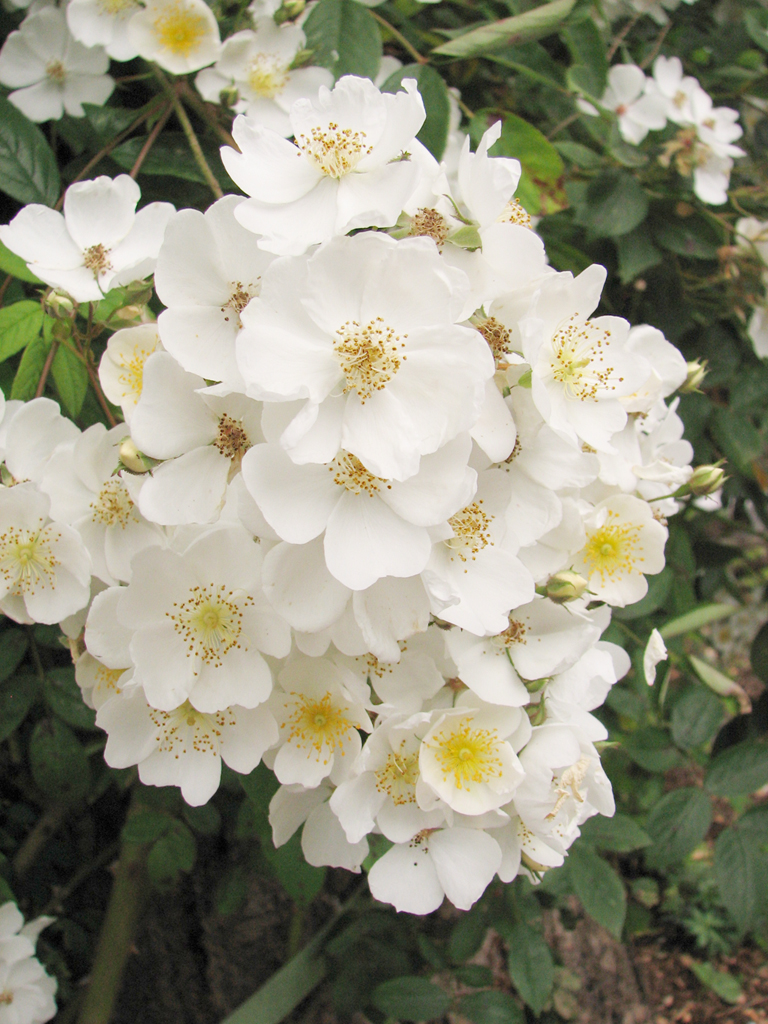
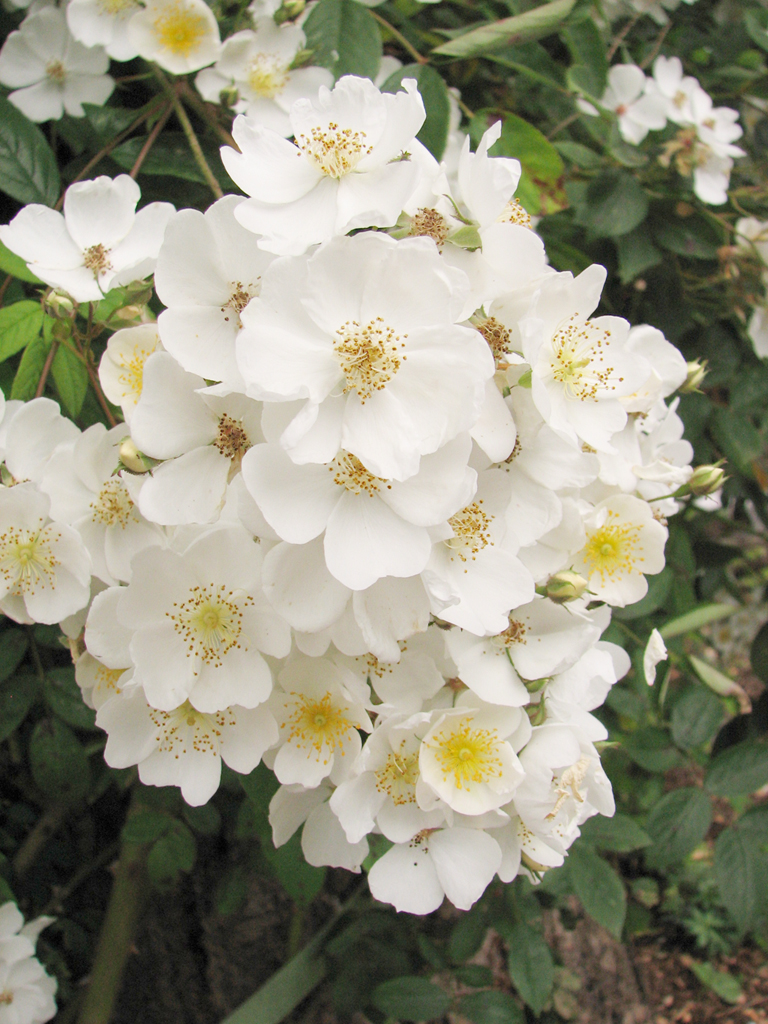
The rose above was a stunning climber that rose fifteen or twenty feet up a fir and was laden with slightly sweet, floral and citrus scented blooms; the fragrance was thoroughly intoxicating. I could have sat beneath is for quite a while. Now, I have to find out what it was, even though I don’t have room for such a large climber like this one.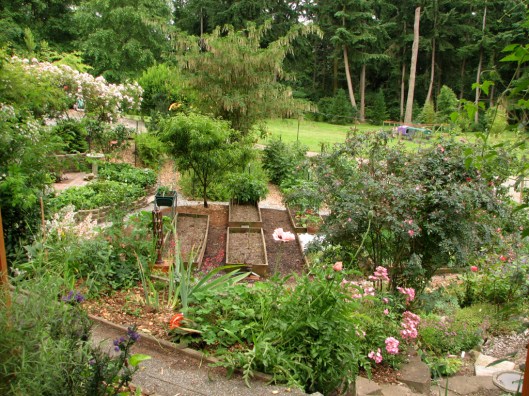
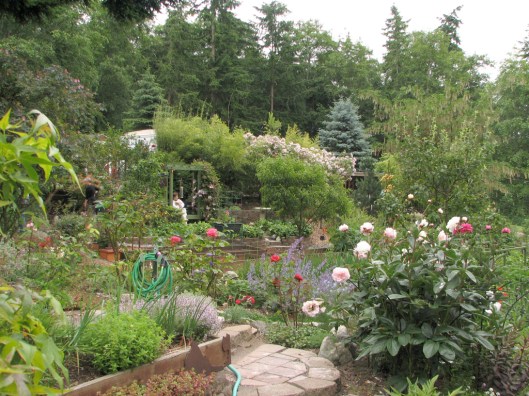
Two views that I hope convey the size of the garden. There were so many views here.
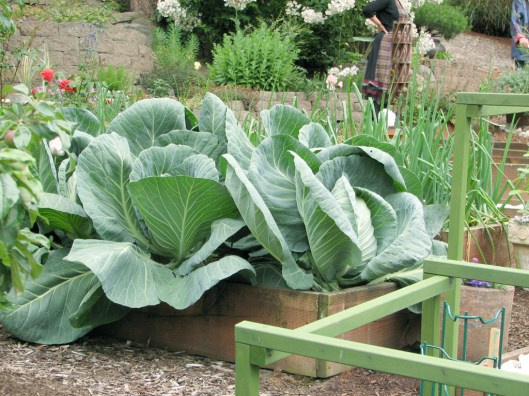
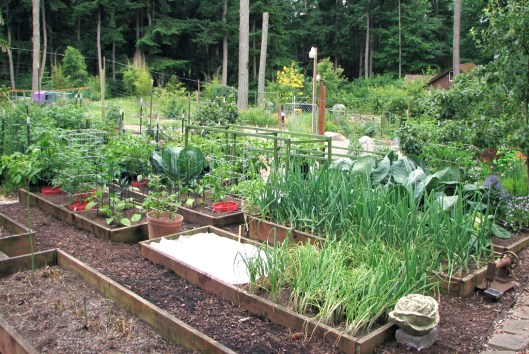
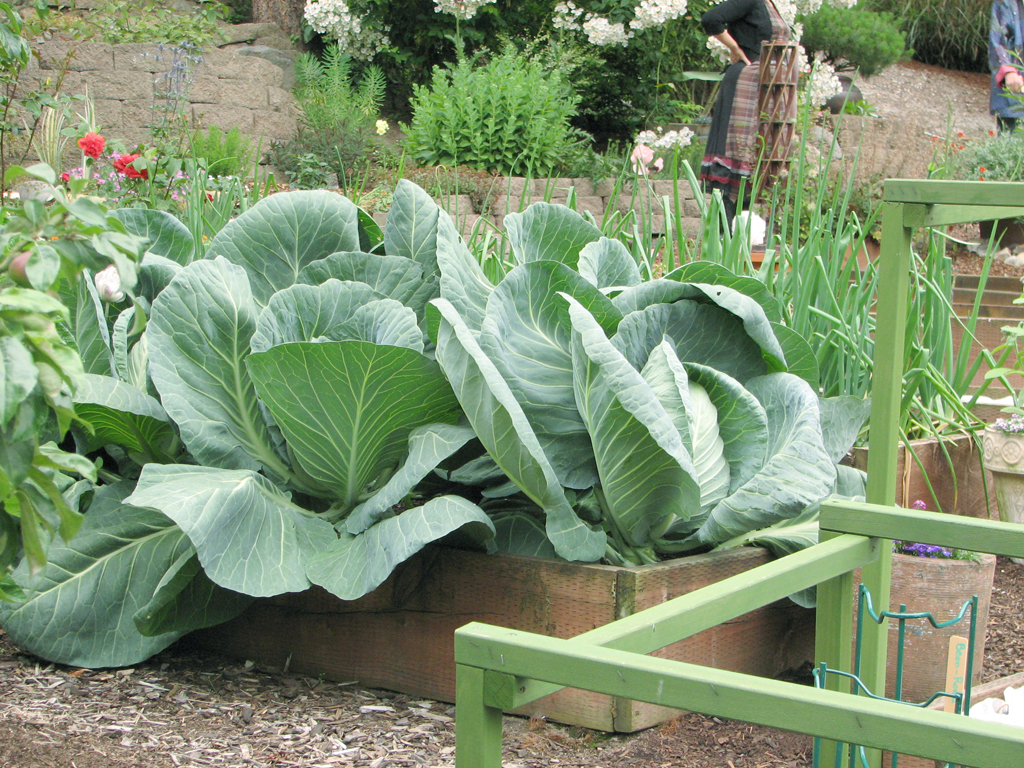
Some really amazing vegetables and so early; makes my efforts look weak by comparison!
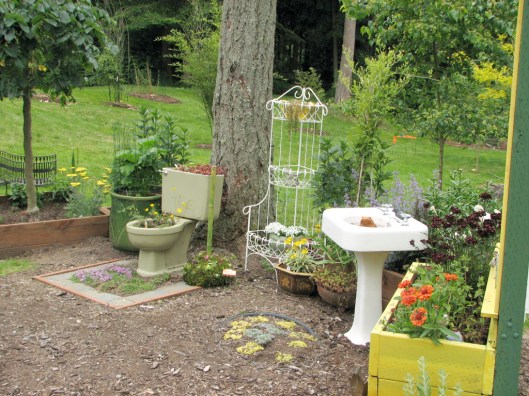
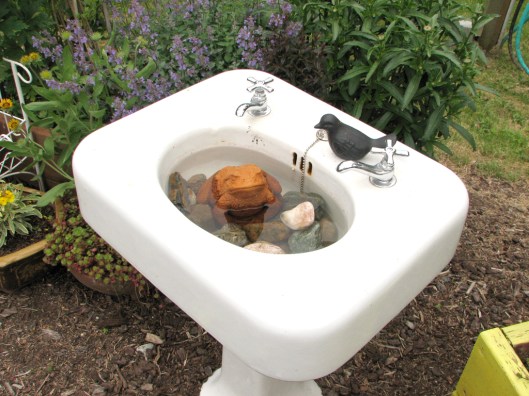
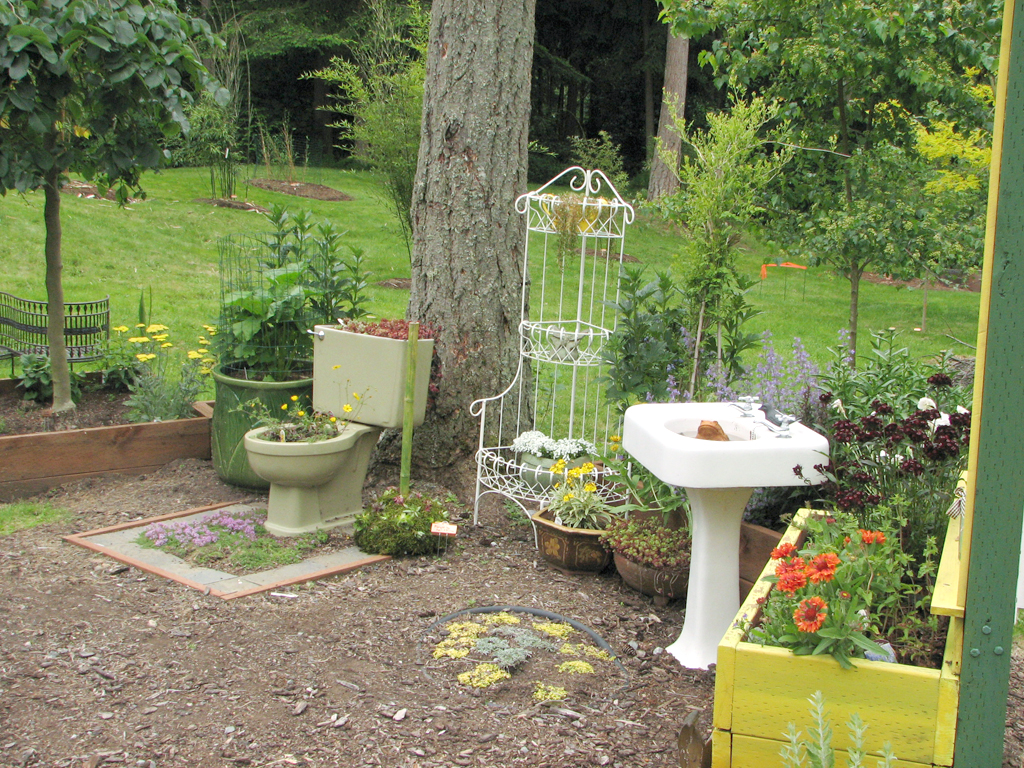
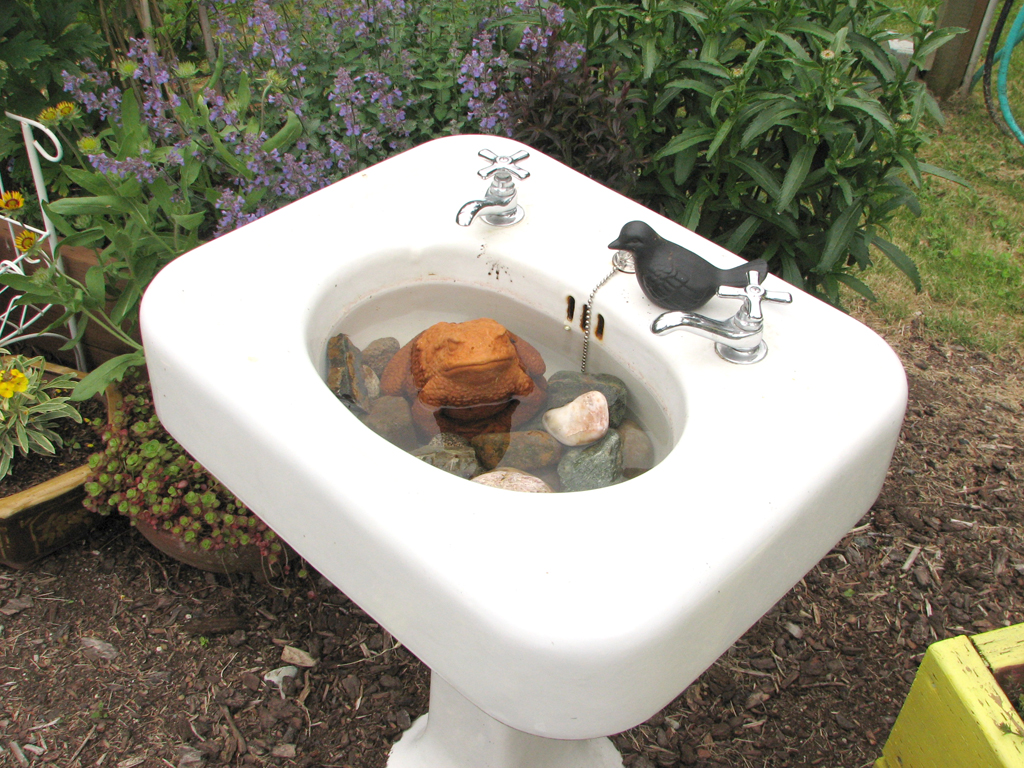
A whimsical garden bathroom, lots of nice little touches. I liked the sink and window box.
There were so many places to look around in this garden. It was clearly my favorite. Every advantage was taken in consideration of the site and slope, including the creation of a pond at the lowest point that collected water runoff.
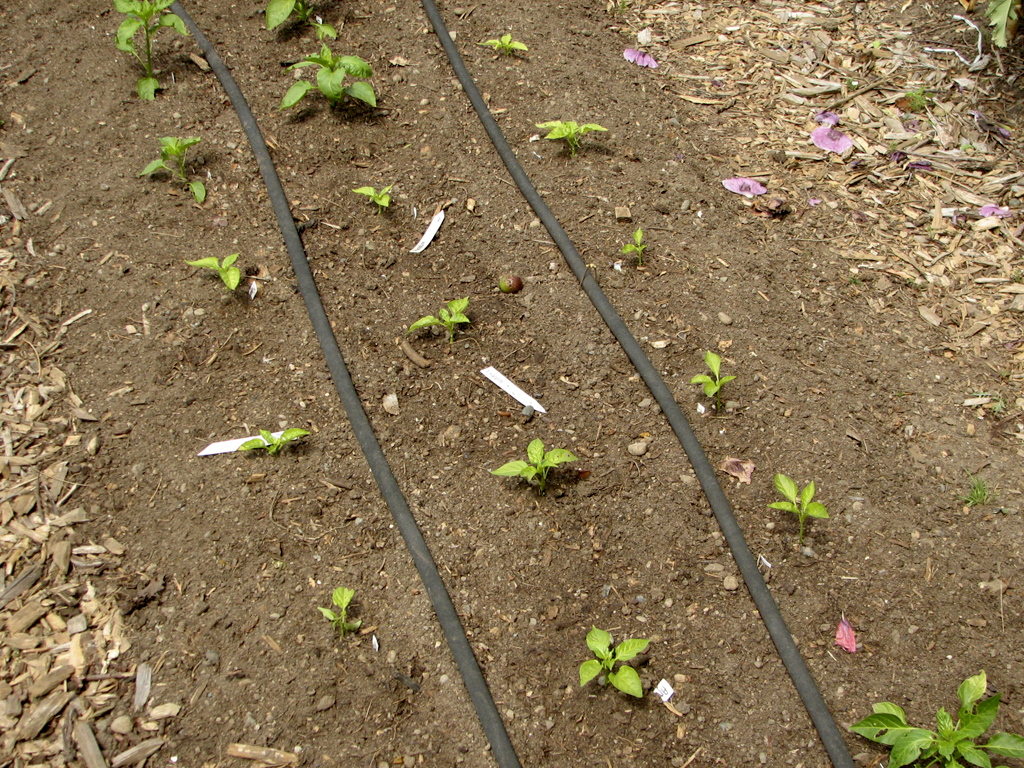
CROWS! The resident groundskeeper takes great delight in feeding peanuts to the resident crows. These crows then feel entitled to introduce their young to the largess of the groundskeeper which in turn infuriates the gardener.
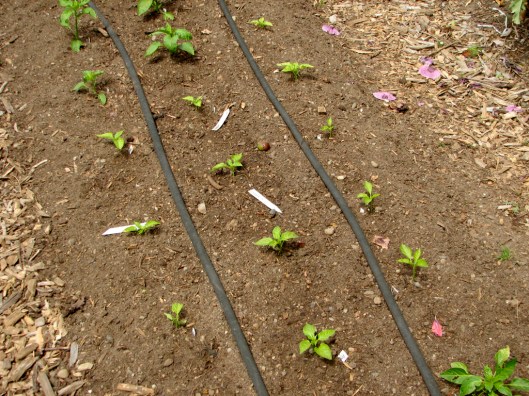 Despite my best efforts to prevent this daily event, the young crows indulge their curiosity by pulling the tags out of the ground wherever they can. I have taken great care to sink the tags as deeply as possible so that only the tiniest bit shows at ground level. But they are too clever. I can only wait until they mature and tire of this play.
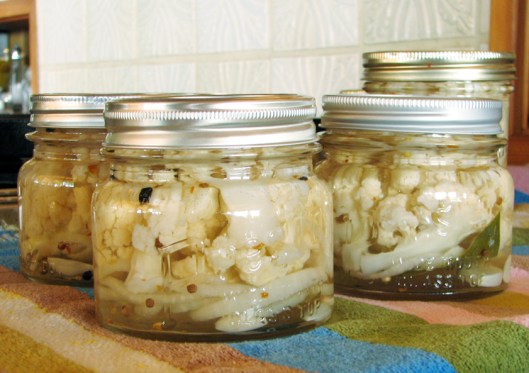
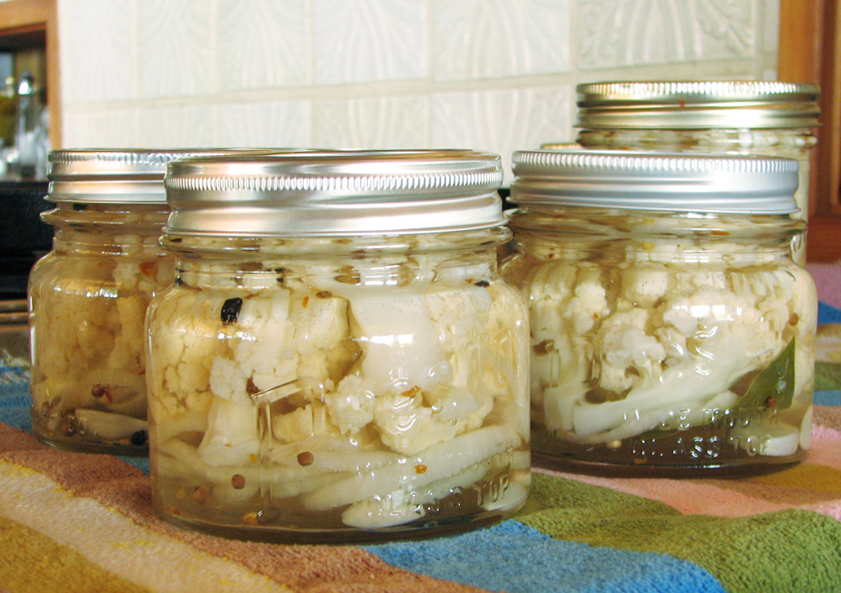
THE CANNING SEASON is officially underway here. On the 27th and 28th of June I found cauliflower at a bargain price of 88¢ a pound! So, I pickled and canned 12 pints. I put up seven pints near the end of last summer and it went quickly given as gifts and additions to winter salads and holiday dinners. I found the recipe in Eugenia Bone’s Well Preserved. I added sliced garlic and a fresh bay leaf to each jar.

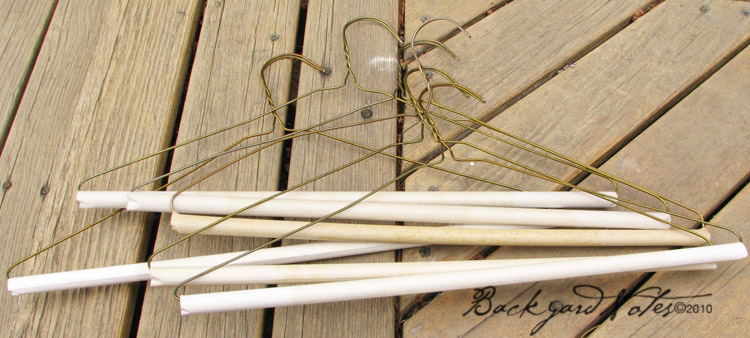 Step one, pull away the paper tube.
 Step two, cut the wire from each side of curved hook for two new pieces and straighten out the little crimp with needle nose pliers.
 Step three, using a large pair of needle nose pliers, pull the uncrimped end into a loop. Fold the cut end up into a hairpin shape to add resistance to pulling (I hope) out of the ground. Using a hole punch, punch a hole in tag, add plant name and slip over the looped end. (I cut up used plastic yogurt containers for tags.)
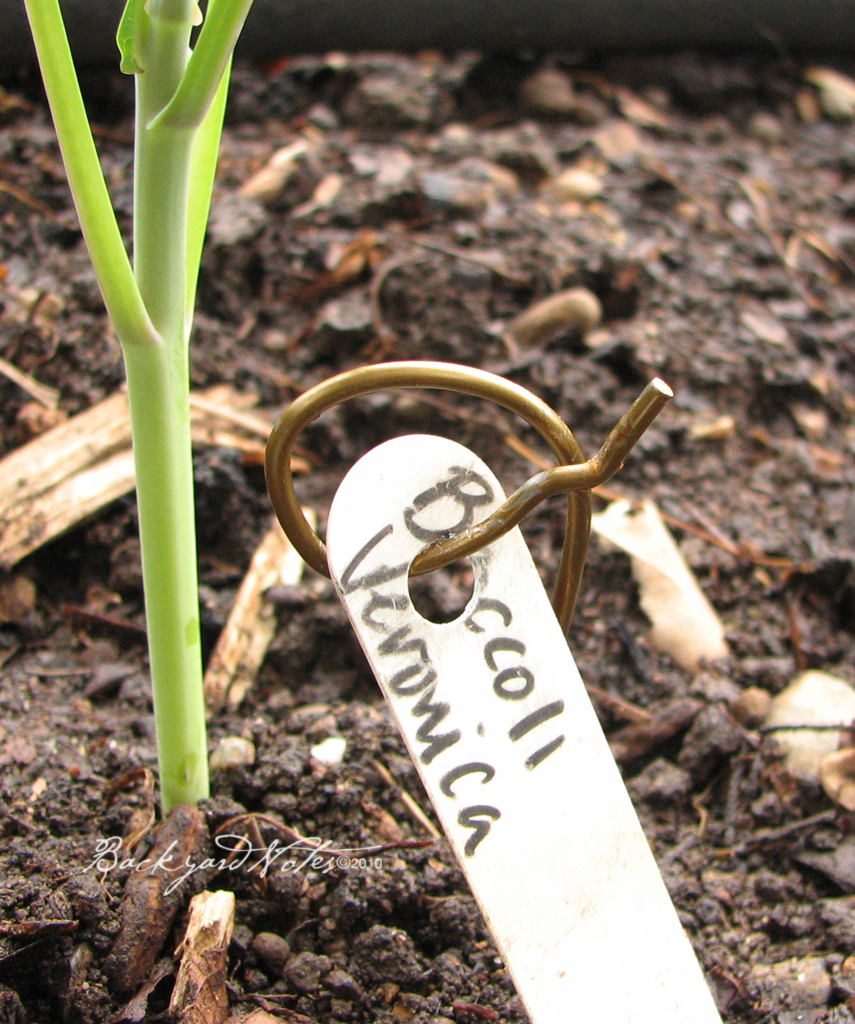 Step four, plunge the hairpin end into the soil so the tag lays kind of flat on top of the soil and hope to heck you have outsmarted the baby crows!
 I used twenty-two hangers and ended up with forty-four tag hangers. I also used them to mark each row of seed that I sowed yesterday too. As of today, all tags are still in place (fingers crossed).








 Backyardnotes