WHY EVERYTHING IS GREEN HERE

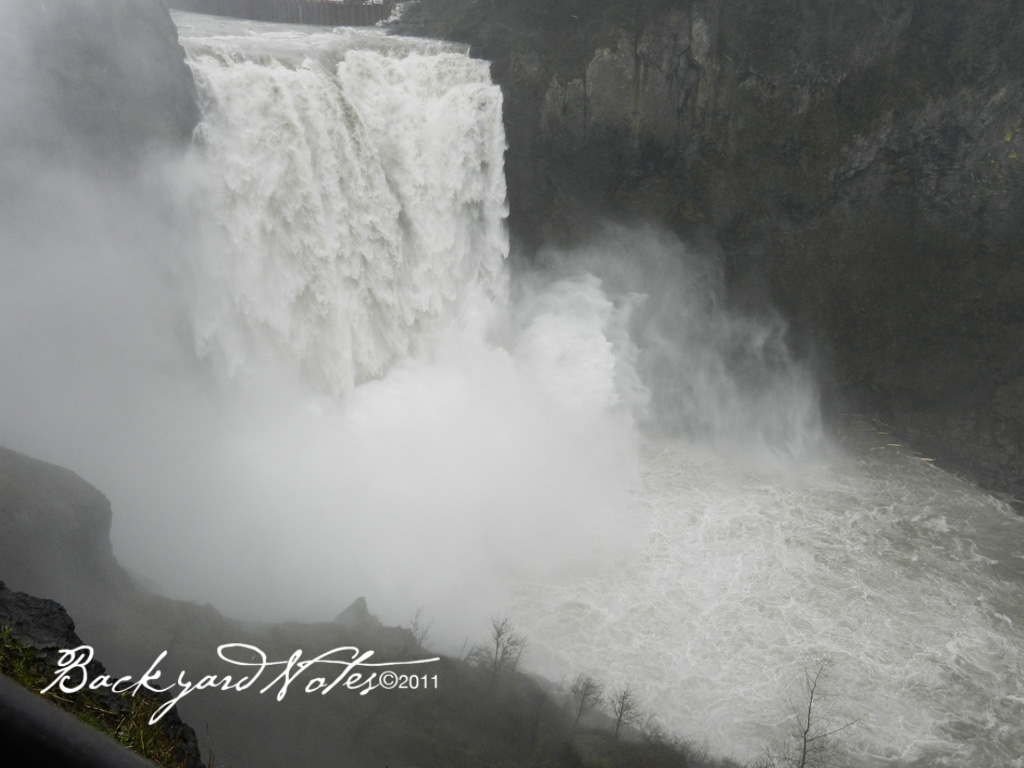
TODAY THE CLOUDS ARE AT GROUND LEVEL. It looks like fog but is rain. A lot of it. All day. This is why we have an over abundance of moss growth this year.

We picked up mom this morning and took a trip to see the spectacle of Snoqualmie Falls, east of Seattle. There has been quite a bit of rain and warming temperatures the past few days in the Cascades, so that means some snow melt and rising rivers. The Snoqualmie River is very near flood stage and the falls runneth over (couldn’t help myself). The river falls 270 ft. before continuing north to join with the Skykomish River near Monroe. Today it was quite a sight. So much water is moving over the fall it creates its own wind.

THE PERSISTENCE OF PLANTS

Tags

, , , ,

I HAVE BEEN ROLLING THIS POST AROUND IN MY HEAD for some time now. About three weeks ago I spotted a little slip of a clematis. I nearly pulled it out while weeding and adding some new plants that I purchased the garden show. I remember planting it here several years ago under an aging lilac thinking it would be a great support for a clematis. It didn’t seem to do well and I was sure that it had died or that maybe I had moved it. I have a vague memory of moving it, but apparently did not get all of the rootstock; what a surprise! How has it managed to survive?

THIS kind of plant behavior always amazes me – I know it shouldn’t – but it does. Plants getting a foothold in the tiniest crack in a rock wall (and turning into large trees), the crotch of a tree, a little hole at the edge of pavement. The will to grow and reproduce is paramount and seems to take place against great odds. And this clematis is a case in point since I broke off a six inch piece of it when weeding – what a klutz! But, the roots are strong and there is new growth as seen in the photo above. Now I will baby it and see what happens this year. With luck it might bloom and then I will know which one it is.

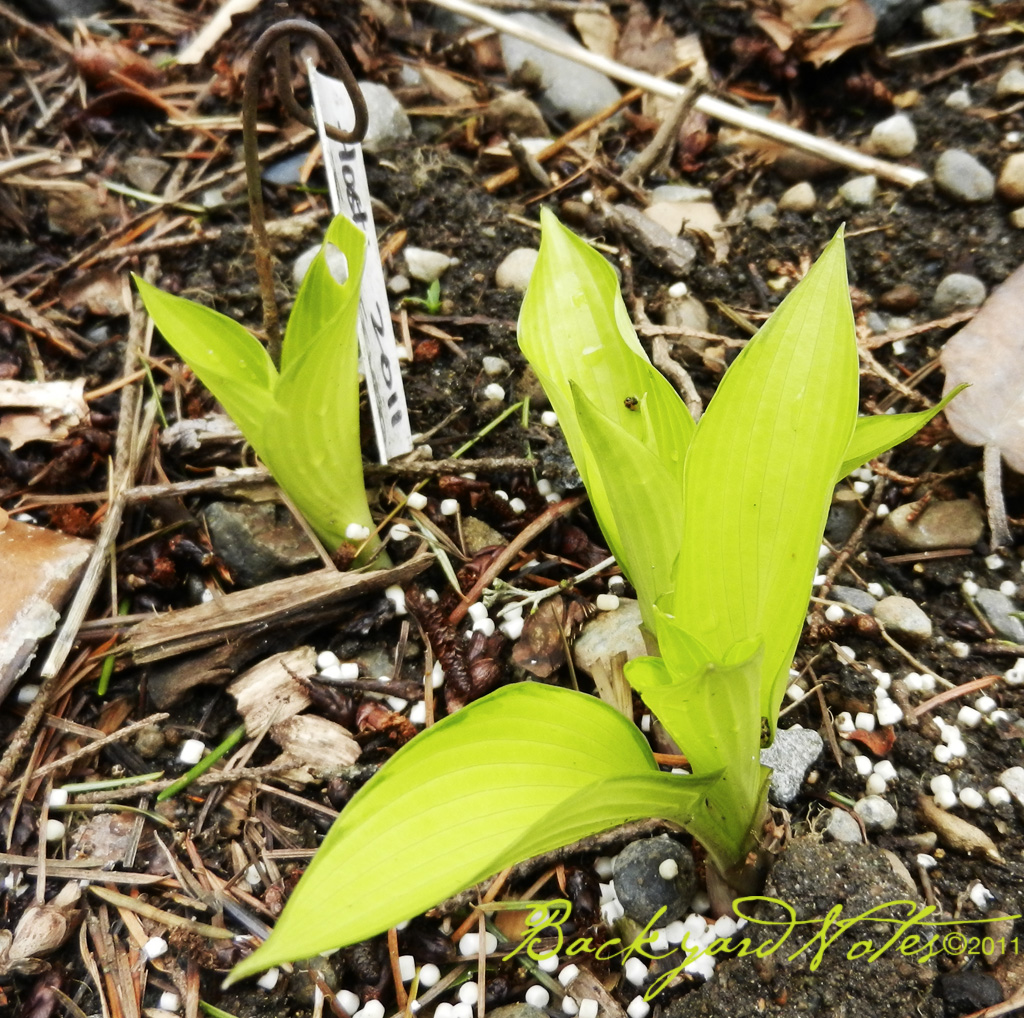
I think that one of the most lovely forms in early spring are emerging hostas. They seem elegant and the color is so fresh. This is a new one, June Fever, from Naylor Creek Nursery, one of four hosta varieties that I purchased from them at the garden show in late February; the others are ‘UFO’, ‘Clear Fork River Valley’, and ‘Blue Angel’.

Speaking of the garden show, the display gardens were big! And showy of course, with fancy hardscape details, and lots of large specimen plantings. For me, there were few new ideas to incorporate into my garden; but that is not the reason I went. I went for the plant vendors. I was not disappointed and this year I made up for what I did not purchase through all of last year. I bought three daylilies: ‘Seal of Approval’, ‘Night Embers’ and ‘China Bride’ (Naylor Creek-great hosta selections); hachonechloa macra ‘Beni-kaze’, crocosmia x pottsii ‘Culzean Pink’, paeonia mascula ssp. russoi (tree  peony), echinacea ‘Sunrise’, and aruncus ‘Guinea Fowl’ (dwarf goat’s beard) from Far Reaches Farm (they have some very cool plants); lilies from my favorite source, B&D Lilies: ‘Rexona’, Belladona’, and ‘Yelloween’; ligularia ‘Osiris’ from Woodland Gardens of Port Orchard (no website), to add to my collection; and a small waterlily type dahlia, ‘Lauren Michele’ (I am partial to simple dahlia blooms) from Swan Island Dahlias in Oregon.  Every plant has a home in the garden except for the daylilies and dahlias which are in pots until I figure out their final locations in the garden.

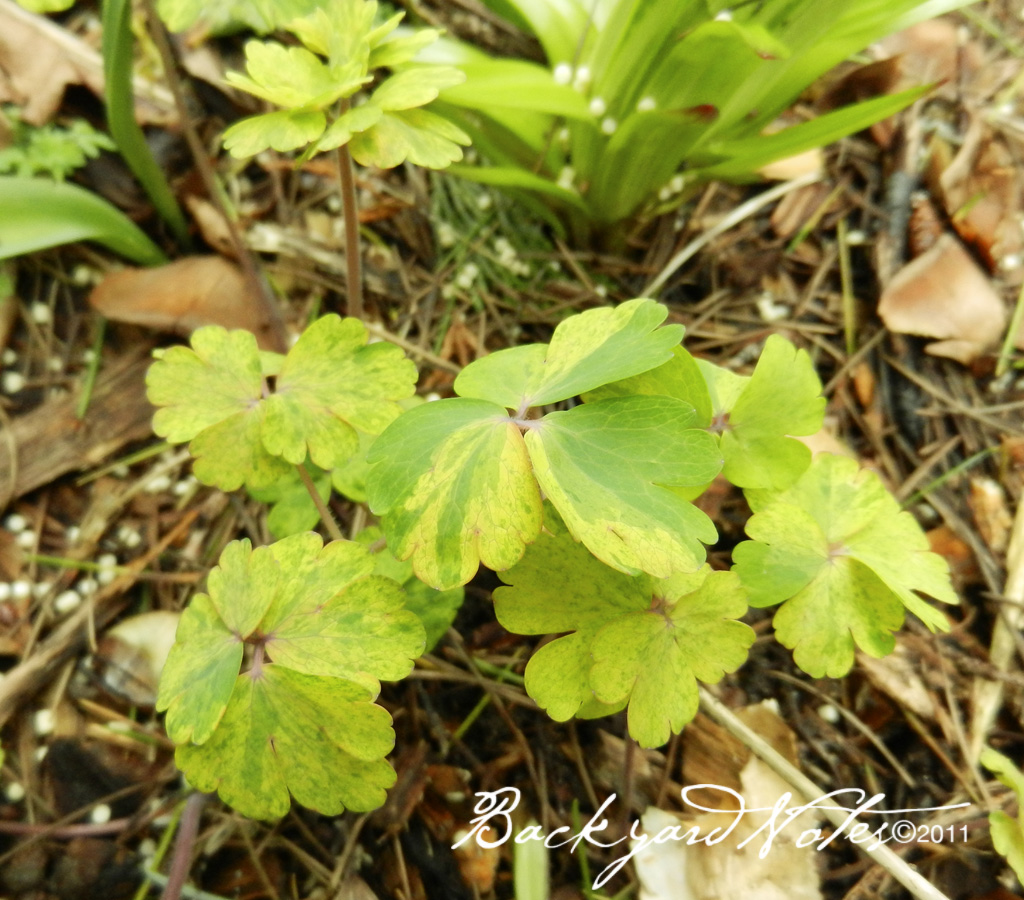
Aquilegia ‘Lime Frost’

Signs of spring are everywhere and it is such a delight after a very dreary and rainy winter. We have of late, had enough fair days to accommodate general cleanup and weeding. Why is it that weeds don’t seem to have a season and grow the year ’round?

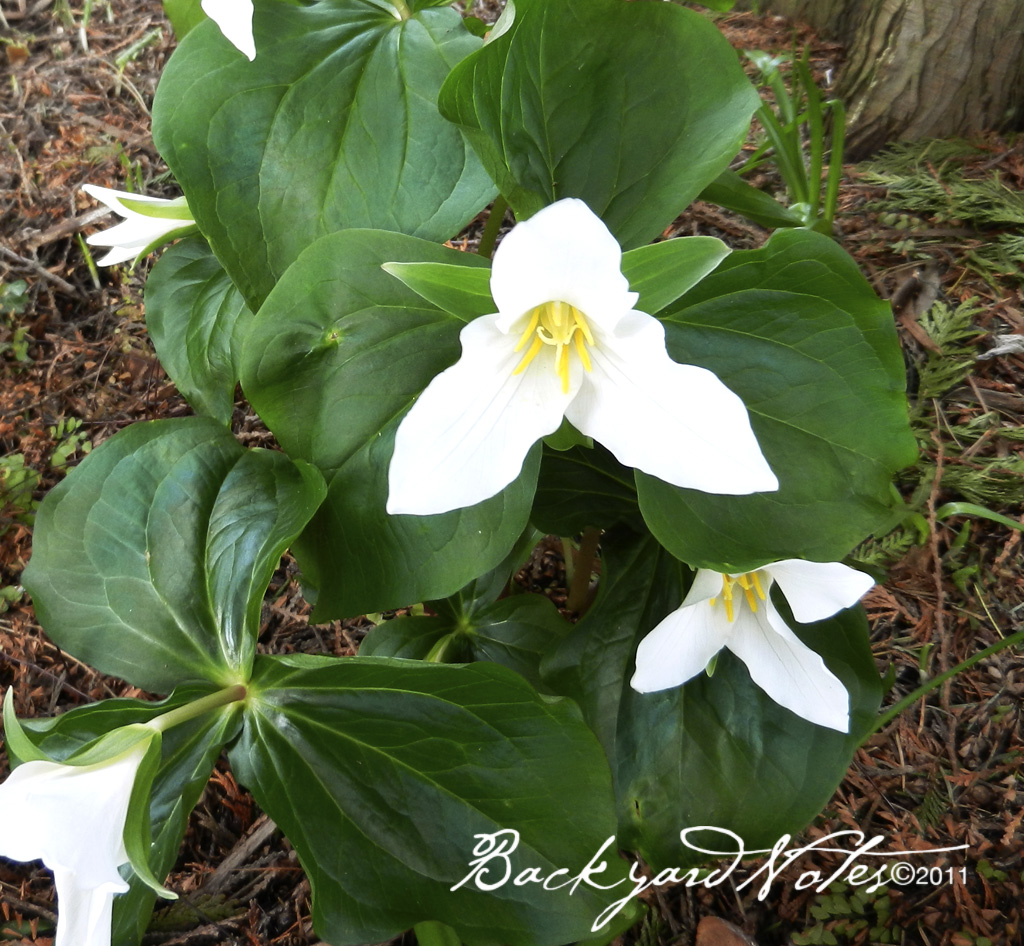
Trillium grandiflorum are in peak form with some are still emerging.

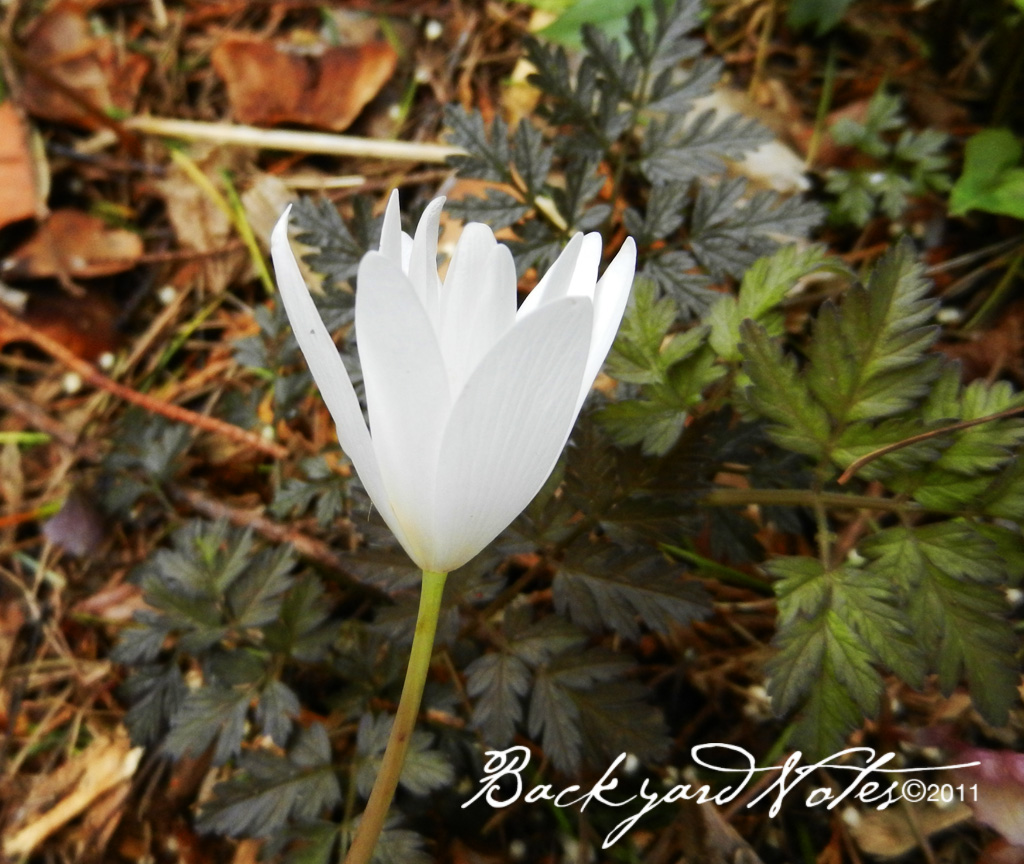
And the beautiful, but briefly appearing sanguinaria canadensis.

It is nice to have a camera available and in working order. The biggest challenge is in learning how this one works. I think the macro is pretty good, but I need to study up. Tomorrow it’s time to start tomatoes and peppers. Hooray, summer is on the way!

IS THERE LIFE WITHOUT CAMERAS & BLOGGING?

WELL, OF COURSE THERE IS. It has been nearly a month since the last post and I must admit that I have felt lost without a camera; I used one nearly everyday for the past ten years. And, what is a blog without photos to share?

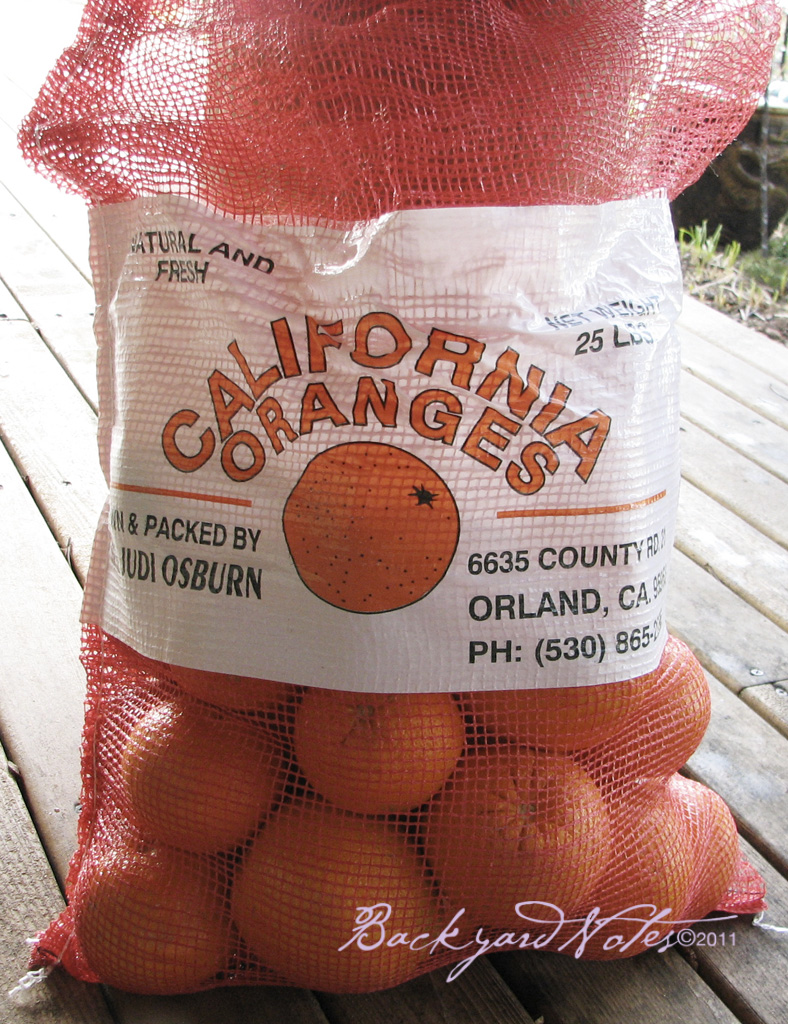
OTHER pursuits took precedence over blogging after the camera malfunctioned and life continued on. I made some wonderful orange jam (not marmalade) and orange pepper jelly with sweet, juicy oranges that I bought on our way home from our desert trip;

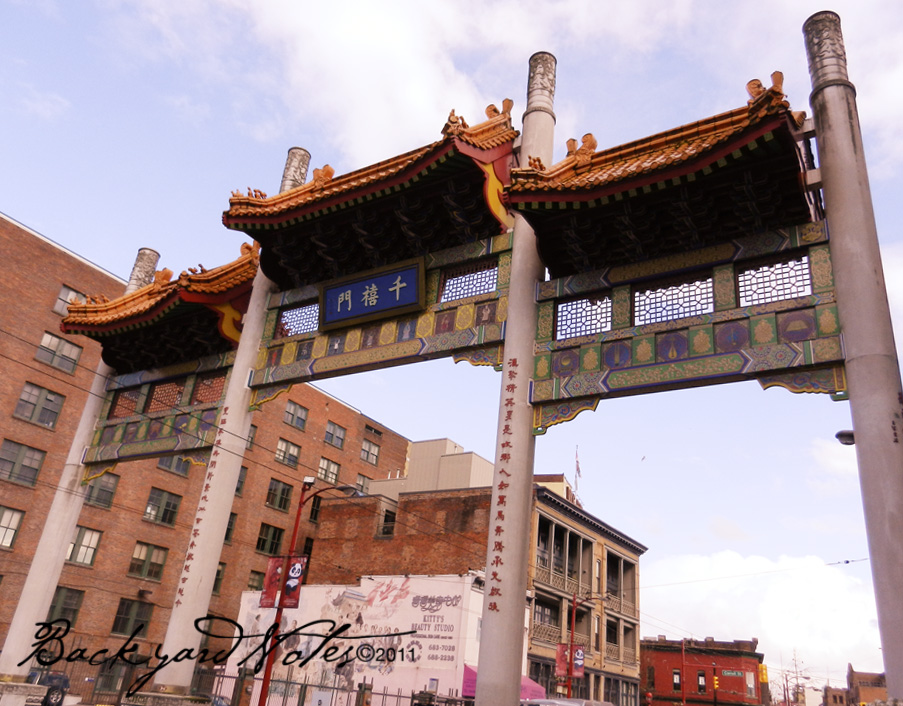
I finished some art projects; I tried to catch up on my travel journal; my sisters, a nephew and I helped my mother hang quilts for her guild’s show, and my husband and I went to Vancouver, B.C. to celebrate our 30th wedding anniversary (hooray)…

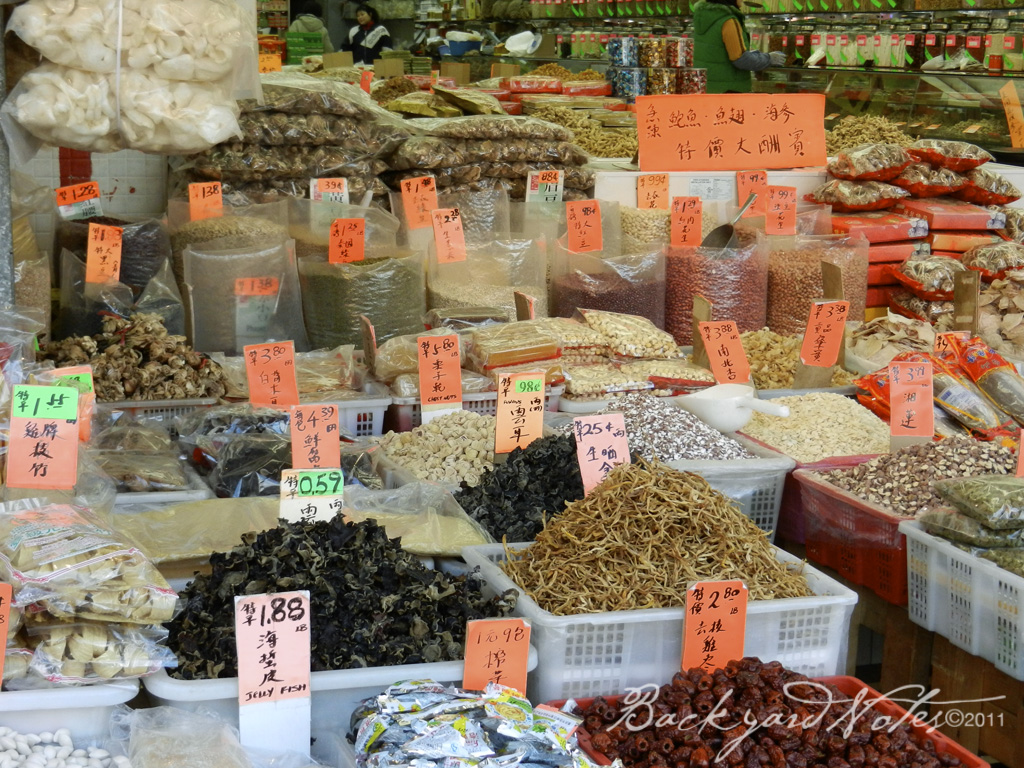
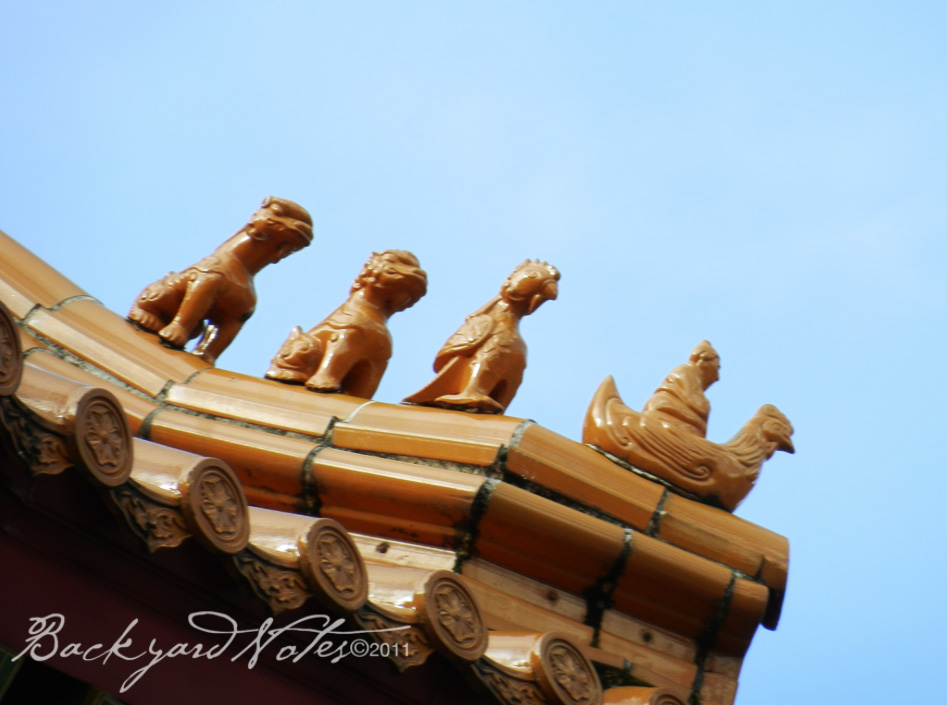
where I surprised him with a new point-and-shoot camera (Nikon Coolpix S9100) that he tried out in Vancouver’s Chinatown.

He had wanted something more simple than the camera that died and point-and-shoots have come a long way in the six years since the last camera purchase. So, now there is one functioning camera in the house while I continue to research the camera that’s right for me.

The detail captured with the 18x zoom is pretty impressive (and this is slightly out of focus).

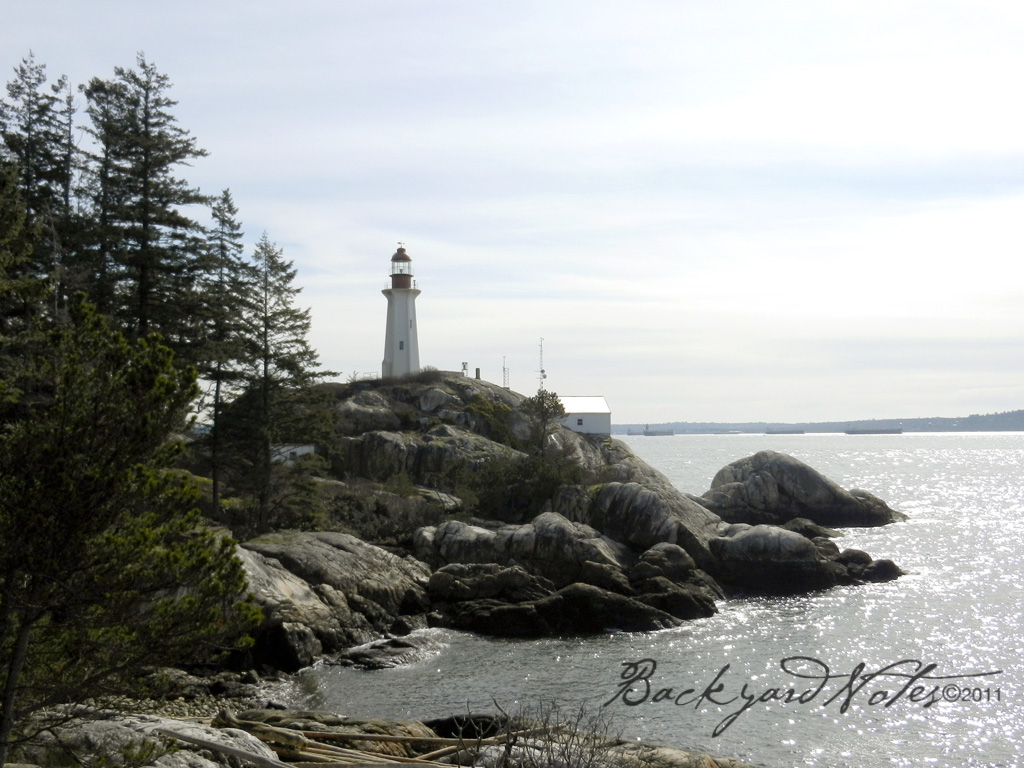
We retraced a few honeymoon steps and spent the first day of spring with a walk through Lighthouse Park at Horseshoe Bay and tried to recapture a photo of the lighthouse that I took thirty years ago.

This day it was sunny and not as moody as the first time.

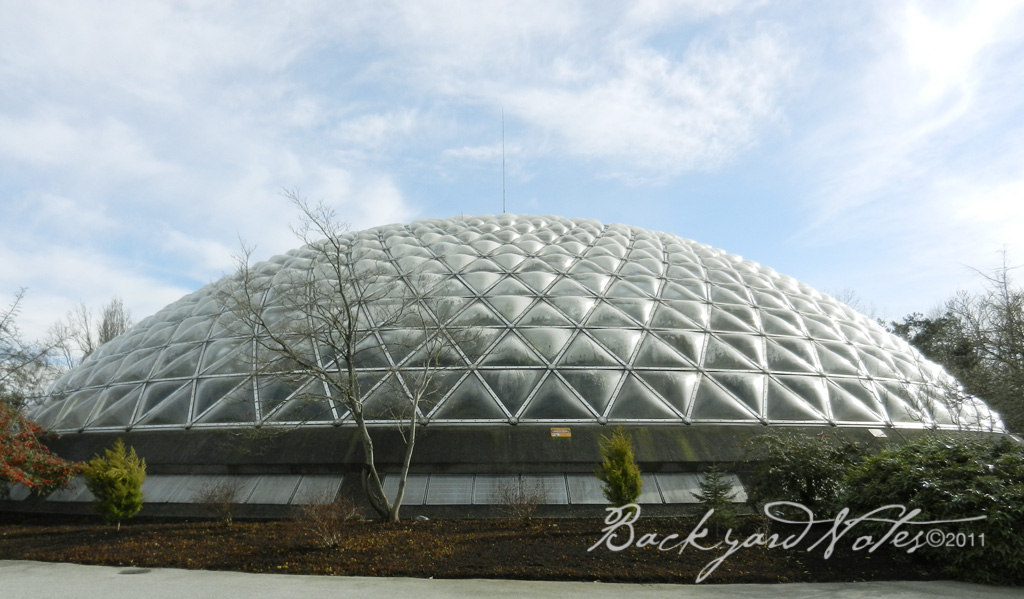
We finished the afternoon at Queen Elizabeth park and a trip through the Blodel Conservatory.

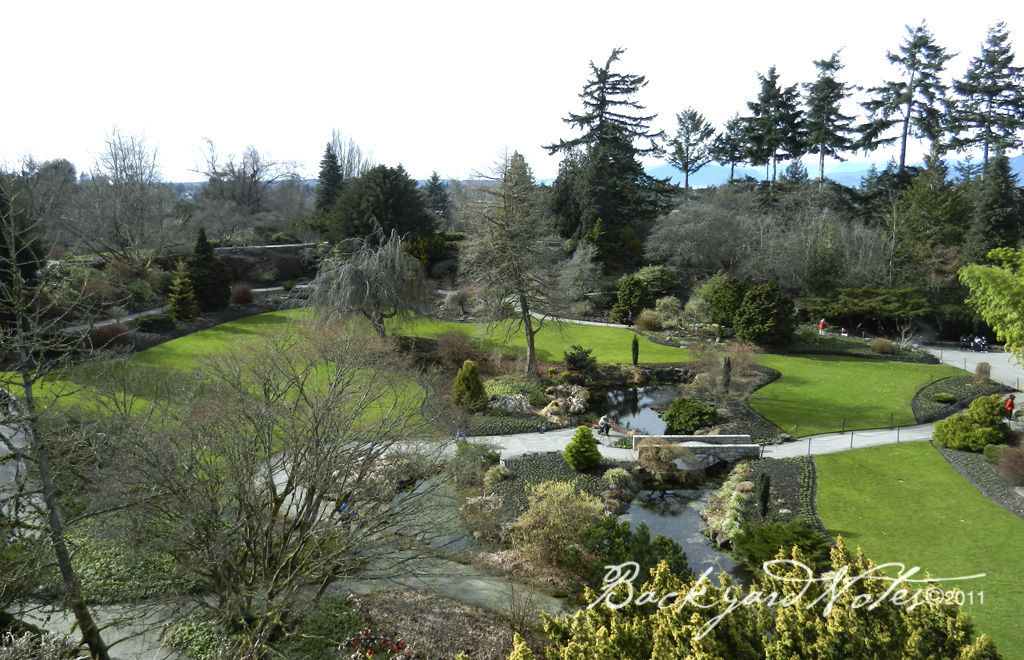
And a walk through the large quarry garden. Similar in nature to the one at Butchart Garden, but quite a bit smaller. The weather was quite delightful and returned to northwest normal the next day—rain.

Now to catch up to what is happening in the garden here and perhaps a few last notes about Death Valley.

P.S. Welcome to WordPress, Fabricgirl66 (see link in blogroll).

LAST LEG: DEATH VALLEY

OUR LAST WEEK IN THE SUN WAS SPENT IN DEATH VALLEY NATIONAL PARK. We had such a wonderful time over ten days last year we decided to return and do some more exploring.

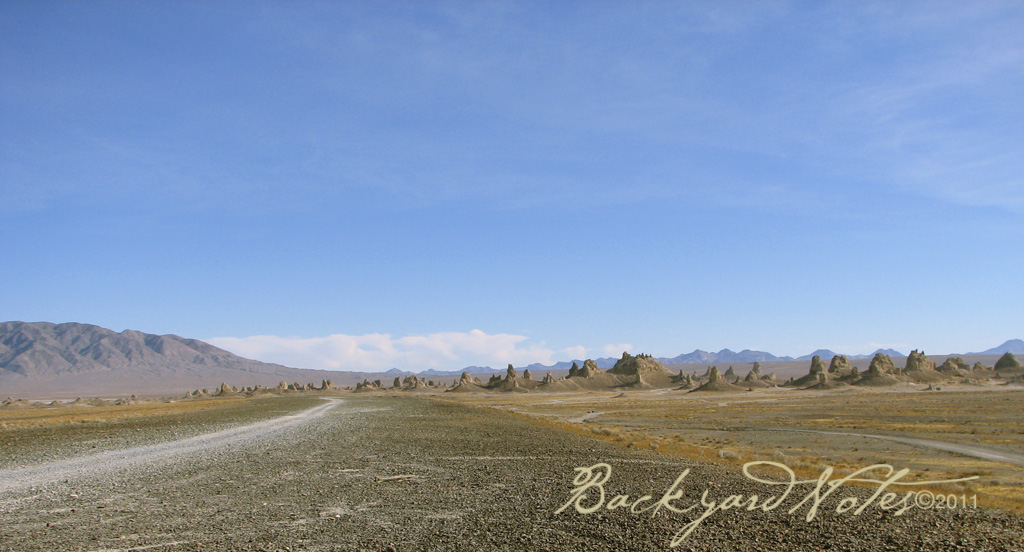
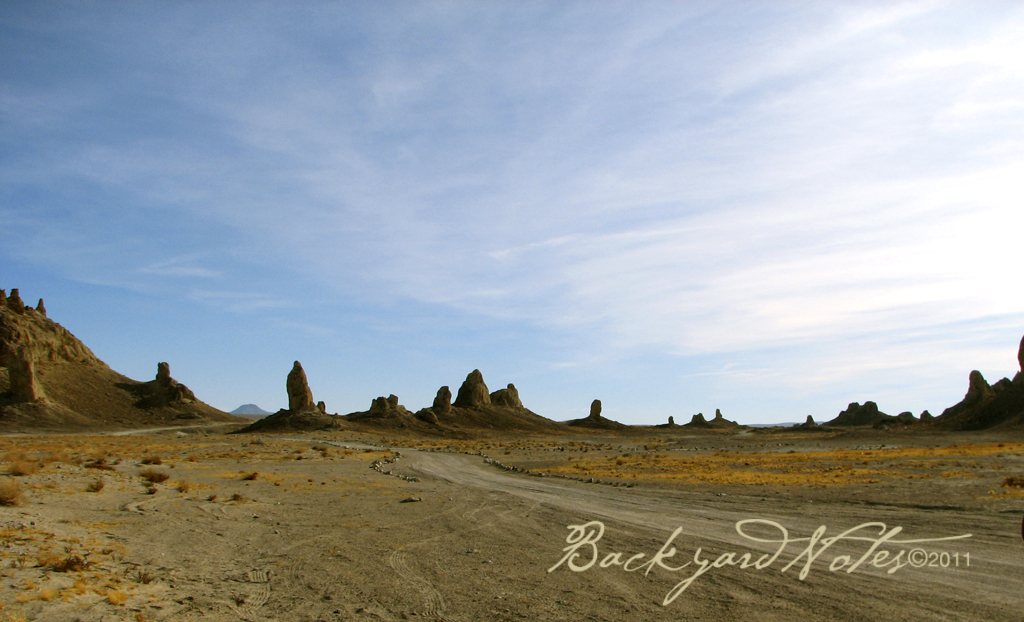
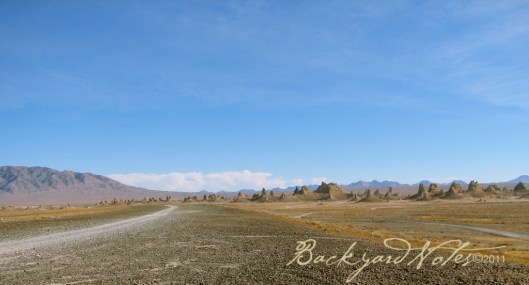
After leaving Red Rock Canyon we traveled north to Ridgecrest, CA and then northeast through the Trona Valley and into DVNP. The Trona/Searles Valley is notable for Searles Lake, a large dry lake containing borax and other valuable minerals and the Trona Pinnacles,   “… unique landscape consists of more than 500 tufa (calcium carbonate) pinnacles rising from the bed of the Searles Dry Lake basin. These tufa spires, some as high as 140 feet, were formed underwater 10,000 to 100,000 years ago when Searles Lake formed a link in an interconnected chain of Pleistocene lakes stretching from Mono Lake to Death Valley.” (BLM website). There is an annual event in Trona that looks interesting, the Trona Gem-O-Rama. If you are intrigued in any way by rocks and minerals, this could be for you (and me). The big get here is pink halite.
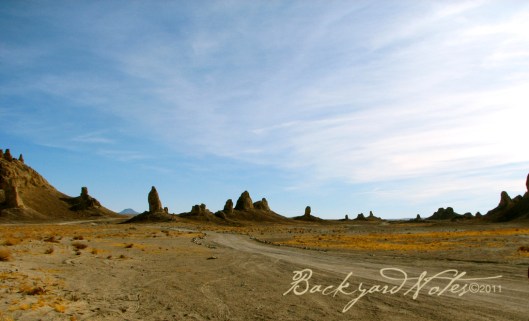
From Trona Pinnacles it’s about another forty-five minutes to DVNP, along a red road with the Slate range to the west and the Panamints on the east.
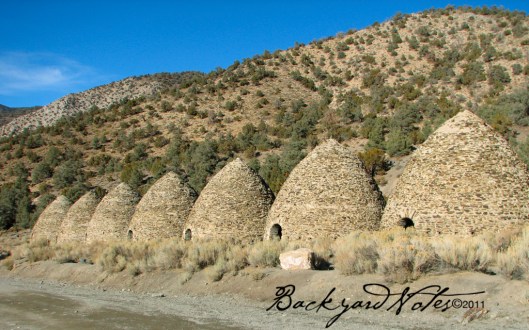
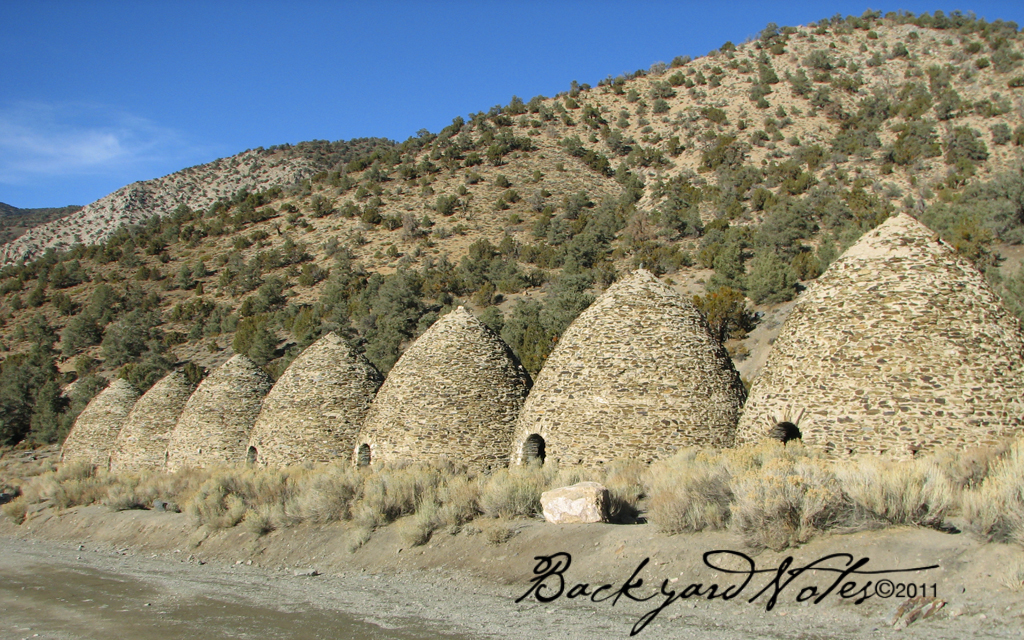
Panamint Springs is the west entrance to Death Valley. Last year we drove up into the Panamints to see the charcoal kilns, 8,000 feet above the Panamint valley floor. The kilns were built to burn Pinyon pine to produce charcoal for metal smelting some eighty miles away. At Panamint Springs there is a small resort with café, cabins, and RV campground. Last year we had lunch at the café and Tom like the chili so much he wrote to the owner to ask for the recipe. This year we stopped for a chili-to-go order and lo and behold, there on the bulletin board was Tom’s letter extolling the virtues of the chili and recipe request! He continues to await the arrival of the recipe.
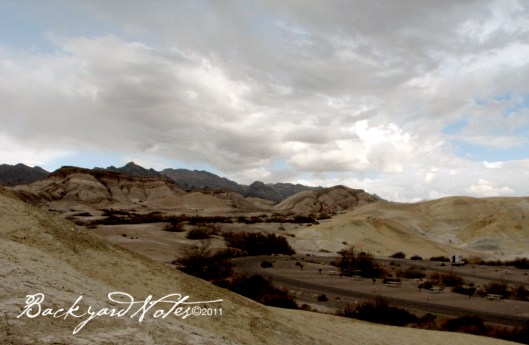
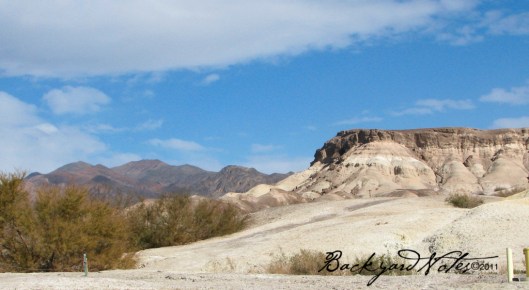
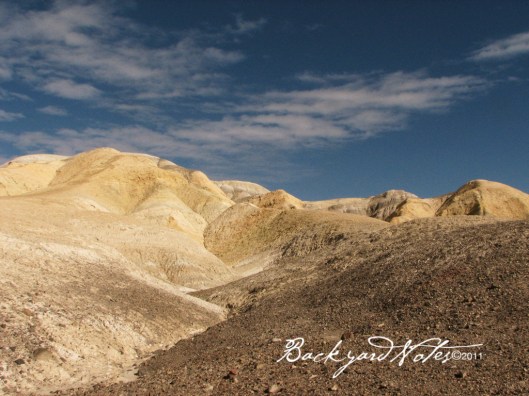
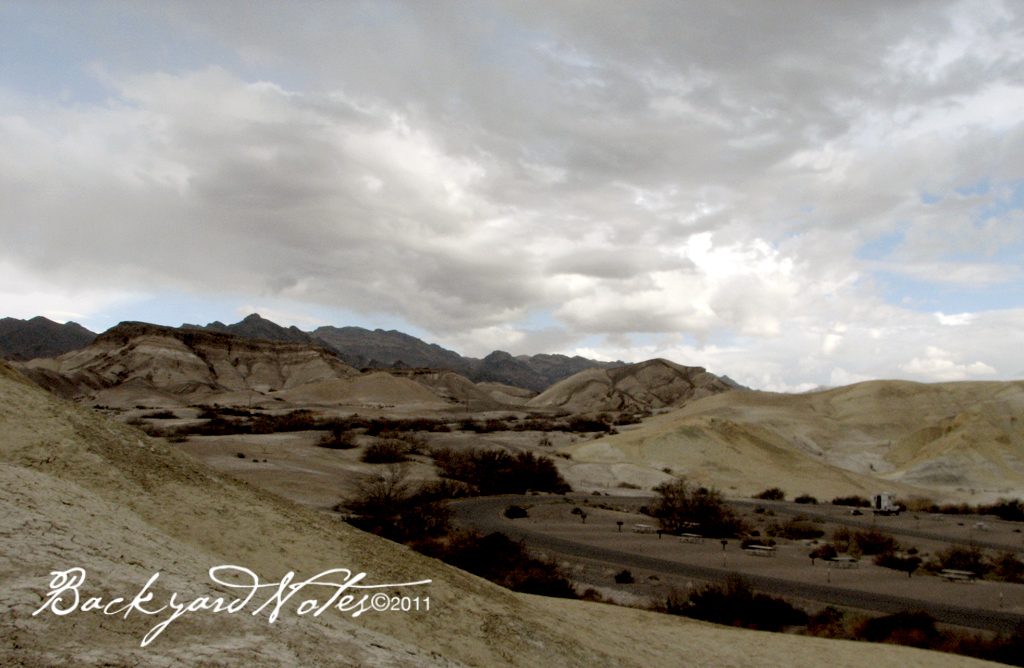
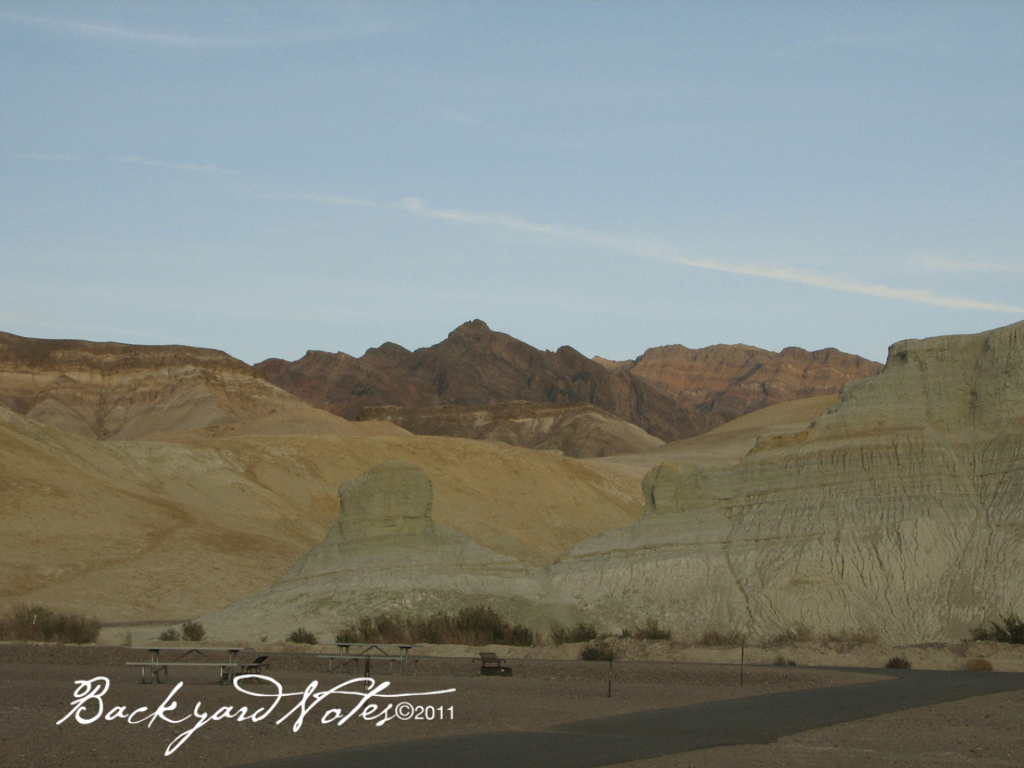
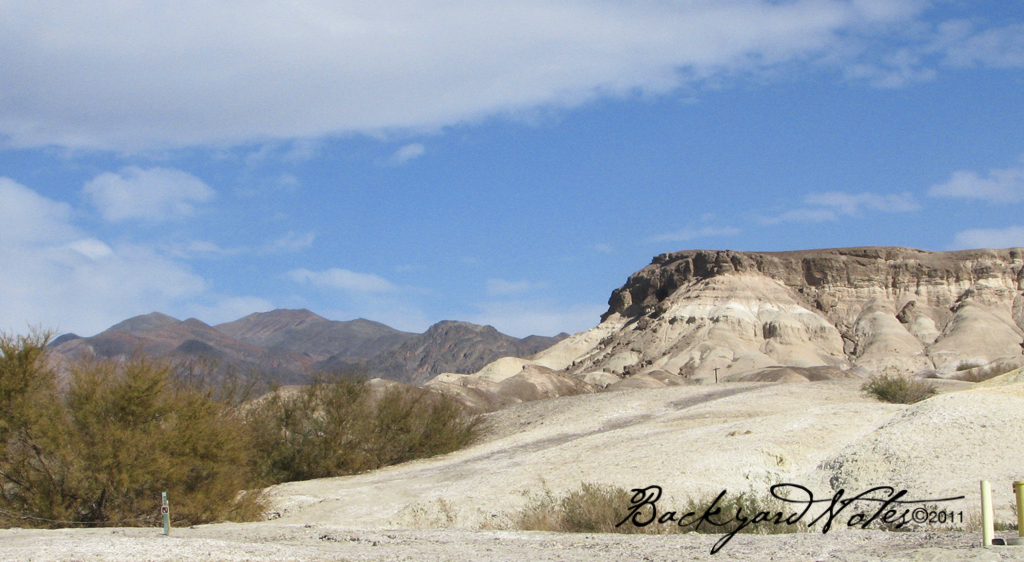
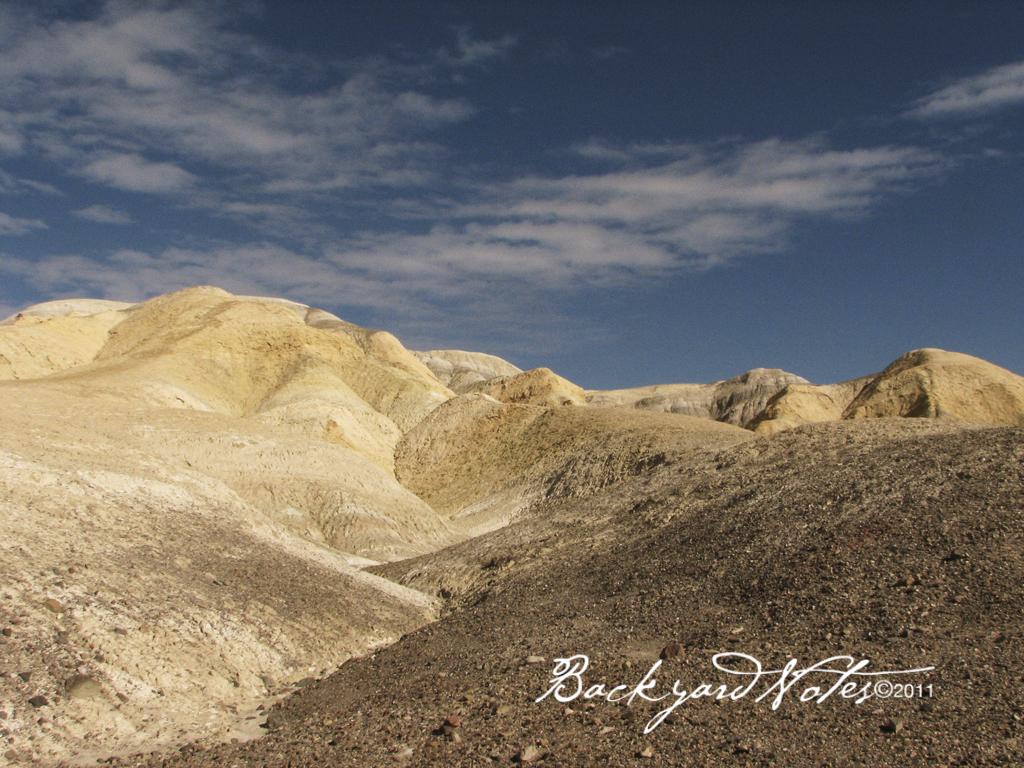
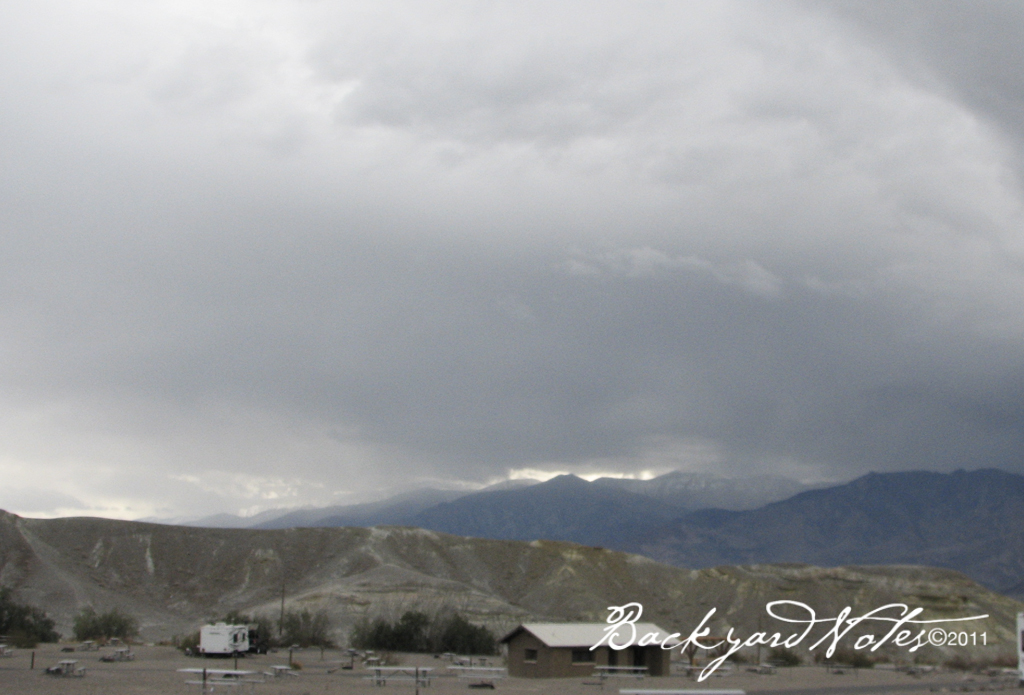
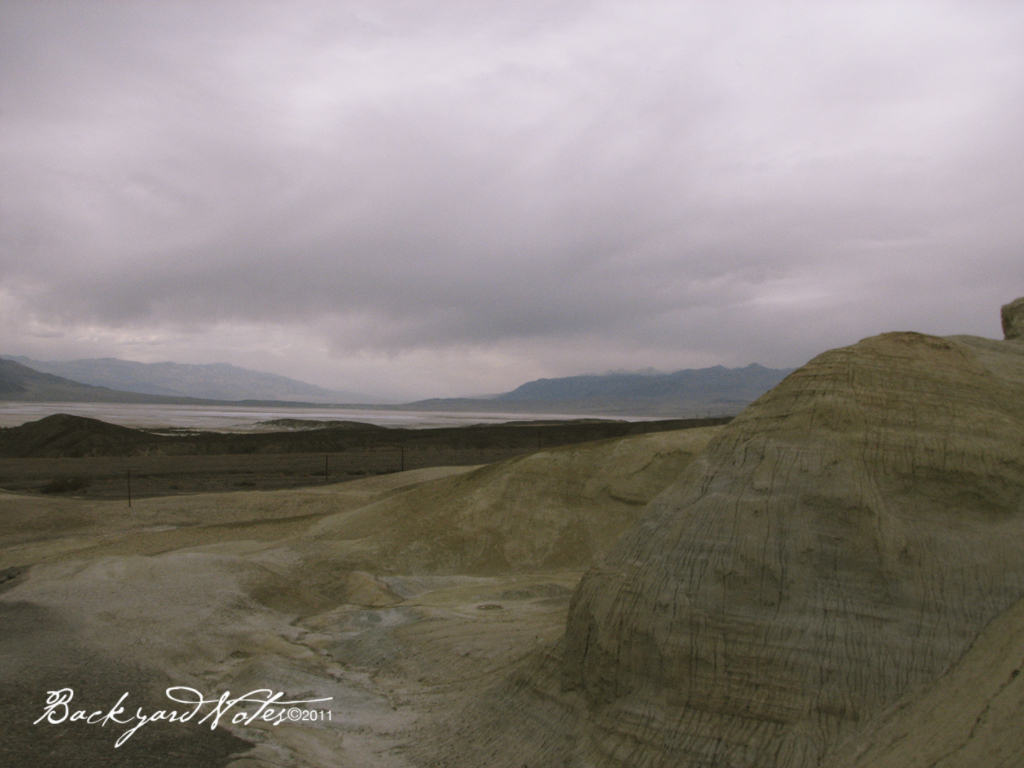
Texas Spring campground was our destination for the next four days. (campground overview above as a storm moved through on day two) above Furnace Creek. This is a wonderful c.g. Great view to the west, of Death Valley and the Panamint mountains rising to 11,000 feet above the valley and the Amargosa  Range behind, to the east. I had hoped to be here the first week or so to participate in the 29th Annual Painter’s Open Camp/Paint Out sponsored by watercolor artist Howard Lucas (Mt. Lassen Art Center). The paint-out was happening last year when we were camped at Texas Spring and we got to chat with him a bit. This year the weather and forecast weather during the first ten days was not to our liking – cold – so I missed out; maybe next year. There are many reasons we like this campground. Scenic value is at the top of the list with amazing color everywhere; we can strike out to the north and/or east and hike until we’ve had enough, which we did on our second day; there are no generators allowed here, so it remains peaceful. A few photos below illustrate the reason to come here and paint, do some hiking, or just chill. January and February have comfortable temperatures, lots of sunshine — a welcome break from northwest winters.
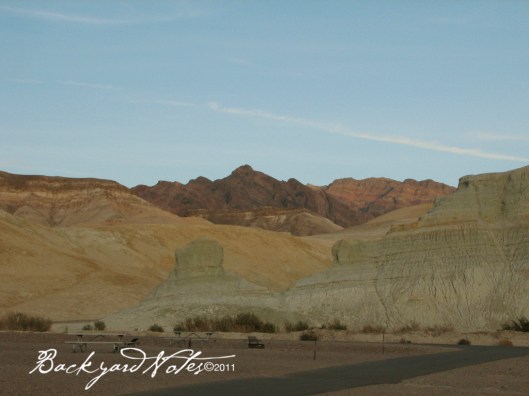
Eastern edge of campground

Northeast

Southern perimeter looking east. Easy hike to the top and not as far as it looks.
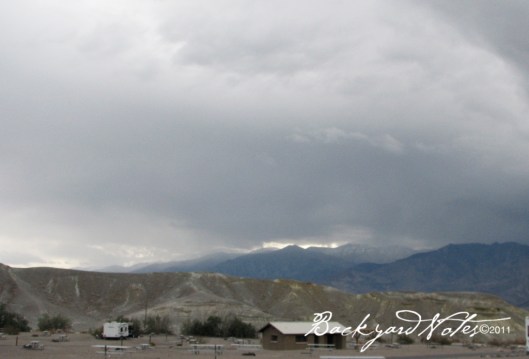
Looking southwest to the Panamints as a storm threatened.

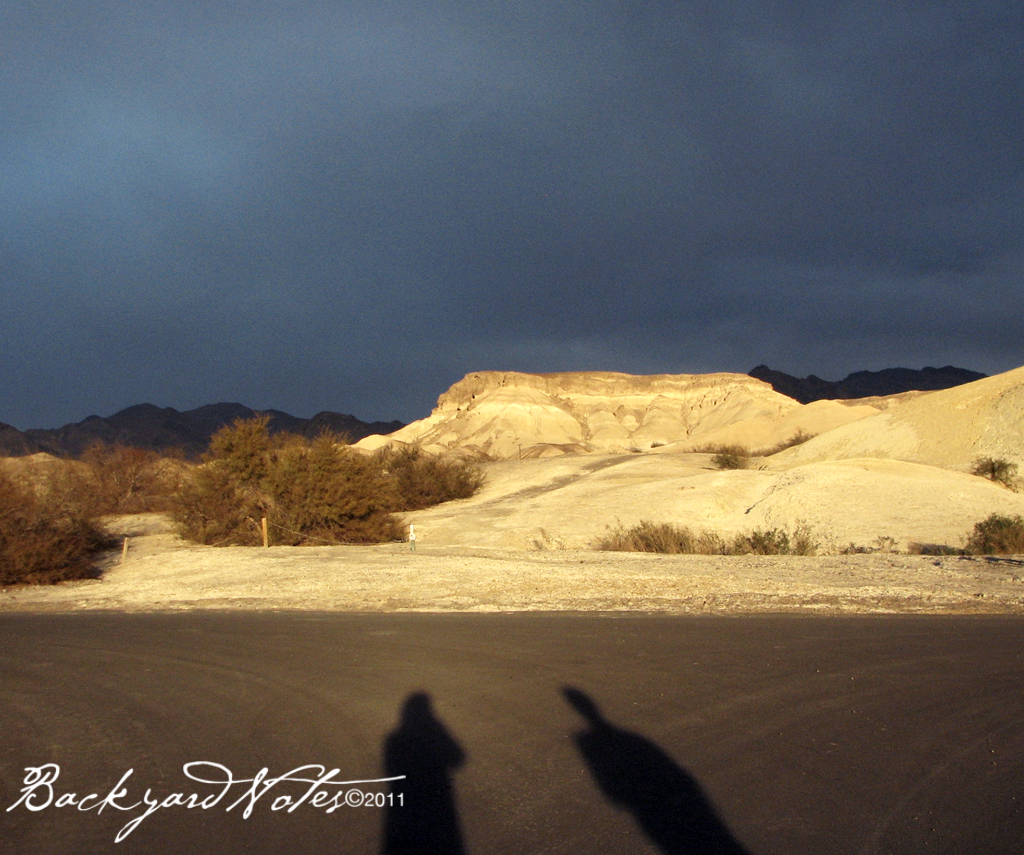
On day three a massive sand storm moved through, traveling north to south. The wind began blowing late the previous evening and did not stop for another day. It was so windy that as we stepped from the truck at Dante’s View, 5,475 feet above the valley, we could hardly stand up. The temperature was 44° but felt more like 24°! No hiking here, but the 360° views are spectacular. We made a point of seeing sights we missed last trip, so after Dante’s View we toured Twenty Mule Team Canyon, a borax prospecting area, and made the short walk up to Zabriske Point, an overlook to Gold Canyon and out toward DV. By early afternoon the sand had obscured all views of the valley and the Panamints. Texas Spring had plenty of wind, but it’s like a little cove so we escaped the sand devestation. As sunset approached the winds died off a bit and shifted direction and the sandstorm became a wind event only. We had some dramatic clouds to the south and east lit by the declining sun.
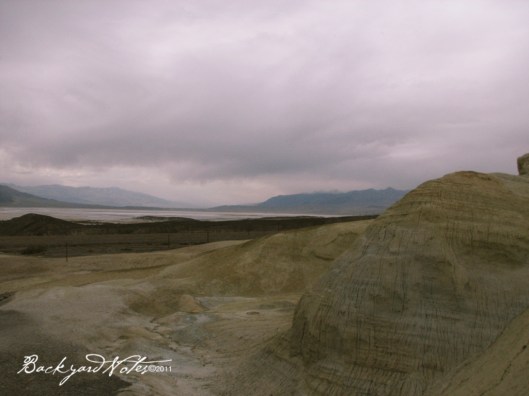
Looking north the valley looks like a huge sea (which it was!).
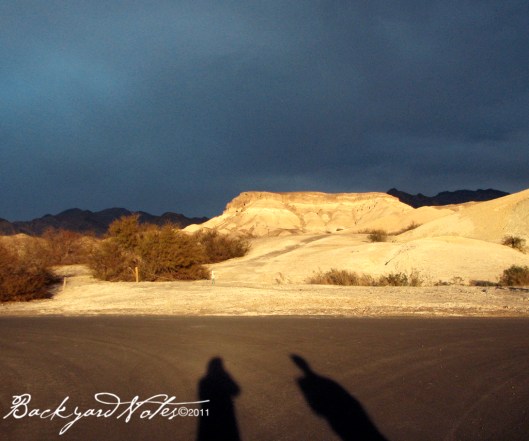
The setting sun lit up the hills to the east.

DEATH OF A CAMERA

Tags

IN DEATH VALLEY the Canon PowerShot S2 IS camera started doing some weird things. Funny double beeps, the lens would extend part way and get stuck and then shut off. Then it was fine for a few days and the last two days it was completely unpredictable. One day it did not work, the last day it did. And, over the couple weeks since we returned home it seemed fine. But last week it finally quit. Tom bought it in October 2005. I cursed it and then learned how to get along with it.  It displays an E18 error code and from a little sleuthing online, I found that it is a problem with the motor and could cost anywhere from $150-$300 to repair. The lens is stuck in a partially extended state and unusable. So I will take it into Glazer’s (where it was purchased) and see if it is worth repairing or if I am now in the market for a replacement (which I can now justify, I think).

I feel kind of lost without it…my old Sony Mavica is not reliable anymore either and spring bulbs are starting to bloom!