A NEW YEAR IN THE GARDEN

I PROMISED Renée that I would try to keep a current accounting of what is happening; new year, new ambitions, and new surprises in the garden.

We spent the first eighteen days away from gray, rainy and cool Washington. Ten of those days were spent in Death Valley National Park, California, where the average daily temperature was 65 degrees and evenings cooled to the low 40’s. DVNP was spectacular; we look forward to returning next year to see what we left unexplore.

When we returned, many winter bloomers were well into flower. The earliest winter flowering plants in my garden is Helleborus foetidus, the so-called stinking hellebore. It may be a little smelly but I find it lovely in the winter garden. It generally starts to flower in mid-December, has dark green foliage and the light, bright green flowering cymes are bell-shaped and nodding, some having red rimmed ‘petals’. The flowers last several months and they are are prodigious seeders.
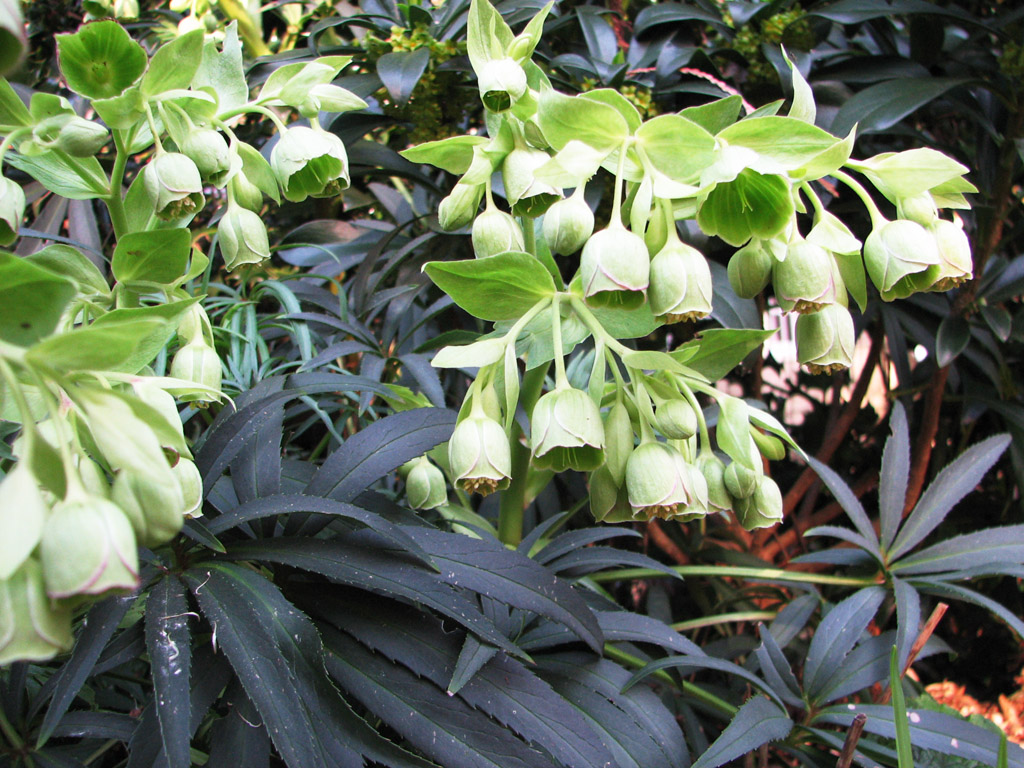
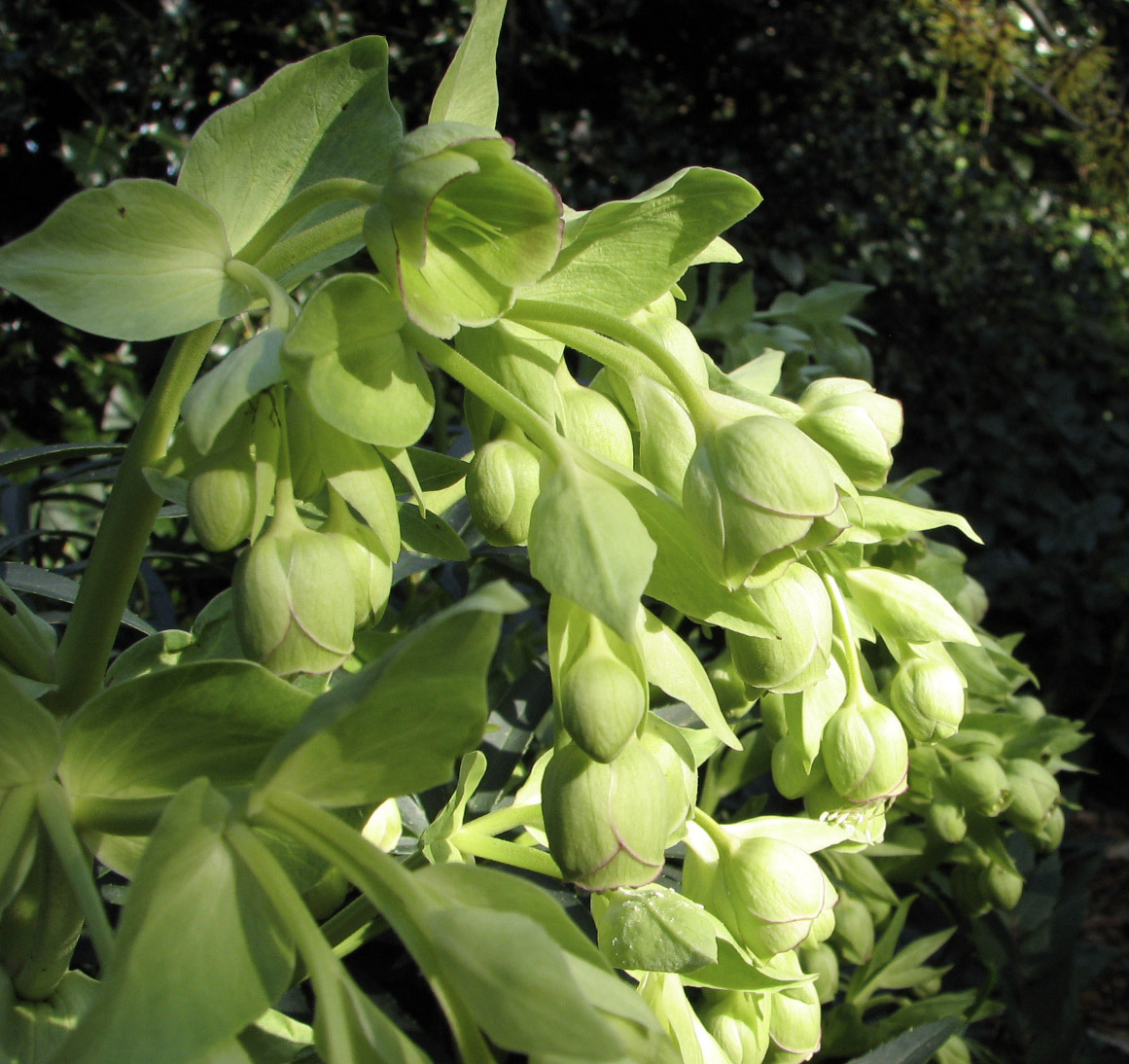
The original plants came from Grandma T. and as new plants have sprouted I have moved them to more difficult areas of the garden since they do not seem to fussy about location.

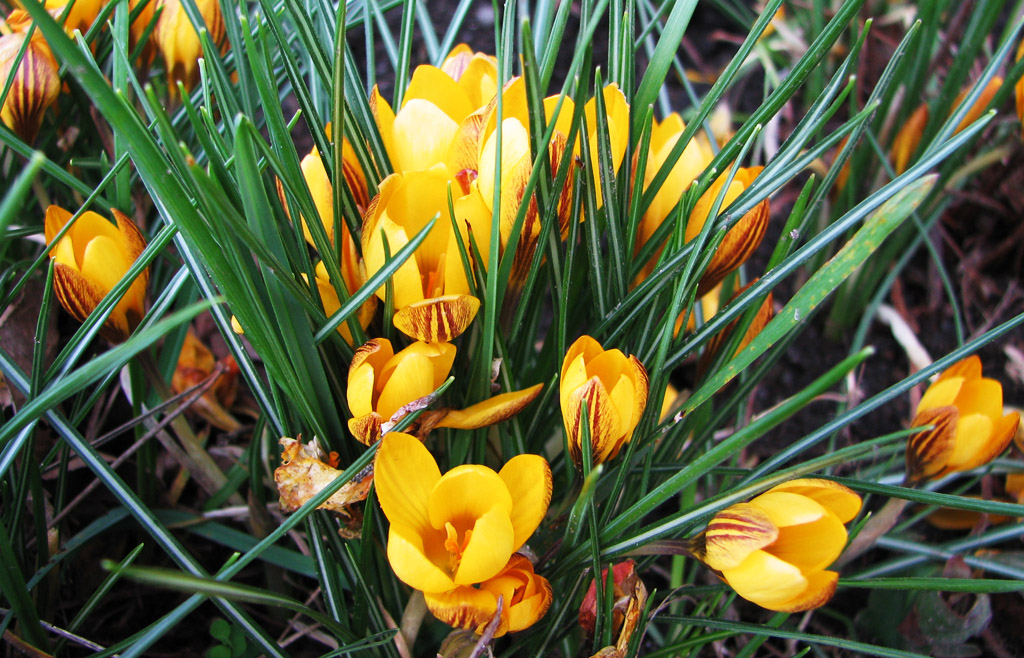
We have had a very mild winter courtesy of El Nino so many plants are up early and flowering ahead of schedule. One bulb that has always showed in early to mid-January is this lovely crocus, the bunch flowering Zwanenburg Bronze, always the first crocus here; a reliable multiplier and very long blooming, into February.
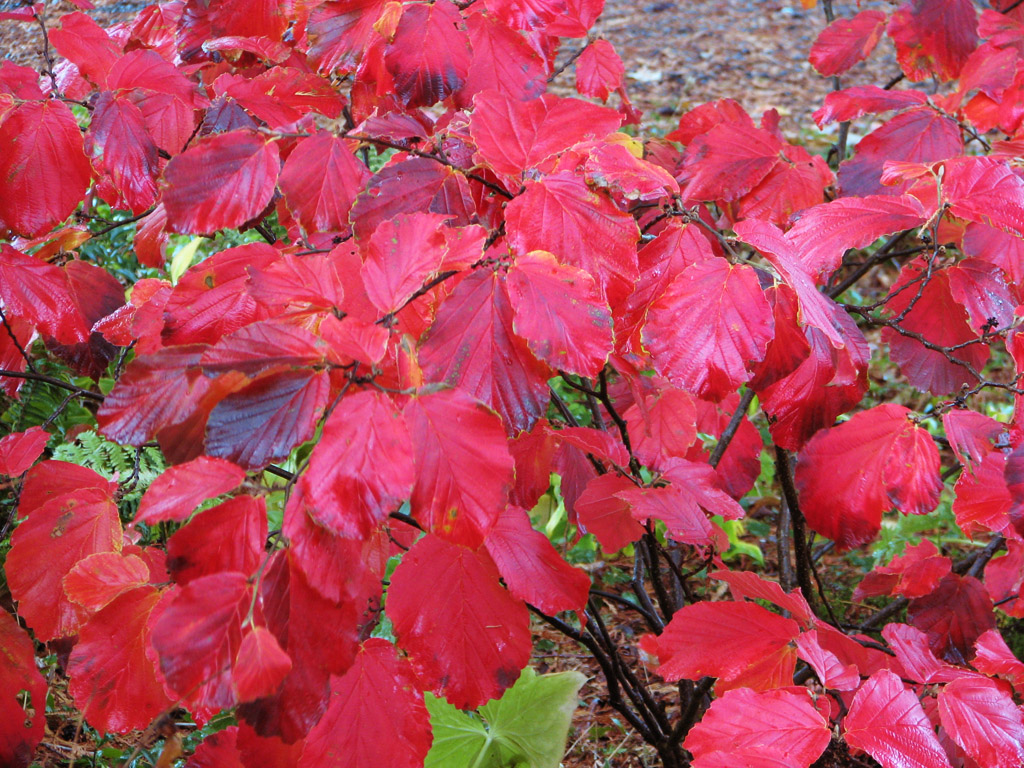
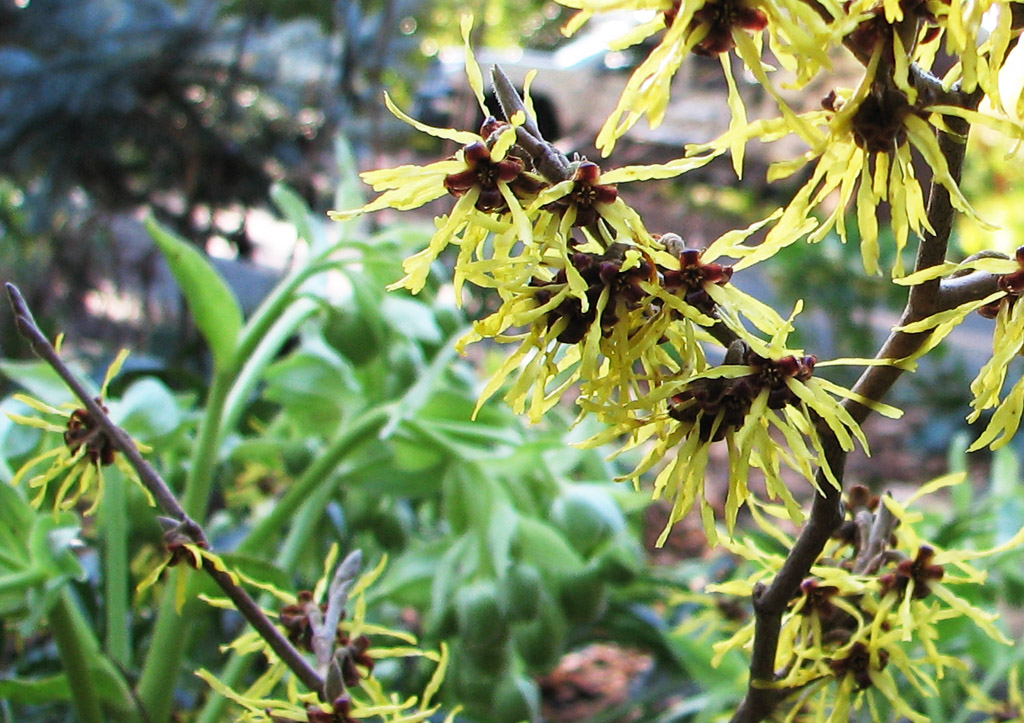
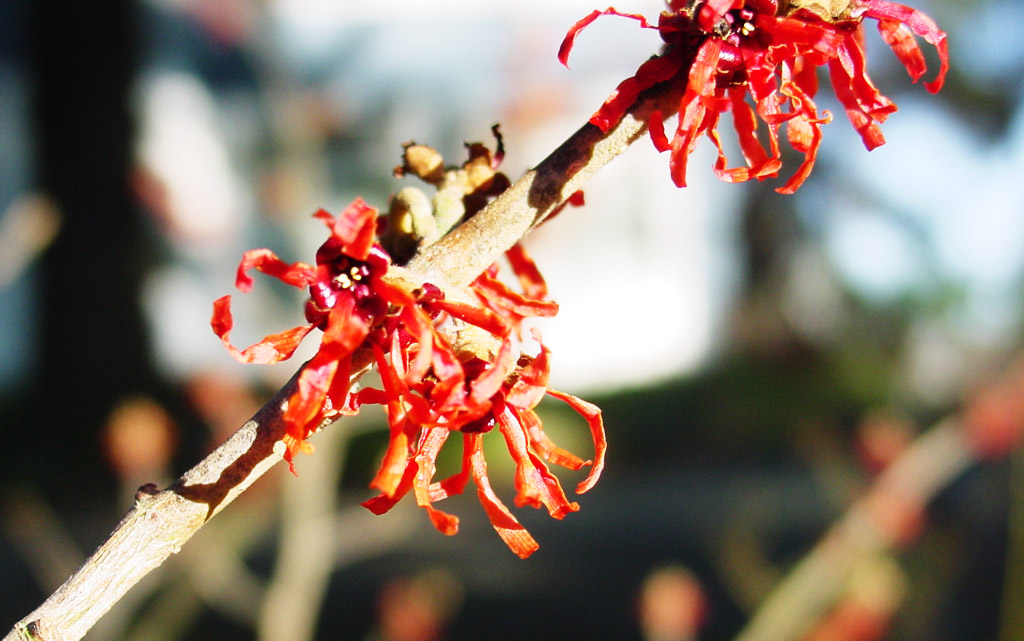
Three years ago we saw this lovely Hamamelis x intermedia (witch hazel) at the Bellevue Botanical Gardens, mid-winter. The petals are wispy and bright yellow; so cheerful in our gray day winters. The variety is Westetede. It has an upright, vase shape to fifteen feet tall and nice fall color. It was not happy in the original planting location, so I found a new home for it and happy days! Another hamamelis that we planted about fifteen years ago is ‘Diane’, a very deep red flower and stunning fall color.
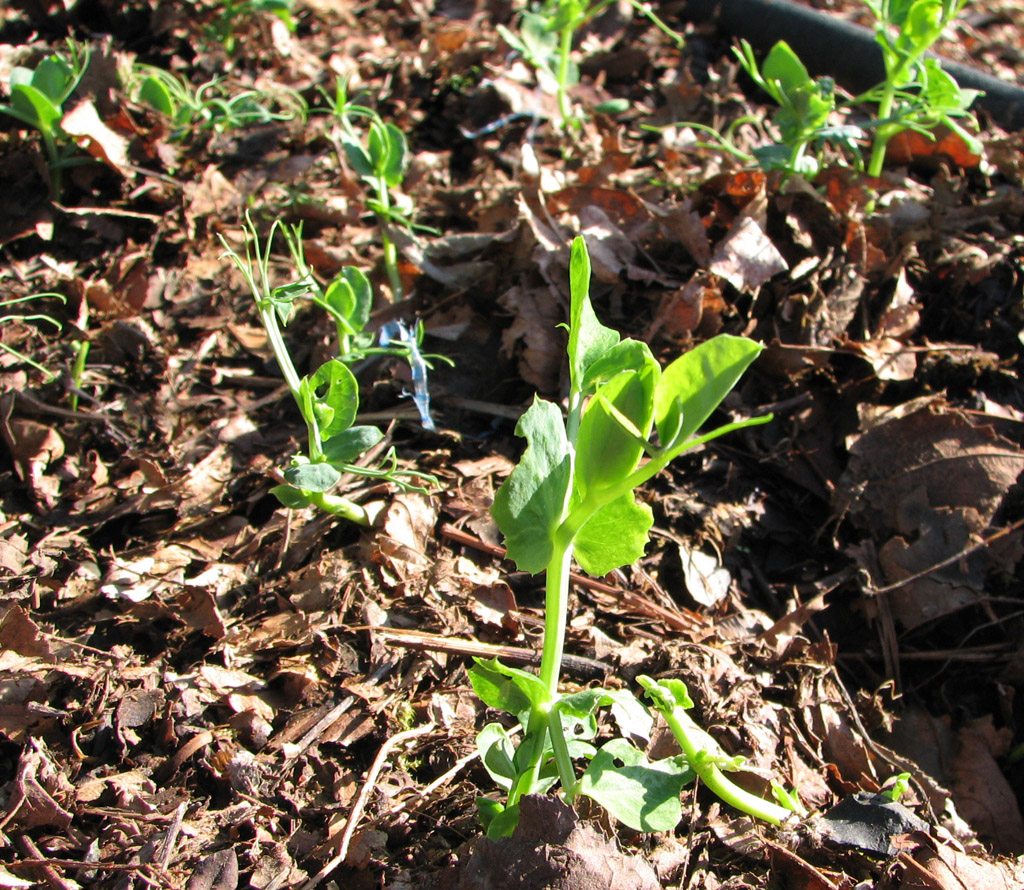
In early December just days before the really cold weather hit, I combined all the pea seed that a friend from art class had given to me and soaked them for a few days and then broadcast them over one entire vegetable bed and covered with shredded fall leaves (February-March is the traditional time to plant them around here). I had close to a pound of seed, many varieties. I figured there was little to lose since all of the seed was in the neighborhood of six to ten years old. By the end of December many had sprouted but had not peeked their little heads out of the leaves. By late January this is what they looked like:
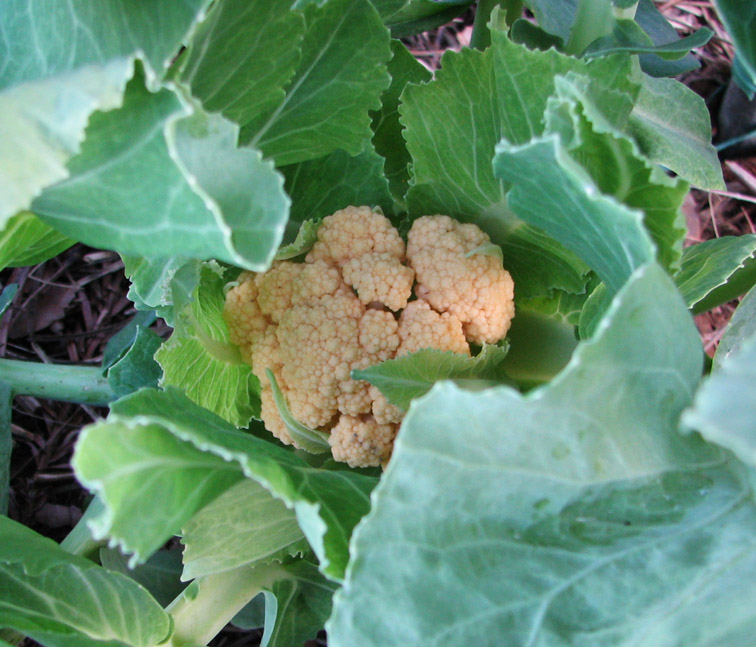
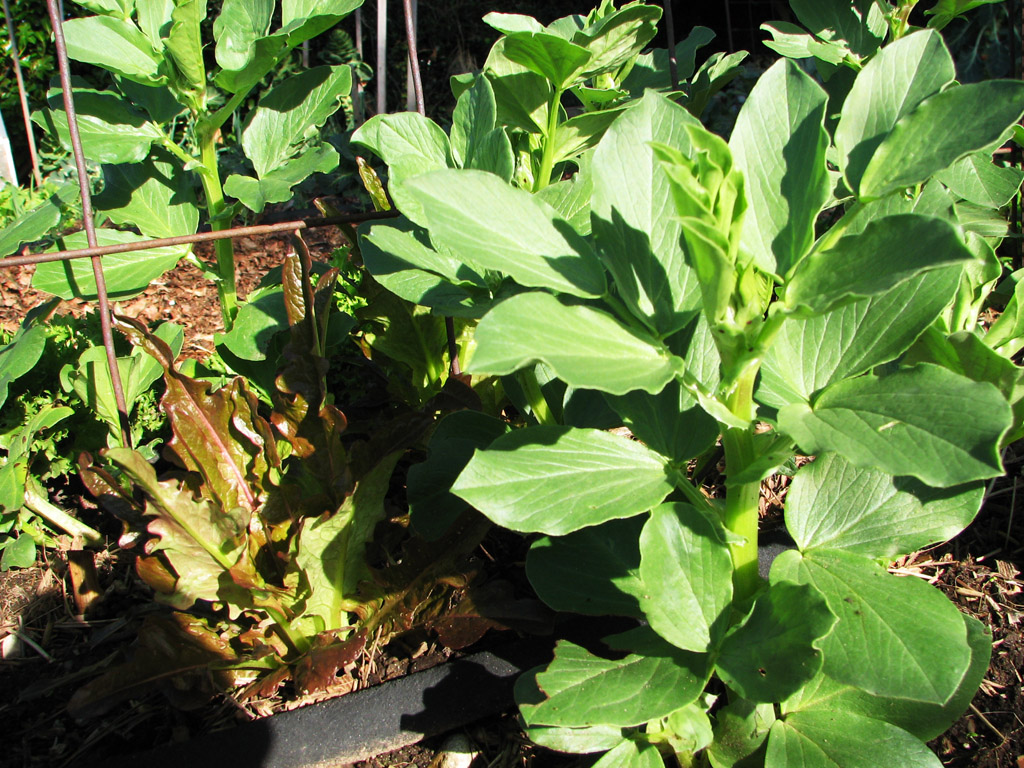
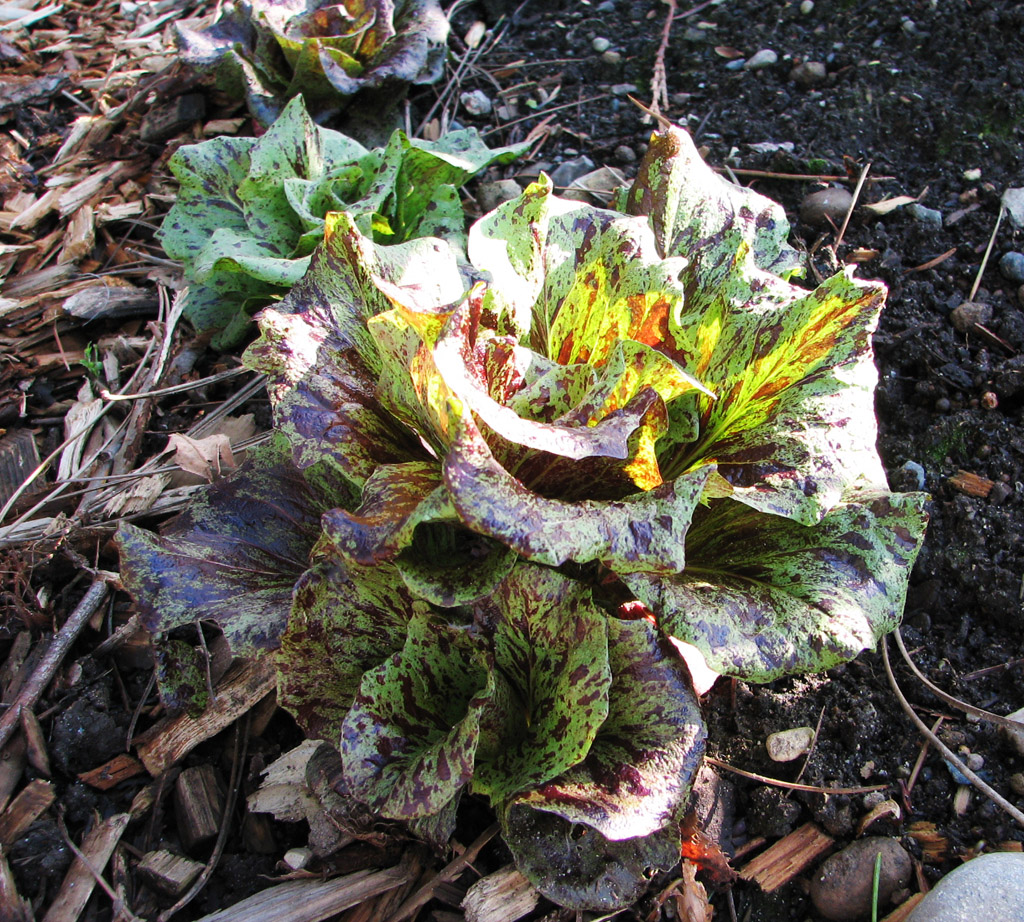
Also in the winter vegetable garden are fava beans that were planted in October and will be ready to havest in early June, some chicory/raddichio which came from seed that I purchased in Rome in 2000 (the seed is still viable); the variety is Castelfranco and the leaves are speckled with red. These plants however are from a few heads that I let go to seed and then sprinkled them around the garden. This is a favorite trick of mine; I like to let a favored lettuce and cilantro go to seed and then sow/throw/broadcast aroun the vegetable garden. The seeds germinate when they feel like it,  many in late fall (see the red oak leaf lettuce next to the fava) and then I transplant them into beds for the winter. The seeds that germinate in very early winter provide a head start on spring lettuce. For me, cilantro does best sown in this way. I usually have beets, chard, brussels sprouts, broccoli, sometimes cauliflower like the variety Cheddar, endive, escarole, and lots of other winter greens.
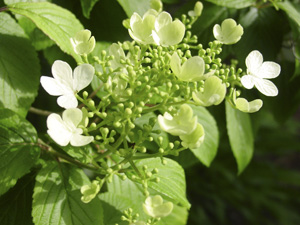
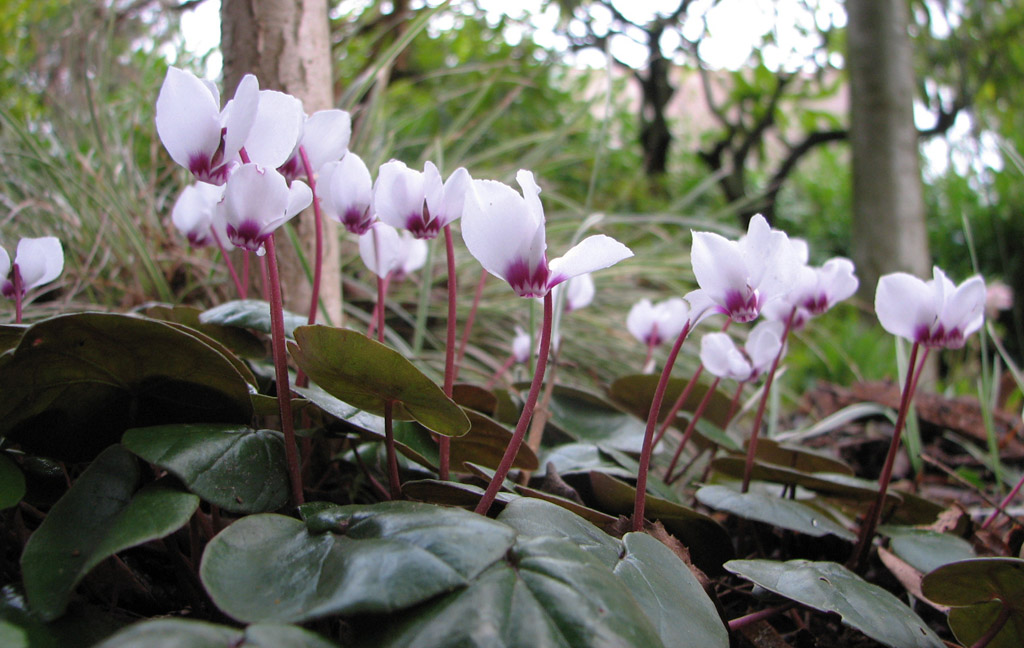
Finally, these dainty little white cyclamen at the base of Viburnum plicata tomentosum ‘Summer Snowflake’. The flowers appear first and then the leaves. The flowers stick around for a good two months.
SUMMER RECAP, part two: JUNE

Tags

, , ,

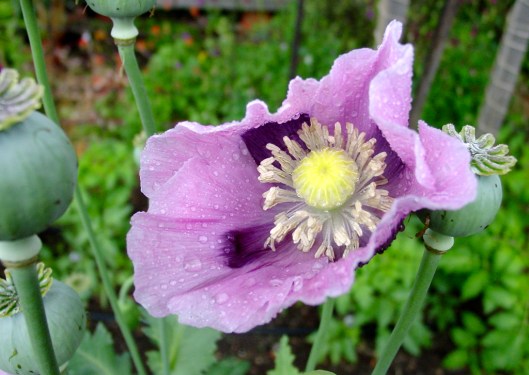
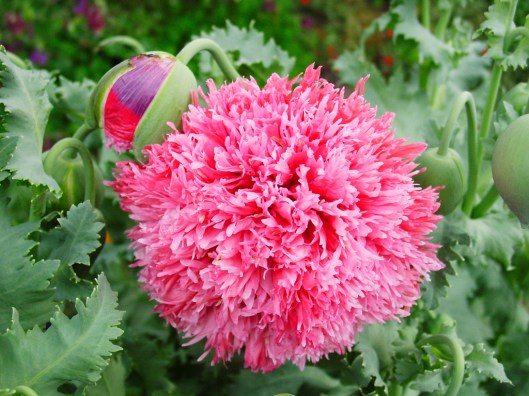
JUNE, SWEET JUNE. Poppies, lilies, columbine and roses are the beauty queens of June and herald the beginnings of summer. One of the perennial seeders is the Lettuce or Peony flowered poppy (papaver somniferum) named no doubt for its’ frilly appearance. This pink one was spotted on the bank of our property about 13 years ago. I managed to get to the seed head and sprinkle the seed around and have been rewarded every year since.  They are prolific re-seeders and not always true as evidenced by the pale lavender ones that showed up the following year.

pnkpoppy

prplpoppy_2

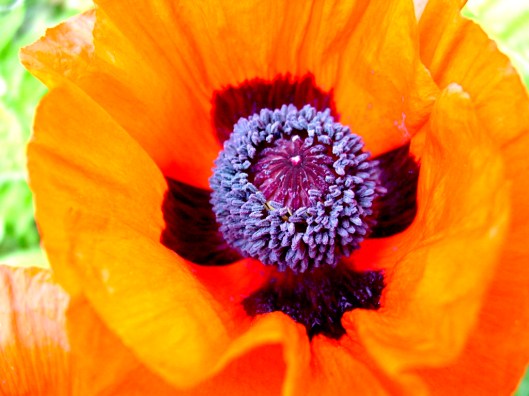
Also in the poppy lineup is the orange perennial Oriental poppy (papaver orientale) that was given to me by a neighbor. This one blooms late in my garden most likely because of a shaded location. Dark green, ferny, hairy leaves and beautiful dark centers contrast sharply with the bright orange petals. After blooming, the leaves die away in July and reappear in late August or early September, so I have tried to inter-plant with geraniums and some carex varieties that will fill in the blank spots.

orntlpoppy

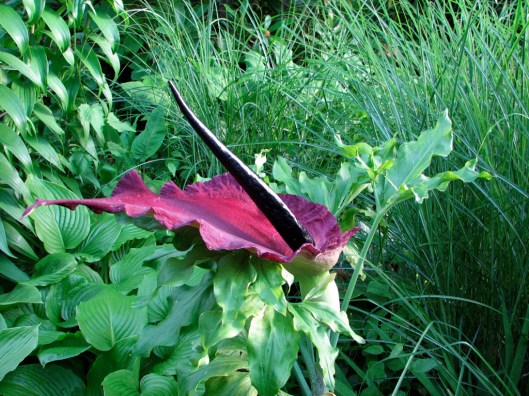
Two other garden spectacles make their appearance in June. The unusual and showy Dracunculus vulgaris has an unpleasant odor and goes completely dormant after flowering leaving no trace of leaf or stem. This plant came from Grandma T’s garden and produces new tuberous offsets for propagation.

dracunculus

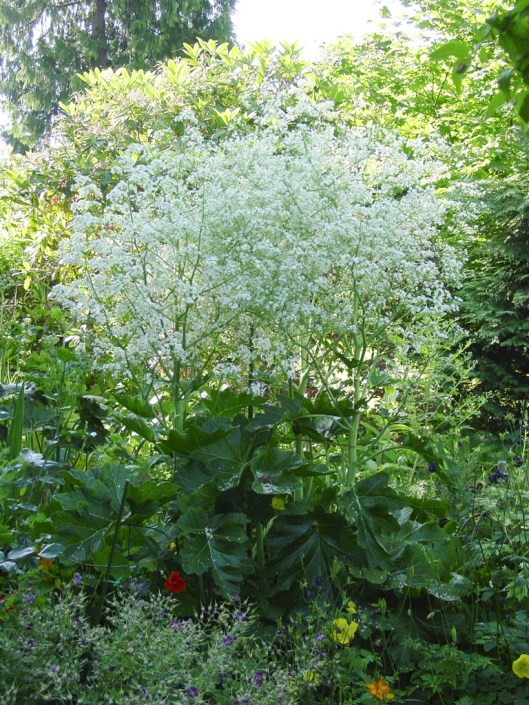
Crambe cordifolia with its tiny white flowers held aloft on tall stalks are like a June snow shower. They float above big, bold, dark green leaves. The flowers have a light, sweet fragrance and overall the plant looks like giant Baby’s Breath.

crambe

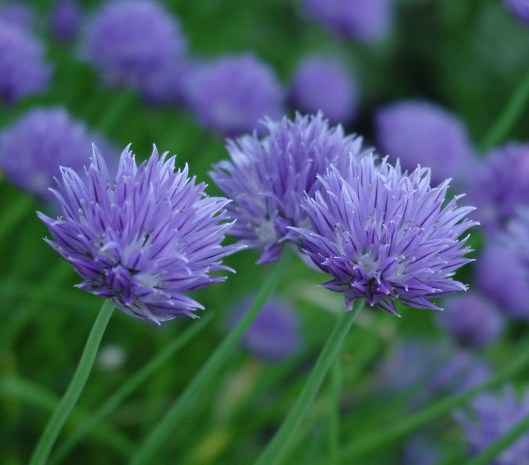
Lovely to look at and tasty too, are chives. One of the few color notes in the herb garden.

Chives

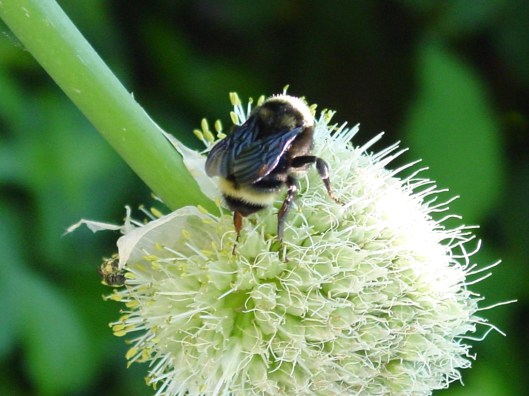
Another member of the perennial onion family is Allium fistulosum or bunching onion. Beautiful white flowers that all bees and bee-like flies can’t seem to resist. A great plant to have at the perimeter of the vegetable garden to promote pollination.

onion_bee

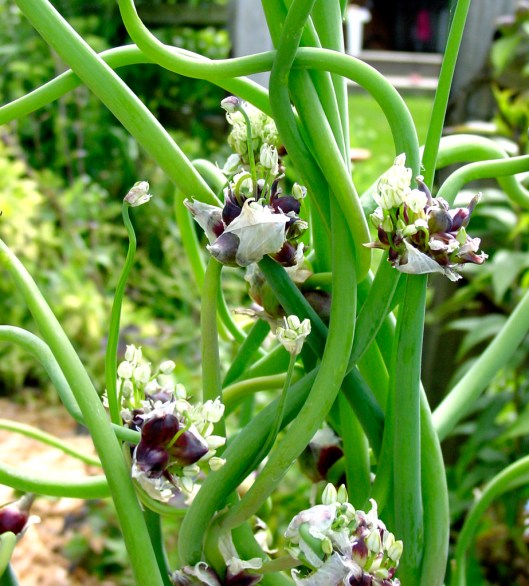
And finally, a more unusual member of the family is the Egyptian or Walking onion that is  a top-setting onion. As the topsets grow, the stalks bend to the ground where the bulblets take root.

walkonion

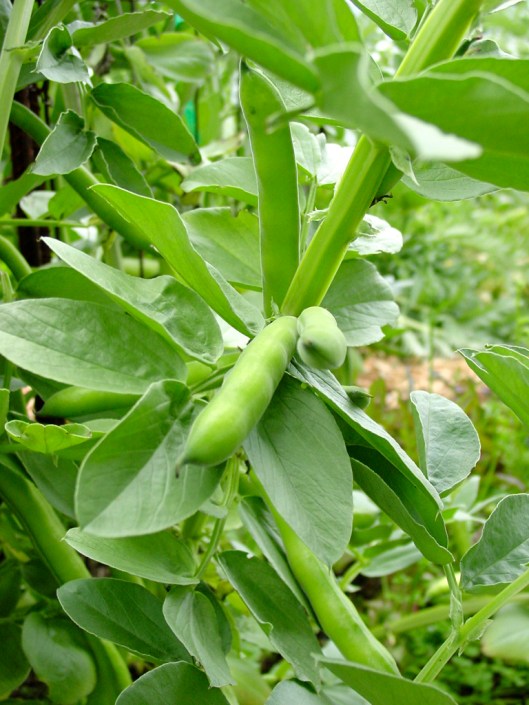
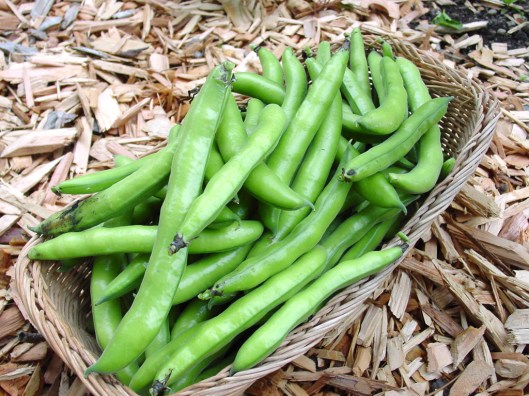
One of most anticipated crops in June are Fava beans. Favas go into the ground here in mid-to-late October for spring harvest and poke their heads out a couple weeks later if the weather remains relatively mild. They continue to grow over the winter and begin flowering in early spring. I plant them for two reasons: they help to replenish the soil by fixing nitrogen in the soil where tomatoes have grown and are a delicious spring vegetable when shelled and lightly dressed with olive oil, lemon and a shaving of pecorino romano cheese. The quintessential taste of spring. (No apologies to peas.) Puréed with a little garlic, salt, and lemon juice favas make a savory spread for toasted bread.

favas_1

favas_2

And that wraps up everything good about June.

RECAPPING A FINE SUMMER, part one

Tags

, , ,

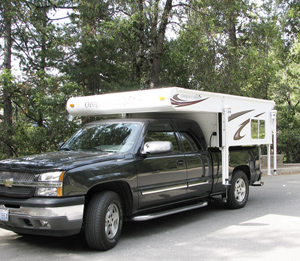
JUNE was uncommonly dry and warm this year. I barely returned from the Washington/NYC trip to translplant tomatoes, peppers, melons and more lettuce when we departed to Oregon to pick up the new camper in Albany, Oregon. It is a pop-top slide in camper so it has a low profile. We started with a half-ton truck but in July traded it in for a heavy duty three-quarter ton truck to better carry the load.

Camper_1

camper_2

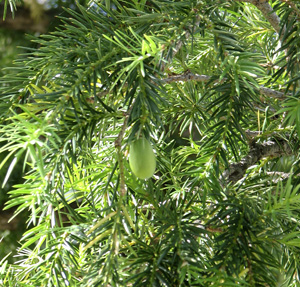
Our first trip with the new set-up was to Yosemite National Park. Neither one of us had been there so it was a new adventure. I would say that everything I have ever read or seen about the park is true. It is spectacular in just about every sense. Overwhelmingly vast, geologically stunning and beyond human scale. In early/mid-June the park was not overcrowded, but the park campgrounds were full or reserved so we had to stay in a forest service campground about 8 miles outside the park. On the way into the park on the first day we pulled over to take in a view of the canyon walls rising up from the Merced River and this tree was growing alongside the rock wall of the pullout on Big Oak Flat Road.

Torreya californica

It was baffling; flat needles like any coniferous tree, but instead of a cone there was a nut. And, because I have to know the answer I searched the books in the visitor center until I found out what it was; Torreya californica, also known as California Nutmeg. This tree is a species endemic to the western slopes of the Cascade-Sierras and Coast Range Mountains of Northern California; not uncommon, but not abundant. I just found out about The Sibley Guide to Trees so it may have to join my traveling hort library.

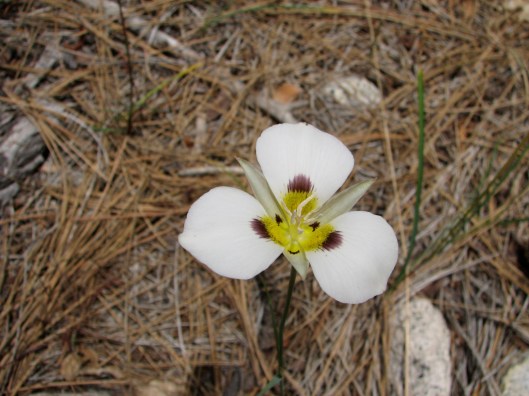
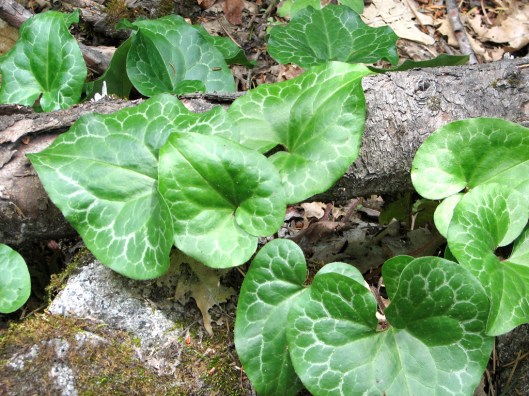
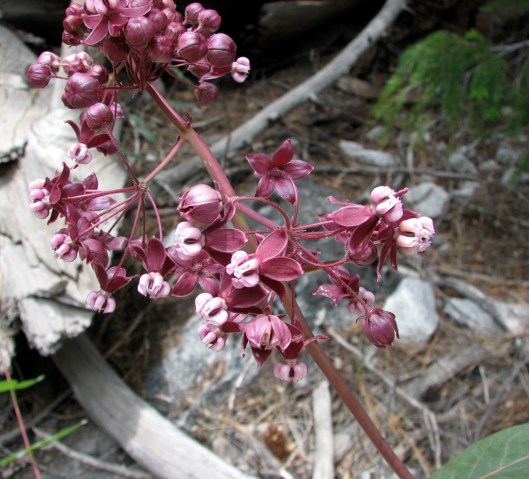
After looking down into the Merced River canyon we traveled on into the valley, our first views of  El Capitan and Bridal Veil and Yosemite falls opened ahead of us. All breathtaking for their sheer size. We spent all day in the park. The continuous shuttles make it easy to get around. We took the short walk to Mirror Lake where we sat and ate our lunch and then walked to Ahwahnee lodge.On the walk from Mirror Lake we spotted the last few blooms of Mariposa lilies and the leaves of Asarum,  a native wild ginger and finally Asclepias californica (I think) also known as milkweed or butterfly weed.

mariposa

asarum

asclepias

The lodge is beautifully restored and like all early national park lodges, massive in scale and use of local materials. Early June seems a pretty good time to visit and we didn’t feel overwhelmed by large crowds everywhere and the weather is fair.

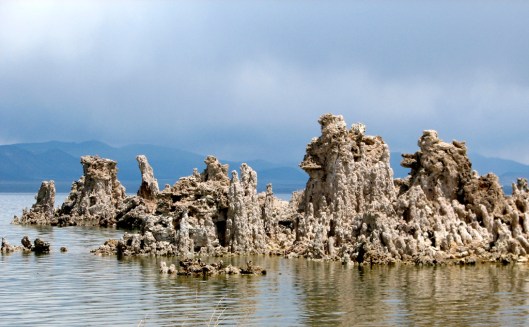
The following day we had planned to hike off of the Tioga Road, but extremely cool weather and forecast snow kept us mostly in the truck and stopping for the big views, most notably Olmstead Point which looks back south towards the valley and Half Dome where we glimpsed a long line of hikers along the cable trail. We drove east through the park and down into the Mono Basin and then to Mono Lake. Another place of  unusual geographic features created by the interaction of two forces, high alkalinity and fresh water springs that created the tufa spires. Also home to largest numbers of nesting California Gulls. We saw quite a few birds species and a couple pairs of osprey nesting on some of  the tufa spires–quite safe from predators.

tufa

The temperature at Mono Lake was a comfortable 60 degrees when we left the lake and fifteen minutes later we were at the Tioga Pass entrance to the park and the temperature was 38 and we saw hail, snow and rain on the road back to the Big Oak Flat entrance to the park. We headed back towards home the following day by way of Woodson Bridge state recreation area on the Sacremento River, just east of Corning, CA. We stayed 3 nights. It is a lovely, quiet park and a bird watchers paradise. On one of our morning walks we saw a pair of fledged Great Horned owls –very exciting! This park was one of many on the closure list due to California’s massive budget problems; say it ain’t so. We plan to go back to Yosemite and spend more time exploring and include Sequoia Kings Canyon in the trip.

Is it really fall here in the Northwest?

Tags

, , , ,

WELL, I neglected the timely posts from May through the summer and now it is October! Today has been rainy and the air is like a blanket of white, so laden with moisture. Can’t see across the sound.

After beginning this blogging endeavor we took a trip to Washington D.C. for a week and then Jood and I spent 4 days in NYC. So, upon my return transplanting tomatoes into their summer homes became job #1.  Summer is busy–planting, weeding, transplanting, traveling (we bought a new slide-in camper), jamming, and canning. And, before I knew it summer was coming to a close and the canning and preserving reached a fever pitch. More than 100 pounds of produce from our garden alone, were put up and dished up this season. I’ve never really kept track before, so it is a meaningful number. In addition to our own produce, I put up close to the same amount of purchased and gifted fruit as preserves, infused vinegars and vodka, brandied peaches, nectarines and 15 pints of our own pears with wine (from a Eugenia Bone recipe that I found in the Sunday NY Times magazine). There are still baskets worth of peppers both sweet yellow ones and ancho/poblanos and long Anaheim types to be picked and preserved somehow.

So, sisters dear and random readers, I will attempt a recap to entertain your winter dreaming and spring scheming with month by month highlights.

First a few more photos of May’s grace.

Clusiana_heuchera

I try to plan for color combos-sometimes it accidental but this is a nice combination of clusiana tulips, astrantia, heuchera “Purple Palace” and daylily “Corky”

HostaFrncsWill

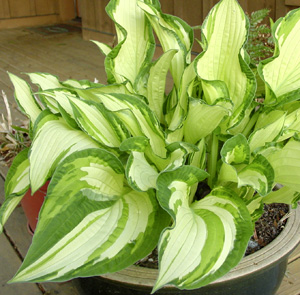
My oldest and largest hosta, “Frances Williams” looks so sculptural as the leaves unfurl.

HostaInniswood_1

This one is ‘On Stage’. When I first planted it the squirrels kept digging in the pot and I was sure they had killed it so I removed the tag and the following year it looked great. It is lovely at all stages through the season.

LigulariaCamasia

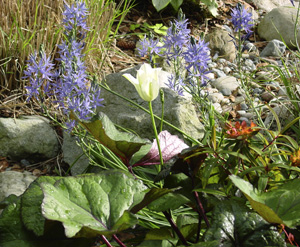
Ligularia, blue camassia ( a native), Spring Green tulip, Euphorbia griffithi “Fireglow”

VibSmmrSnwflk

Viburnum tomentosa “Summer Snowflake” only 4 1/2 ft tall. This blooms sporadically through the summer.

JUNE. The roses were really beautiful in mid-June, the first real flush of bloom. Tom, who cares for all the roses around our yard commented that “Roses don’t just blink and take the rest of the year off” as so many blooming beauties do. Poppies, iris, lilies, and all the spring bulbs show their stuff and fade away until next year, but roses continue to delight long into the fall.

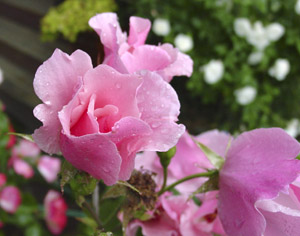
Daintybess

Dainty Bess is a pretty single and blooms all summer.

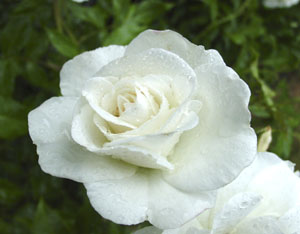
icebergrose

Iceberg, a floribunda has masses of blooms all summer long with regular deadheading. Very light fragrance.

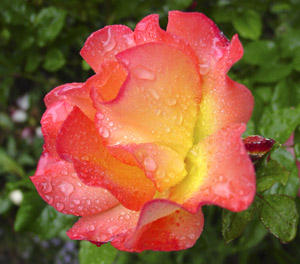
playboyrose

Perhaps my favorite for color variety is Playboy since it changes color dramatically as it ages.

Of course, everything looks beautiful after a little June rain and the rain that wetted these roses was about it for the remainder of the summer. We had a record number of days without rain this past summer, only .24″ for June-July and not much more in August.

More Peonies

Tags

, ,

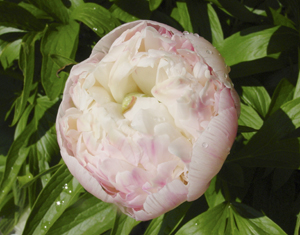
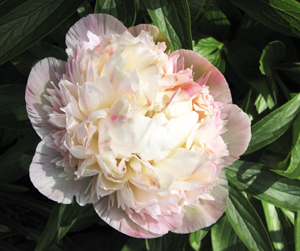
Another peony began blooming at the same time as the tree peony. It is very lovely and more refined looking than the crepe paper one. I originally ordered a peony called Flame Heart, brilliant red with a yellow flame center eight to ten years ago. However when it bloomed the following year after planting it was the palest pink turning to white. What a disappointment. At least the company that I ordered it from offered a credit. It has become very robust and is the first of my limited peonies to bloom, and the flowers are quite long lasting. I have perhaps 4 more peonies that were all given to me; three from a neighbor who most likely planted hers some 40 years ago, and a lovely white one from a good friend. These all bloom a little later in May and early June.

fauxflame2

fauxflamepeony

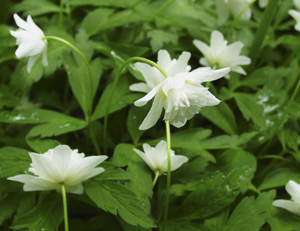
Also blooming the last few weeks is another little beauty that I scrounged from my grandmother’s garden, the Anemone nemerosa, a tuberous type of anemone; it is a double white. I was able to find it after the foliage had died back for the summer and my grandmother was happy that I had found it as she thought it had died out. I found maybe a half dozen tubers and now have a thriving colony after ten years. These truly make me happy when the start blooming. Very dainty flowers at only about three-quarters of an inch across, they elegant and carefree.  There are plenty to share with Renee when she is ready for them.

anemonemerosa

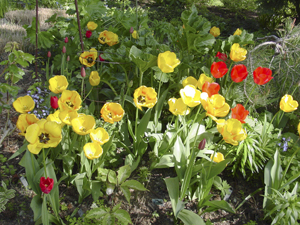
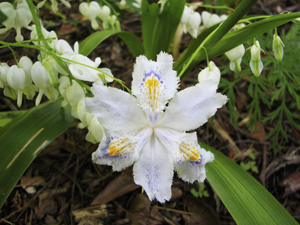
One last note is the fading tulips and Iris tectorum, also known as Japanese roof iris or wall iris. Last fall I ordered some new red and yellow tulips to add to the dozen Yellow Oxford tulips I had planted ten or so years ago and now it is a pretty showy display. These tulips topped out somewhere between 24″ to 30″. They are so cheerful to look at from my office window.

mixedtulips

The iris also came from Grandma T’s garden and there are only a few blooms remaining for the season. These iris have beautiful little color details and look so delicate.

roofiris